


Biomolecular analyses reveal grape-based beverages, dairy processing, and pottery function in Kura–Araxes culinary practices
28.04.2026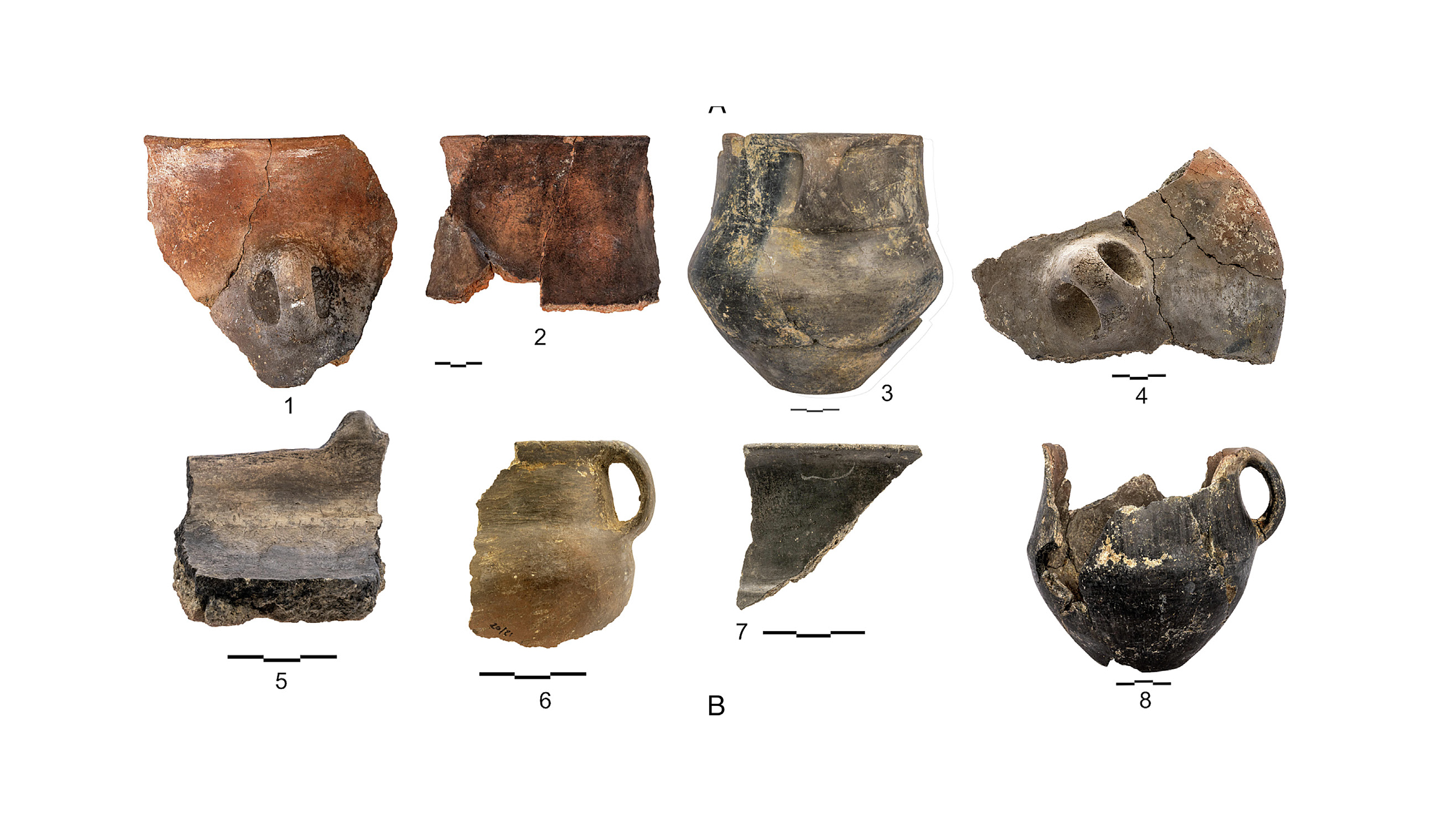
The findings, published in »Proceedings of the National Academy of Sciences« (PNAS), are the result of a collaboration between the University of Bari, the University of Bonn, the Azerbaijan National Academy of Sciences, the Austrian Archaeological Institute of the Austrian Academy of Sciences, the CNRS, and other European institutions. The study provides the first clear evidence of functional differentiation among Kura–Araxes pottery: Monochrome Wares were primarily used for cooking, while the distinctive Red-Black Burnished vessels were associated with the consumption of unheated dairy products and fruit- or grape-based beverages.
Chemical analyses of the organic residues entrapped in the ceramic´s texture revealed that these communities consumed grape-derived drinks, likely including resinated wine, embedded in everyday practices. The presence of fruit residues in both cooking and storage vessels suggests diverse culinary uses, from sweetening and flavoring to possible roles in fermentation and cheese production. The identification of millet, a crop originating in Central Asia, points to previously undocumented long-distance connections and early exchange networks in the region.
More broadly, the study highlights a mixed subsistence economy and emphasizes the cultural importance of food and drink in shaping social practices. The integration of ceramic technology, vessel morphology, and organic residue analysis offers a detailed picture of how culinary traditions contributed to the identity and cohesion of Kura–Araxes communities across Southwest Asia during the early third millennium BCE.
Publication
Maxime Rageot, Maria Bianca D’Anna, Muzaffar Huseynov, Bakhtiyar Jalilov, Alexia Decaix, Rémi Berthon, Qi Zeng, Jeremy Perez, Farhad Guliyev, Léa Drieu, Arnaud Mazuy, Martine Regert & Giulio Palumbi: Biomolecular analyses reveal grape-based beverages, dairy processing, and pottery function in Kura-Araxes culinary practices, PNAS 2026, Vol. 123, No. 18