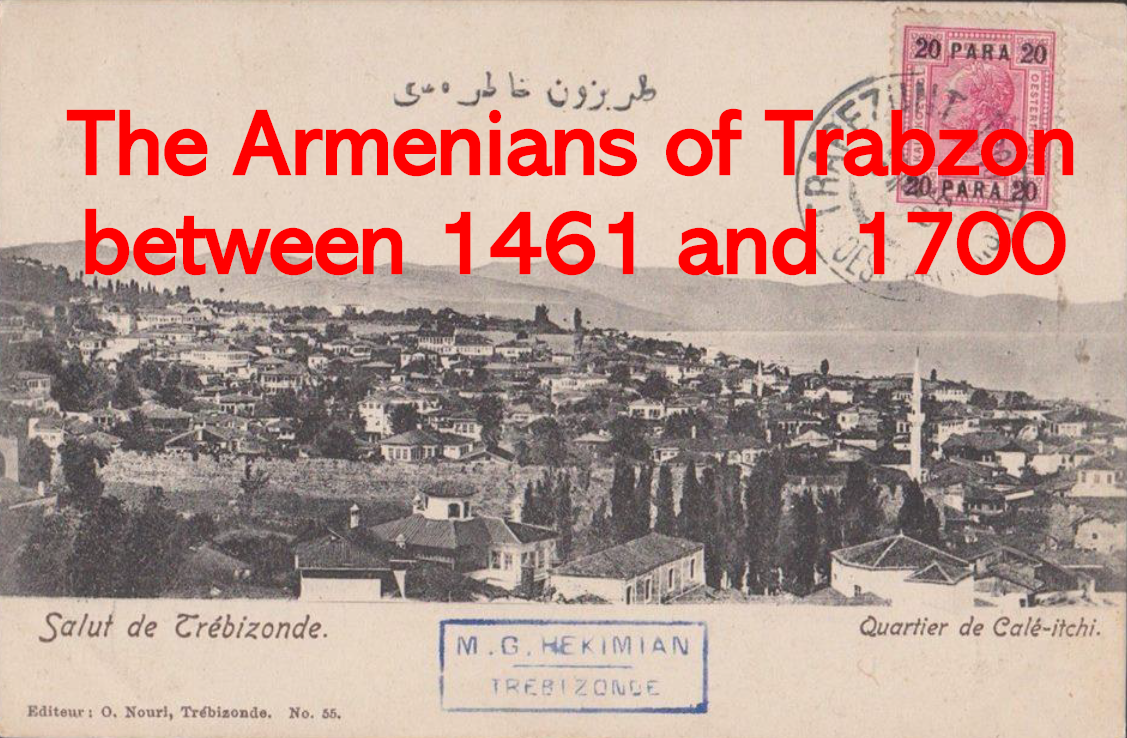
On 15 August 1461, Mehmed II conquered Trabzon. The city came under Ottoman rule at a later date than most of the Anatolian cities and also protected a considerable amount of non Muslim population. According to the sources, after the conquest, Mehmed II transferred some of the population of the city to other parts of Anatolia and to Istanbul and brought some Muslim Turks to the city. However, it is clear that this pattern of immigration and emigration first did not affect the share of the non Muslim population of Trabzon to any great extent. Thus, there was a unique situation until 1583, when the Muslim population surpassed the non Muslim population for the first time. At the end of the 15th century, the population of Trabzon consisted of 2.015 Muslims and 5.549 Christians, according to the tahrir defters (land registers). At the end of the 16th century, there were 6.083 Muslims and 4.901 Christians. Thus, the total population was 11 000 people.
The Judicial Registers (Şer’i Mahkeme Sicilleri) are among the most important sources for writing the social, economic and cultural history of the Ottoman Empire. The functions of the kadi (judge) and the sicils have helped us to understand the daily life of the Ottoman society in the centres and provinces. The court situation makes the available information unique, as such data cannot be gathered from other archival documents. In the administrative division of the Ottoman Empire, Trabzon was at first a sancak (sub province), then at the end of the 16th century, it became a province with the sancak of
Batumi In the 16th century, Trabzon was an important port for the Ottomans on the Black Sea coast, connecting the Black Sea to the inner parts of Anatolia, and by the trade routes to Iran.
The sicil records analysed for this presentation show that the Armenians, whether settled or staying in Trabzon for different reasons, made a considerable contribution to the social and economic life of the city. The Armenian population of Trabzon in general was scattered around the city’s quarters in the eastern suburbs. It is also interesting to see that for the 17th century, while our sources do not mention Greek Orthodox people in the centre of the city that was called Orta Hisar (Middle Castle), we have court records about the existence of an Armenian population there. It seems that the Armenians
continued to live in this part of the city after the Ottoman conquest. They were very much involved in trading activities in Trabzon and in transit trade.
The lecture is organised by the project Entangled Charters of Anatolia 1200 1300, ENCHANT) funded by the Austrian Science Funds FWF (P-36403-G, https://www.oeaw.ac.at/en/imafo/research/byzantine-research/byzantium-and-beyond/mobility-and-intercultural-contacts/entangled-charters-of-anatolia-1200-1300-enchant) and the Österreichisch Armenische Studiengesellschaft
https://www.byzneo.univie.ac.at/ueber -uns/gesellschaften/oesterreichisch-armenische-studiengesellschaft/
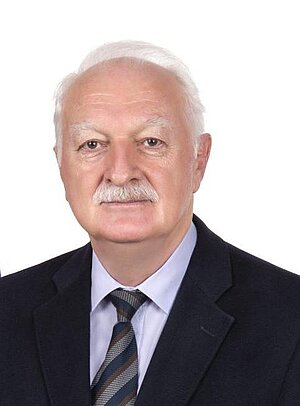
Prof. Kenan İnan was born on April 24, 1961 in Çankaya, Ankara, Turkey. He graduated with a degree in History from Gazi University in 1984. Following a year of teaching history in Rize, he earned a government scholarship to study in the UK. At
the University of Manchester, he completed his MA in 1989 and his PhD in 1993, writing on Tariḥ-i Ebü'l Feth by Tursun Bey. Since returning to Turkey, Dr İnan has.held key roles at Karadeniz Technical University (KTU) in Trabzon. He founded the Department of History in 1994 served as department chair (1994-97, 2003-05) as Faculty Dean (2005-10) and as Vice Secretary General (2004-05) of the university. He’s been a full professor since 2004. His scholarship focuses on Ottoman
historiography, 17 th century Ottoman legal documents (kadı court registers), and the history of Trabzon. He has published extensively over 50 papers and contributed to EU funded projects and quality accreditation initiatives in Turkish higher education. Proficiency in English and with intermediate Arabic, he has participated in numerous academic conferences internationally, gave lectures in Germany and Italy and contributed to major publications in Ottoman and legal history.
Venue:
PSK, Georg Coch-Platz 2, 1010 Wien, Seminarraum 3. Stock (barrierefreier Zugang über Wiesingerstraße 4, 1010 Wien)
Time:
Friday, 12 September 2025, 10:30 am
For online participation, join via Zoom
https://oeaw-ac-at.zoom.us/j/62140347221?pwd=JyXDinjmnfNCyvZXsGojp9dVOkDwzD.1.
Please register for on-site-participation