


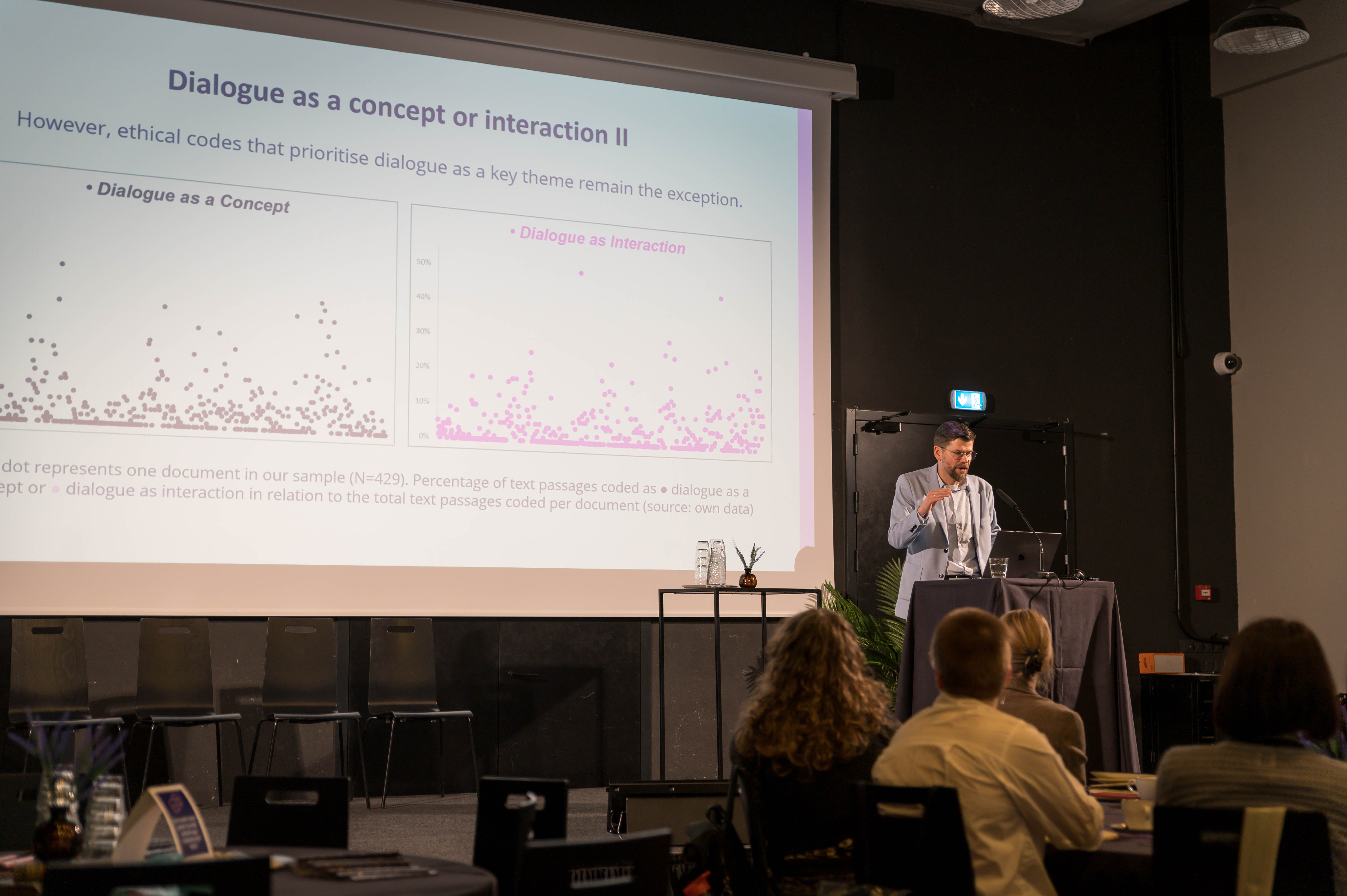
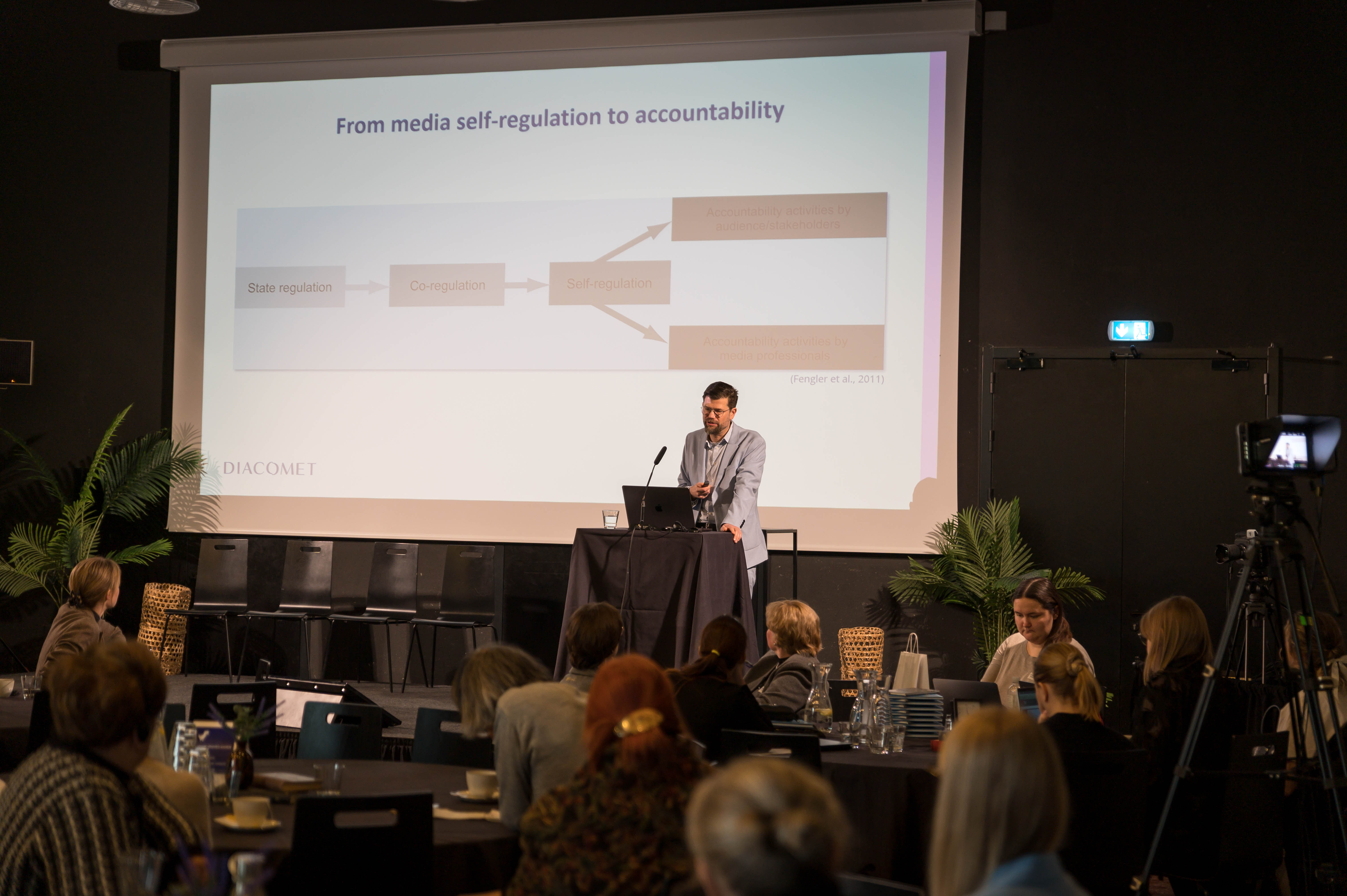
In his keynote, Tobias Eberwein broadened the discussion from the Estonian context to the European level, offering a comparative perspective on how different countries interpret the shared principles of good communication – transparency, responsibility, and respect – within their respective historical and cultural settings. This comparative lens underscored both the commonalities and the divergences that shape communication practices across Europe.
A central theme of the presentation was the ongoing dialogical turn in communication. While traditional media once limited opportunities for public participation, the rise of digital platforms has enabled a far greater number of actors to contribute to public debate and influence which issues gain visibility. This development, Eberwein noted, has transformed not only the structure of public communication but also the expectations placed on all those who participate in it.
In this context, the keynote placed particular emphasis on the evolving notion of accountability. Responsibility in public communication can no longer be understood as the exclusive domain of journalists or media organisations. Instead, it extends to all participants in the communication environment. Meaningful dialogue, Eberwein argued, requires an openness to justify one’s views, a willingness to listen to others, and an awareness of the consequences of one’s statements.
The CMC is pleased to see its research contributing to international discussions on communication ethics and the future of public dialogue.
Easy Language Version:
Europe in Dialogue: Keynote by Tobias Eberwein
On 20 February 2024, Tobias Eberwein from the CMC – Institute for Comparative Media and Communication Studies gave a keynote in Tallinn.
The conference was organised by Estonian partners from the DIACOMET project.
The keynote talked about dialogue in public communication in Europe.
It explained that many European countries share the same ideas of good communication.
These ideas are transparency, responsibility, and respect.
Every country uses these ideas in its own way.
This depends on the history and culture of each country.
The keynote also showed that digital media have changed public debate.
In the past, mostly journalists and traditional media could speak in public.
Today, many more people can join public discussions.
Different people can share their views.
They can also help decide which topics become important.
A main point of the keynote was responsibility.
Good communication is not only the task of journalists.
Everyone who takes part in public communication has a responsibility.
People should explain their views clearly.
People should listen to others.
People should think about the effects of their words.
This helps create good and respectful dialogue.
The keynote showed that dialogue works best when everyone takes responsibility and treats others with respect.