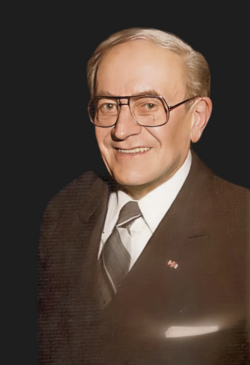
The “Institut für Demographie” (IfD) was founded by the Austrian Academy of Sciences (ÖAW) in November 1975. Its board and its founding director, Lothar Bosse, were appointed in January 1976. The main activities in the starting year included developing a research agenda and the institute’s internal structure, preparing proposals for external funding, and concluding a cooperation agreement with the Austrian Central Statistical Office (ACSO).
In 1977, the first IfD scientist employed by the ÖAW, Alois Haslinger, began working in the new building of the ACSO in Vienna’s third district. Two sections were established: (1) Theory and Basic Research (headed by Gustav Feichtinger) and (2) Applied Demography (headed by Richard Gisser), with both section heads being external honorary functionaries.
In the following years, the institute was active - and successful - in acquiring external funding for research projects. An early highlight was the longitudinal study of fertility intentions in young marriage cohorts. Publication outlets included the “Schriftenreihe” (since 1977), “Demographische Informationen” (D.I., since 1981) and “Forschungsberichte” (since 1985). Between six and fourteen researchers worked on fee contracts, and the permanent staff of scientists increased gradually to about four full-time equivalents (FTE) by 1990.
The ÖAW budget for the IfD increased significantly in 1991 and 1994, when the institute received special multiannual funding to “stimulate and internationalise” its research. Given its relatively small size, it was decided that the institute should concentrate on Austria and its role within the process of European integration. Relative to its resources (about eight FTE scientists in 2001), the institute was highly productive and enjoyed a strong reputation, as evidenced by increasing international cooperation and positive peer evaluations.
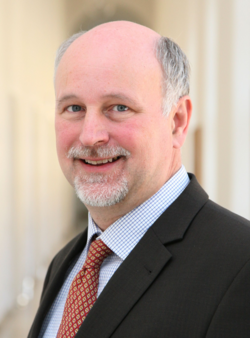
In 2001, the ÖAW decided to substantially expand and internationalise the institute and designated Wolfgang Lutz as the new director. According to these plans, with an emphasis on “excellence” and “relevance”, the institute sought to grow in size and importance, developing into an international hub for demography with cutting-edge methodology and high-quality peer-reviewed research, while strengthening its policy-oriented profile through the proactive analysis and projection of demographic trends and their consequences, including issues extending beyond national boundaries. Researchers were actively recruited from abroad, and English became the institute’s working language. The brand name “Vienna Institute of Demography” (VID) was introduced to signal this reorientation. An important step was the launch of an annual international scientific conference with a thematic focus, which in turn is adopted by the “Vienna Yearbook of Population Research”, the successor of D.I. The number of research groups expanded from two to four, and the institute moved to its new premises in Vienna’s fourth district. During this period the number of scientific FTE grew to 21. An evaluation in 2010 concluded: “The evaluation team is unrestrictedly positive about VID. It is an admirable institution.” In the same year, Marc Luy received VID’s first European Research Council (ERC) grant, while Wolfgang Lutz was awarded the Wittgenstein Prize, Austria’s most prestigious and highest-endowed scientific award.
In 2011, the Wittgenstein Centre for Demography and Global Human Capital, for short WIC, was founded as a collaboration between the three “pillars” ÖAW/VID, the International Institute for Applied Systems Analysis (IIASA; World Population Program), and the Vienna University of Economics and Business (WU; Research Institute for Human Capital and Development and the WU Demography Group). It is a cooperative research cluster with personnel links between the three partner institutions and a joint research agenda focusing on educational attainment as a third dimension of demographic analysis alongside age and sex. An outstanding product are the global population projections as documented online in the WIC Data Explorer.
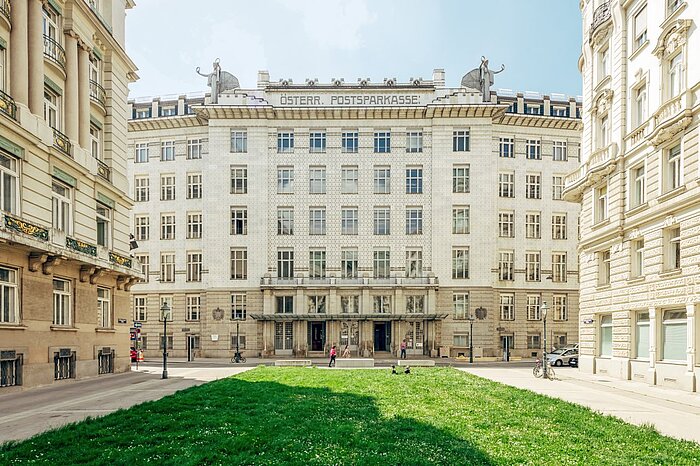
Since 2015, when the VID moved to the WU Campus in Vienna’s second district, a joint location of two WIC pillars has been existing, enabling synergies. This continued even after the replacement of the WU pillar by the newly founded Department of Demography at the University of Vienna (2019), both in an interim accommodation from 2020 to 2022, and currently on the premises of the Postsparkasse in the first district. The VID’s research staff reached 28 FTE in 2015; this mark could not be kept all the time, but is currently surpassed with around 30.
In 2022, Wolfgang Lutz retired as director of the VID. Following an interim period under the leadership of Alexia Fürnkranz-Prskawetz, Marc Luy was appointed director in November 2023. The institute’s research is now organised around two complementary focus areas: Demography and Human Capital, and Demography of Europe. The first builds on Wolfgang Lutz’s scientific legacy, which expanded the classical demographic framework by incorporating education as a third core analytical dimension. The VID aims to further establish this approach as the “Vienna School of Demography”. The second focuses on the major demographic transformations shaping contemporary Europe, with a strategic emphasis on demographic change in Austria.
Directors:
Lothar Bosse 1976-1987 (✝ 1996)
Richard Gisser 1987-1989
Rainer Münz 1990-1992
Richard Gisser 1993-2001
Wolfgang Lutz 2002-2022
Alexia Fürnkranz-Prskawetz 2016-2019 (and interim director 2022/23)
Marc Luy since 2023
Deputy directors:
Gustav Feichtinger 1976-1992
Josef Kytir 1993-2001
Alexia Fürnkranz-Prskawetz 2003-2015, 2020-2022 and 2023-2025
Richard Gisser 2002-2017
Tomas Sobotka since 2023 (and interim deputy director 2022/23)


