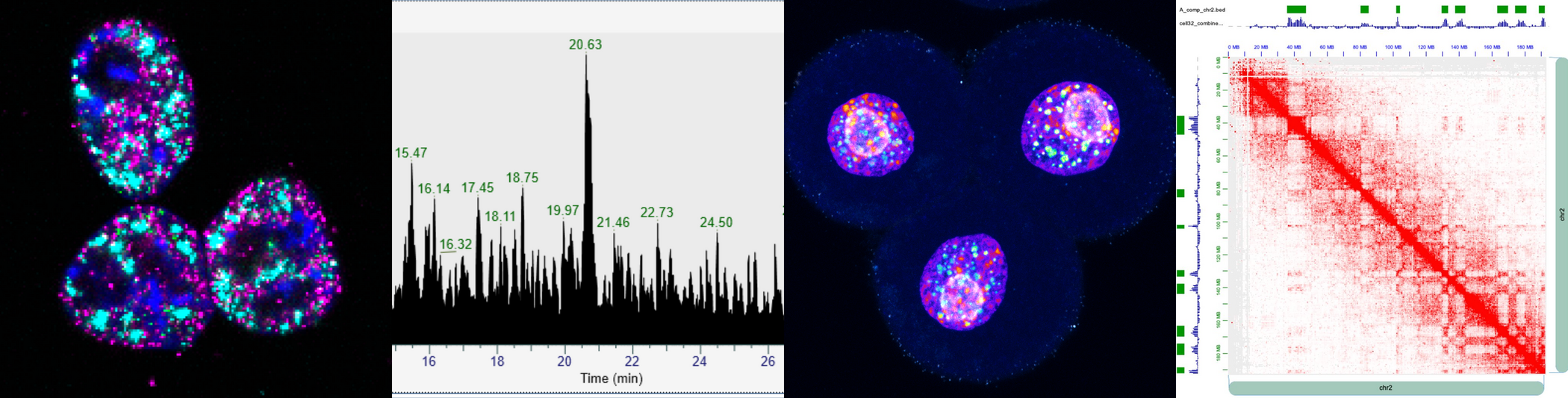
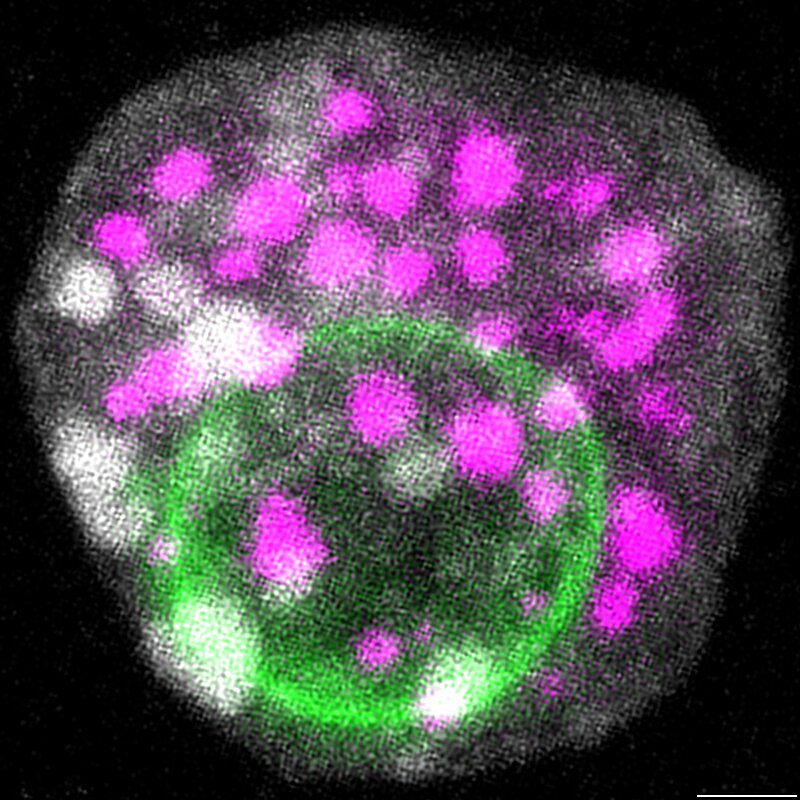
The genome is organized into euchromatin and heterochromatin, corresponding to transcriptionally active and inactive regions, respectively. In somatic cells, active and inactive chromatin segments from the same and different chromosomes cluster together to form functional nuclear hubs. However, after fertilization – when the oocyte and sperm genomes merge – the newly-formed embryo must re-establish this spatial DNA organization and form functional chromatin hubs.
While properly forming these DNA compartments is essential for normal development, the underlying mechanisms and regulatory molecules remain poorly understood. Evidence suggests that large-scale interactions between genomic regions with similar transcriptional activity and epigenetic states contribute to establishing these compartments. Mechanisms such as phase separation and biomolecular condensate formation have been proposed to facilitate this higher-order organization, yet the main driving forces are not clear.
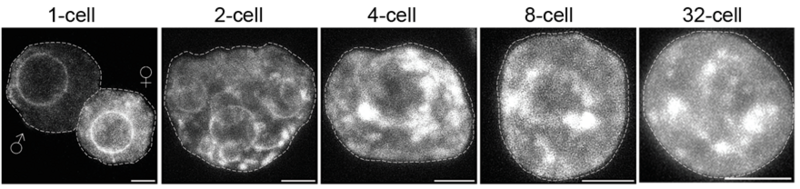
Goal: Our group aims to define when and how the embryo establishes active and inactive chromatin domains after fertilization and how this organization relates to dynamic changes in gene expression during early development. We seek to determine whether forming these domains is essential for regulating transcriptional programs and guiding lineage specification during embryogenesis.
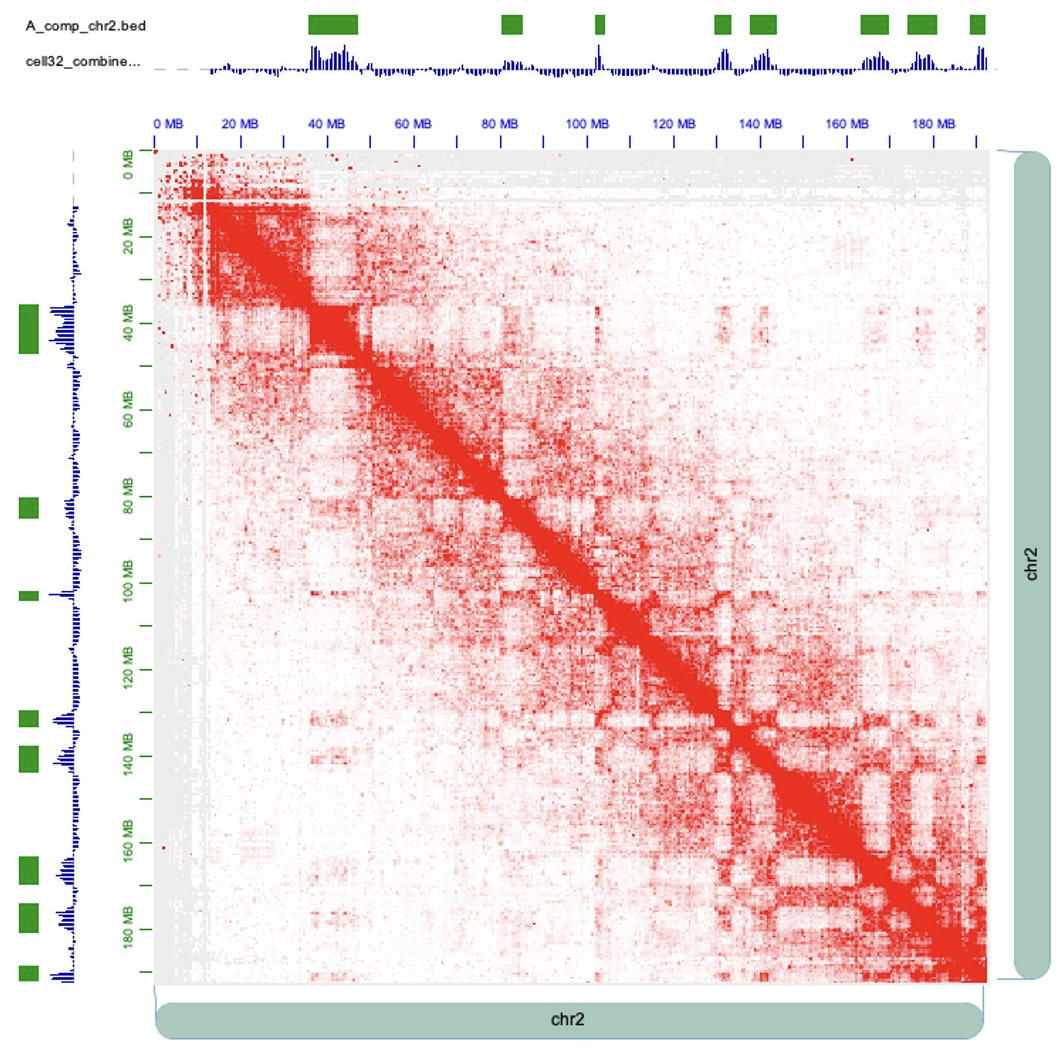
Methods: Because 3D genome organization and gene expression are heterogeneous, addressing these questions requires linking chromatin architecture with transcriptional output within the same individual cell. To overcome these challenges, we employ cutting-edge genome-wide methods, including Split-Pool Recognition of Interactions by Tag Extension (SPRITE), allowing us to measure inter- and intrachromosomal interactions, combined with advanced microscopy, CRISPR-based perturbations, and biochemical assays.
Impact: Our research aims to uncover how higher-order chromatin domains shape genome organization and transcriptional regulation during the early mammalian development and provide critical insights into fundamental mechanisms that guide lineage specification. These insights will not only deepen our understanding of genome regulation in the totipotent embryo but also inform strategies to overcome current barriers in stem cell reprogramming, with broad implications for regenerative medicine and developmental biology.

Transposable elements make up over 50% of the mammalian genome. Once considered parasitic or junk, growing evidence – including work from our lab – suggests that these elements play active and essential roles in early embryonic development. Many transposons possess functional regulatory sequences, such as enhancers and promoters, and can generate RNAs and proteins with regulatory capacity. While RNA and protein products from transposons are abundant in early embryos embryonic cells, their molecular functions remain largely unexplored.
Goal: Our group aims to uncover novel roles through which transposon-derived RNAs and proteins influence early development and mechanisms that hosts utilize to prevent their potential deleterious effects.

Methods: By combining genome-wide perturbation screens, high-resolution chromatin and transcriptomic profiling, and RNA-centric biochemical approaches, we investigate the interactions between transposons-derived molecules and their chromatin and transcriptional targets. The early embryo and embryonic stem cells serve as ideal in vivo systems for this work, as they naturally tolerate high activity of transposons without compromising developmental progression.
Impact: Our research will provide a detailed mechanistic understanding of how retroelements contribute to establishing gene regulatory networks and nuclear organization during one of the most dynamic and formative stages of mammalian life. More broadly, it aims to redefine the role of transposons from passive genomic elements to integral regulators of developmental gene expression and genome architecture.