





May 5, 2026 | Alexander Marx | HI Research Blog
The Roman conquest of Jerusalem in 70 CE was a watershed in Western history: crushing a Jewish revolt and destroying the Jewish Temple, it shattered the very foundations of Judaism. This allowed the disciples of Christ to distinguish themselves as their own religious order. Without this event, they would probably have remained only one amongst many Jewish sects at the time. Significantly, all four Gospels were written in the years subsequent to the conquest, and are essentially informed by the shadow of this event. Moreover, early on Christian authors had already started to explain it as God’s vengeance on the Jews for the crucifixion of Christ: Emperor Vespasian (r.69–79) and his son Titus, the commander of the siege (subsequently emperor, r.79–81), were thus his instruments. This endowed the conquest with a significant place within the scheme of Salvation History, making it into the foundational narrative of Christendom, including its notorious anti-Jewish sentiments. It is therefore unsurprising that the Roman conquest appears in thousands of medieval texts, across various genres and vastly different historical contexts. My FWF-funded project The Medieval Reception of the Roman Conquest of Jerusalem (c.600-c.1200) [ESP-678] is the first attempt to study its deployment in the medieval period broadly and systematically, covering the period from the Church Fathers (c.400) up to the thriving University of Paris and the incessant crusade movement (c.1300). My focus in particular is on sermon collections and biblical commentaries, two genres that still receive significantly too little attention in historical scholarship, despite their survival in such enormous numbers. Consequently, they can offer an empirical basis that is otherwise rare for the Middle Ages. But beyond these two key genres, I am interested in the conquest wherever it appears (limited to Latin texts): this includes, for example, chronicles, computistic treatises, or various types of letters.
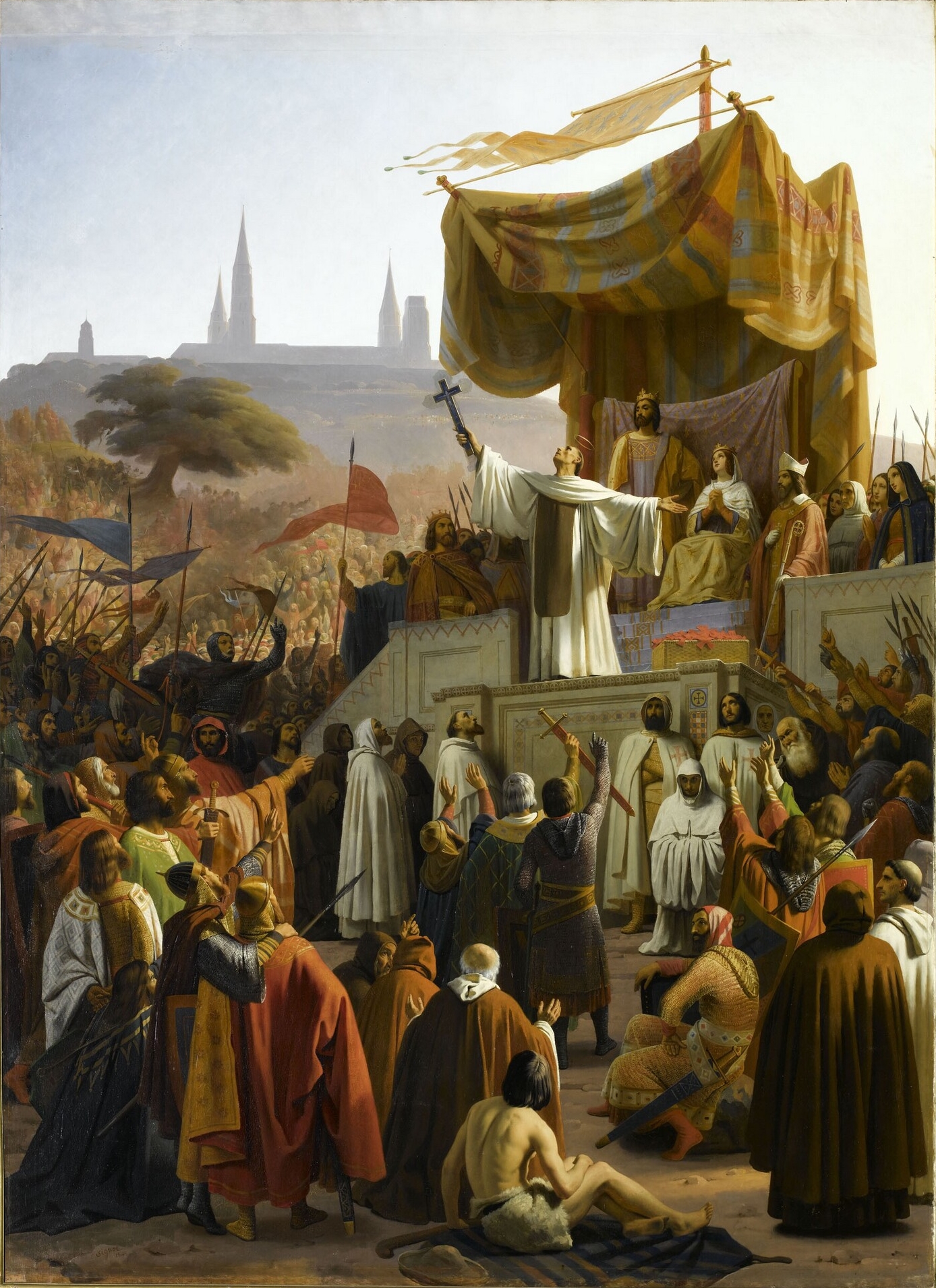
Importantly, deploying this event was much more than an intellectual exercise: it served a number of contemporary purposes, or was explicitly entangled with contemporary phenomena – such as anti-Jewish policies, contemporary conquests of the holy city, notably in the context of the crusading movement, or apocalyptic beliefs, since the Roman conquest was commonly understood as a typological prefiguration of the eschatological events. For example, pope Sergius IV (r.1009–12), shocked by the news that the Church of the Holy Sepulcher had been destroyed (probably in 1009), compared this current event with the Roman conquest in his so-called crusade encyclical: both were a divine punishment. This aimed at creating the urge for an appropriate reaction that very much prefigures the crusading movement, almost a century before the First Crusade (1095–99). Another example: the anonymous Gesta Treverorum Continuata (early 14th century) compared the invasion of the Mongols with the Roman conquest, once again to convey the gravity of the current divine punishment. As I have discussed in an article, Martin of León (c.1130–1203), in a sermon on Maundy Thursday, offers another most interesting case: it follows the other sources mentioned here via comparing a contemporary event – here the fall of Jerusalem in 1187 – with the event of 70 CE. However, its rhetorical technique is unique: while Martin is doubtlessly speaking to a Christian audience (this is clear, for instance, given that he discusses the Corpus Christi, and calls for penance), he repeatedly calls them “Jews” (iudaei), obviously in a pejorative sense – while referring to the Roman conquest several times. It follows that the audience has now suffered the same type of divine punishment as the ancient Jews once had. Martin’s rhetorical form is, therefore, more dramatic than in the other sources, and it suggests greater urgency, obviously with the goal to motivate people to join the Third Crusade (1187–92). In another, already-published study, I examine the case of Rupert of Deutz (c.1070–1129), one of the authors who cannot stop talking about the Roman conquest (79 passages): the article argues that Rupert’s exceptional interest in this past event was triggered by the recent conquest of the city, the conclusion of the First Crusade. The past event offered him a providential and exegetical rationale via which he endowed the current event with meaning.
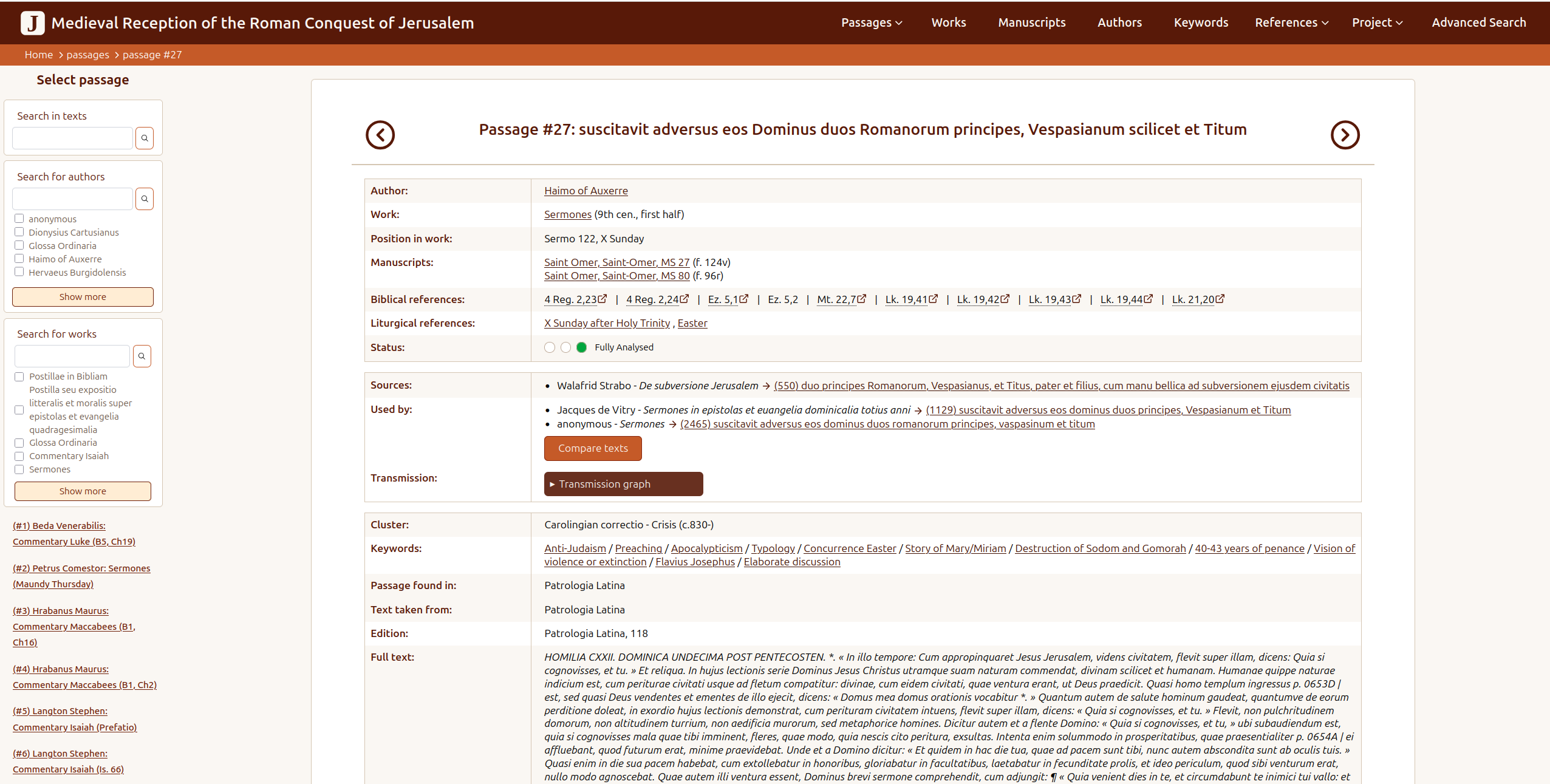
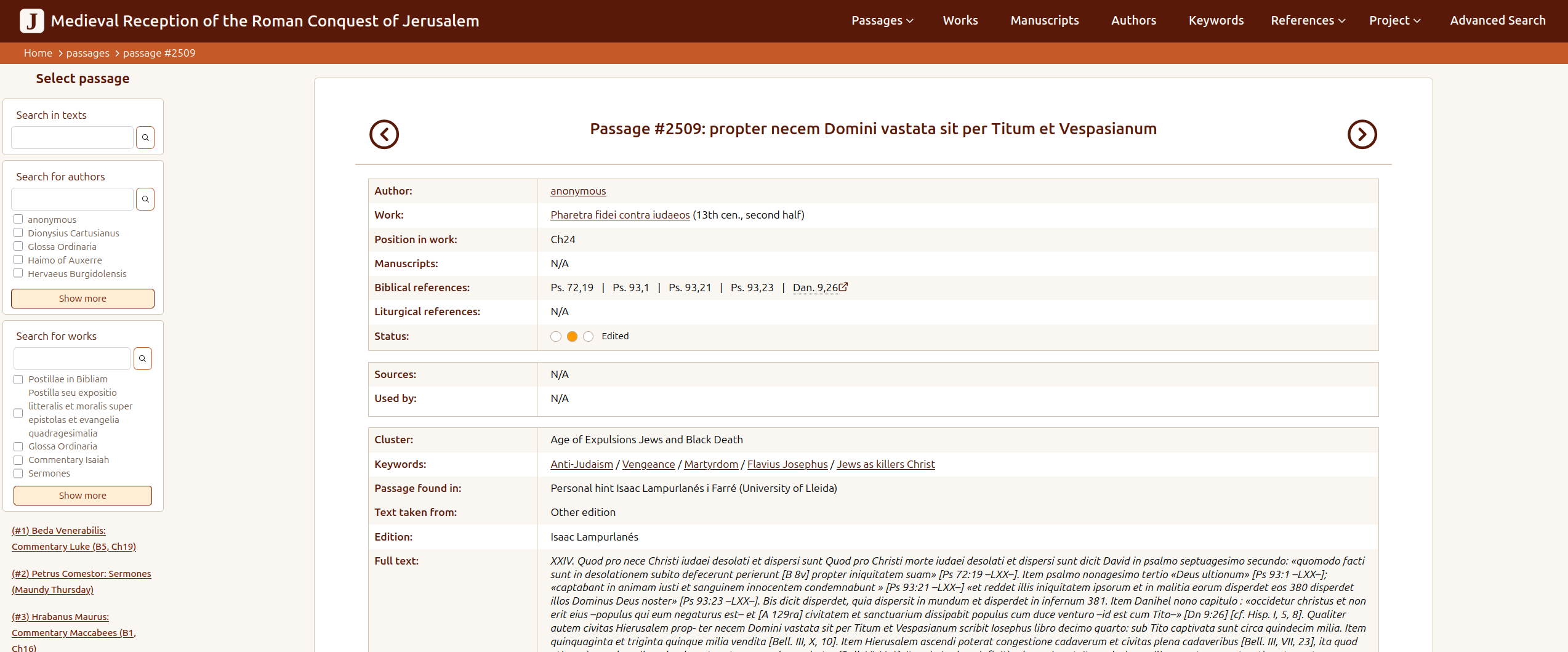
The vast amount of evidence has created the need for systematic cataloguing, thereby making good use of the digital opportunities that are nowadays available to scholarship. The project, therefore, includes a cooperation with the Austrian Centre for Digital Humanities (likewise based at the Austrian Academy of Sciences), with the goal of setting up an open-access database. It catalogues all the occurrences of the conquest that I can find, including other useful information, such as extant manuscripts or dependencies between various texts (for a typical entry, see Fig. 3). To date (May 2026), this endeavor has yielded 2.305 passages on the Roman conquest, deriving from 308 different authors, 655 works, and 236 manuscripts (eventually, I anticipate, it will reach to c.2500 entries). The main device for finding passages had been the major full-text databases for medieval sources – the Patrologia Latina, the Library of Latin Texts, and the Monumenta Germaniae Historica – but complemented by a number of further resources. Notably, this pertains to extensive work with manuscripts, covering many venues throughout Europe as well as numerous sermons and commentaries: at the moment, the database includes c.380 passages from unpublished texts – and there is still some more work to do here over the coming months. This encompasses, for example, a highly interesting commentary on Isaiah by Guerric of Saint-Quentin (d. 1245), one of the Paris masters involved in the Talmud disputations around 1240, with 18 passages on the Roman conquest. This historical context creates intriguing synergies with the bold anti-Jewish dimensions inherent to the event of 70 CE. Another example: the original sermon collection of Heiric of Auxerre (d. c.875) – as opposed to the later and strongly different recension that has been published in the Corpus Christianorum (vol.116) – has yielded three highly interesting sermons on the conquest: one the day of Saint Stephen (26 Dec), one on the tenth Sunday, and one the 20th Sunday after Holy Trinity.
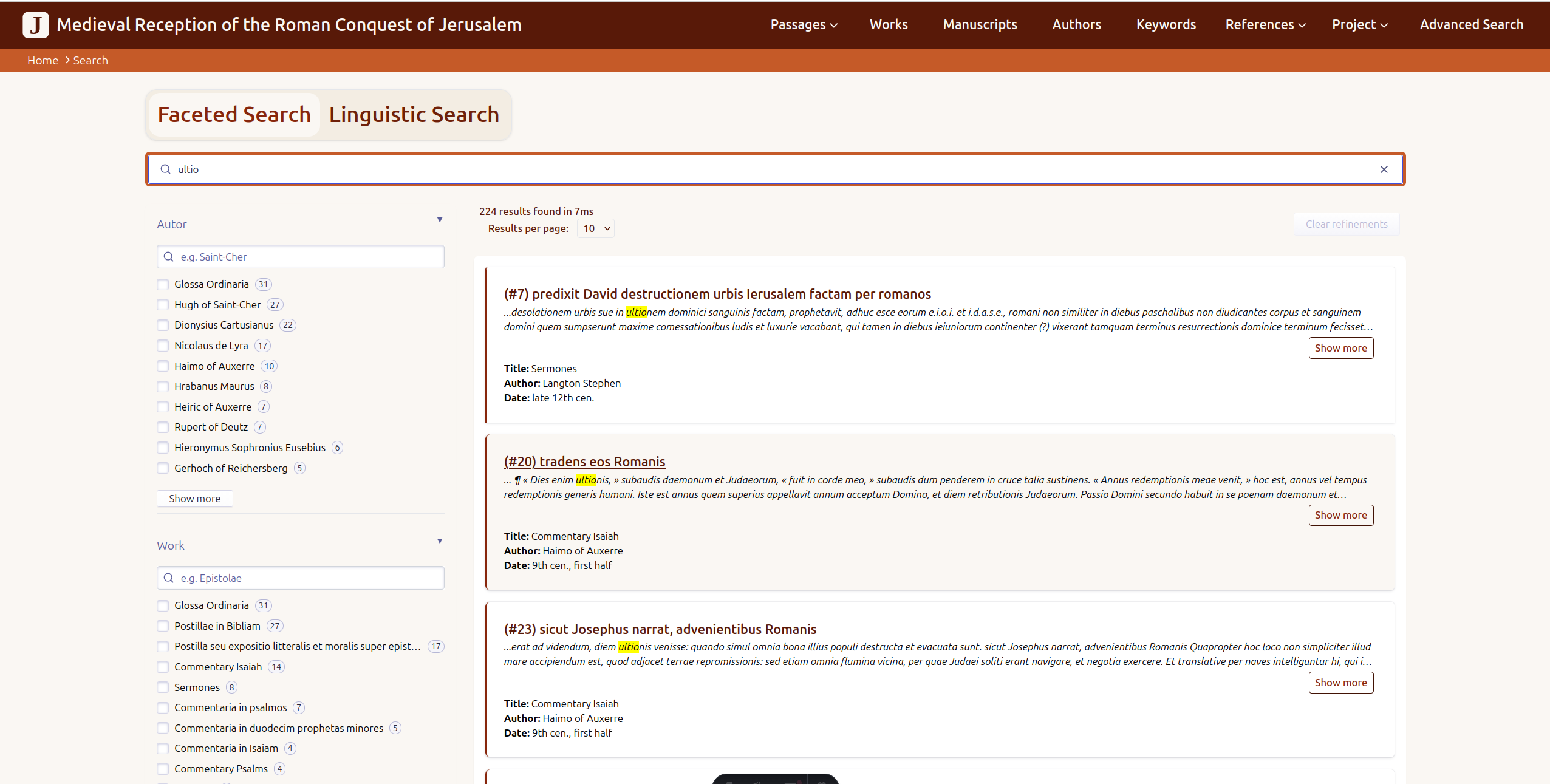
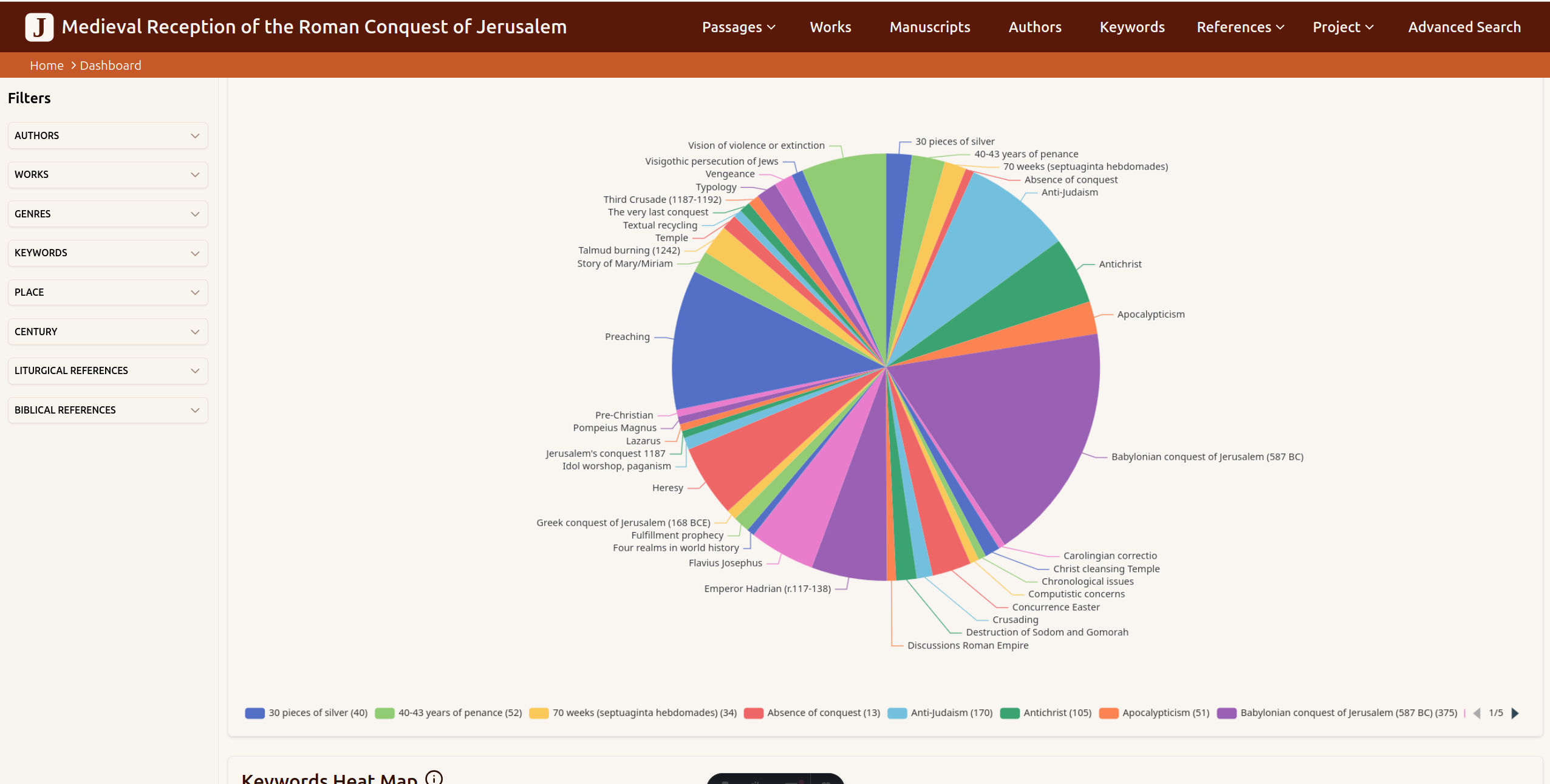
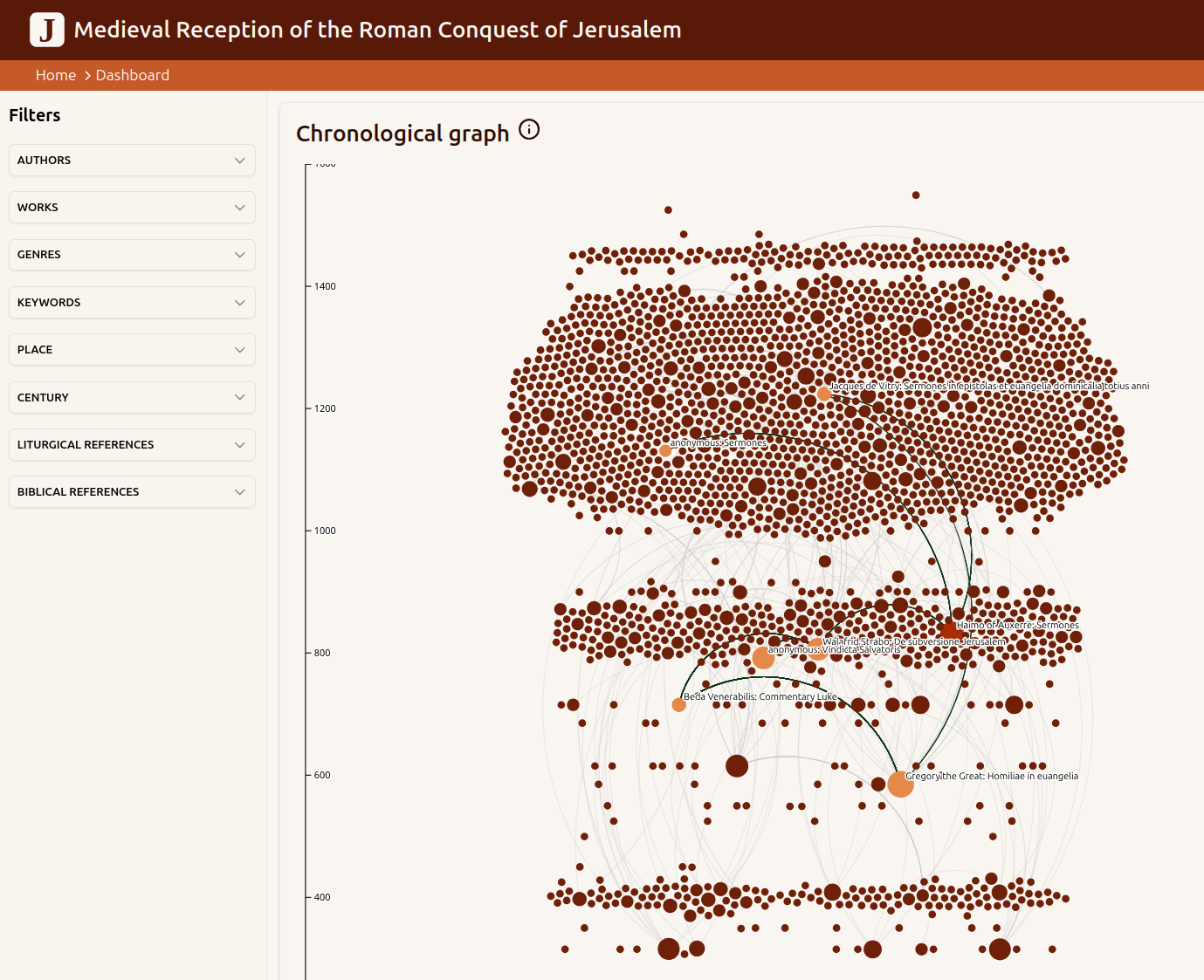
The database is primarily ordered according to passages: each passage in which the conquest appears has its own entry, which quotes the pertinent parts, that is, at least a paragraph, sometimes more. In the case of sermons, I often include the entire sermon here (see Fig. 3). In addition to this, each entry records other useful information, such as the position within the work or the biblical references that are used in the passage (the event was often intertwined with such, for instance, Luke 19:41). It also notes the sources that an author used, and on the other hand, the subsequent texts in which this author was used. But the data is ordered via other means as well: via the menu, one cannot only access the passages, but also, for example, a list of manuscripts or authors recorded. Similarly, the website will offer a number of interactive visualizations, one of which will be addressed below (Fig. 7; see also Fig. 5). Finally, there is a two-fold full-text search interface, which makes the dataset explorable in manifold ways: a simple search is complemented by a more complex linguistic search. The phrases entered are highlighted in yellow in the results, and a number of filters permit to work effectively through them (see Fig. 4).
With the work progressing so well, I anticipate that the database will go online by the end of this year – further details will be announced on the project website and on this blog in due course. The present contribution intends to elaborate on the potential I envision that this database has for future scholarship, a potential that points well beyond the specific event at stake, and which I shall sketch in four points:
(1) A lens on a number of significant historical phenomena: The Roman conquest is such an intriguing subject of study because it provides a lens through which various broader phenomena may be approached: the Middle Age’s incessant anti-Jewish sentiments, other conquests of Jerusalem (and their providential meaning), the crusading movement, as well as apocalyptic beliefs – but also more generally how medieval people dealt with and distorted the past (see the variety shown in Fig. 5). It is probably not too much to claim that the conquest was a preeminent argumentative device within the discourses evolving around all these historical phenomena, a device that was powerful in its nature and imagery, as well as widespread through its rich tradition. Anchored in the medieval concept of typology, it formed a providential precedent which people were supposed to emulate – as it surfaces most significantly within the crusading movement. Studying the Roman conquest and its meaning thus elucidates a key piece of the medieval mind, including the actions that resulted from its allure. Hence, the database can be a powerful tool for all scholars interested in these broader phenomena. For example, it can be used to shed light on the ideas that clerics applied for mobilizing crusaders (if looking at sermons) or for commemorating crusading expeditions (if looking at chronicles). Alternatively, the database can likewise be used for illuminating the Carolingian efforts to appropriate the Roman Empire, and what exactly that meant to contemporaries when they pursued these efforts. Similarly, the passages on the Roman conquest, as catalogued in the database, can be a point of departure for exploring what else is happening in the same sources: more often than not, this can be a quick device thanks to the immediate availability of many works via either the full-text databases or digitized copies of manuscripts (which are directly linked in my database, see Fig. 3).
(2) The power of preaching: As I am not getting tired of underlining, historians should pay much more attention to sermon materials, which are located at the crossroads to the broad populace: they were meant to instruct and entice popular audiences to specific kinds of behavior. They are one of the few medieval sources that allow us to leave an exclusively clerical register, while their broad survival offers an incomparable empirical basis (c.140.000 texts between c.1150 and c.1350 alone). Sermon materials should be included much more into university curricula as well as the mainstream of medieval studies; and it is always astonishing to me that many scholars do not seem to realize the potential of these sources – though these texts also come with challenges, such as the potential divergence between written sermon and its actual delivery. My database now offers an opportunity to change this situation: at the moment, it has catalogued roughly 250 sermons (often including the full text), as well as c.80 manuscripts containing sermons, stretching from the early Carolingians to the early fourteenth century (and there is still some more work remaining to do here in the next few months). This pertains to the study of preaching networks, that is, the distribution of sermon materials and of the ideas that were transported by them. Importantly, this is a pars pro toto endeavor: while my database has only catalogued the (few) sermons on the Roman conquest contained within a collection, its broader information recorded, notably on the manuscripts, can be a valuable aid to study these sermon collections altogether. Eventually, we can suppose that the patterns and clusters that become visible, thanks to such a broad dataset, will show us the dominant ideas of a vivid preaching agenda (while we are not on such safe ground with only small samples of sermons).
(3) Studying textual traditions throughout the Middle Ages: The database will also be a useful tool for anybody who is interested in exploring the complex textual traditions of this historical period: Who copied from whom? And can we detect traditions that have remained unnoticed so far? Indeed, the database forms a tool for doing research here in a much sounder and more systematic manner than has hitherto been possible. Recording numerous dependencies between texts, it offers an extensive textual archaeology of medieval Latin texts (the first of its kind, I believe). This is depicted graphically as a large genealogy, from Flavius Josephus himself (c.38–c.100), our elaborate eyewitness account on the event, to the end of the Middle Ages (though for the fourteenth and fifteenth centuries, only sporadically, mainly deriving from what I have retrieved from the full-text databases). This visualization is an interactive tool which a user can navigate and filter however one wishes (see Fig. 7, having selected one example of a tradition). It includes milestones such as the biblical commentaries of Jerome (c.345–420), a key source for later expositions on the conquest (with 87 passages); or the Glossa Ordinaria, the exegetical landmark of the twelfth century (148 passages). It can thus claim to form a representative spotlight on medieval textual traditions – though still incomplete, especially since there are important authors who did not care about the conquest, and are consequently absent from this genealogy. For example, Bernard of Clairvaux (c.1090–1153) does not have a single passage on it in his vast oeuvre. But for the materials recorded, the essential point is:if one author used another author’s work for the Roman conquest, he probably used it for other things as well. The database, therefore, permits to study pars pro toto textual traditions of Western history.
(4) Elucidating the organization of knowledge: The extensive work with manuscripts conducted in my project also adds a new dimension to how we can effectively survey unpublished sources. My challenge here consisted in finding occurrences of the Roman conquest in a codex of, say, 200 folios. But as the cases recorded in the database demonstrate, I have developed efficient methods for finding the conquest in large amounts of unpublished text. To provide an example: I have consulted the commentary on Lamentations by William of Malmesbury (c.1080–1142) in MS Bodleian Library, Bodley 868, finding 9 passages within a few hours. Realizing afterwards that this work is already published, I did a full-text search via the Library of Latin Texts, which yielded 12 passages. This means that there were only three passages I had not found in manuscript form – a pretty good result. The riddle’s solution lies in the fact that the event’s appearance is not a haphazard matter, but there are occasions on which it is typically deployed: specific liturgical feasts in the sermon collections, such as Easter or the tenth Sunday after Holy Trinity (see Fig. 8 for an example); and specific biblical references in the commentaries, for example, Isaiah 66, Ezekiel 5, or Matthew 22 (see Fig. 10 for an example). The results recorded in the database thus shed important new light on how manuscripts are organized, and how they can consequently be more effectively harvested by scholars – methods that have not been developed sufficiently as of yet. Similarly, the database offers information on more than 200 codices (eventually probably c.300 pieces), hence forming a valuable repository, especially for studying sermon collections and biblical commentaries.
Altogether, I am convinced that the possible applications for this database are manifold, yet I see a challenge in selling this to scholars, or even making them aware that this resource exists. So many people are producing databases nowadays, but who actually uses them? Therefore, I hope that this contribution to the blog can be a first step in making scholars aware of this resource and what it can do for them. All the more shall this contribution be understood as an invitation, specifically for sending me further references to the Roman conquest (especially from unpublished materials), which I am happily adding to the database, including of course a note of acknowledgment (see Fig. 9 for an example). If you have any references for me, please send me relevant information via email. But this is also an invitation more generally for exploring my dataset as soon as it goes online: anybody is welcome here to send me a message anytime, with any feedback that you would like to share.
Contact:
Alexander Marx, IMAFO: alexander.marx(at)oeaw.ac.at
Project:
Funded by the Austrian Science Fund (FWF) [ESP-678]
Attention: The Database will be available online later this year (probably Nov-Dec 2026).