


ICE AGE at the MAMUZ Museum Mistelbach
28.01.2025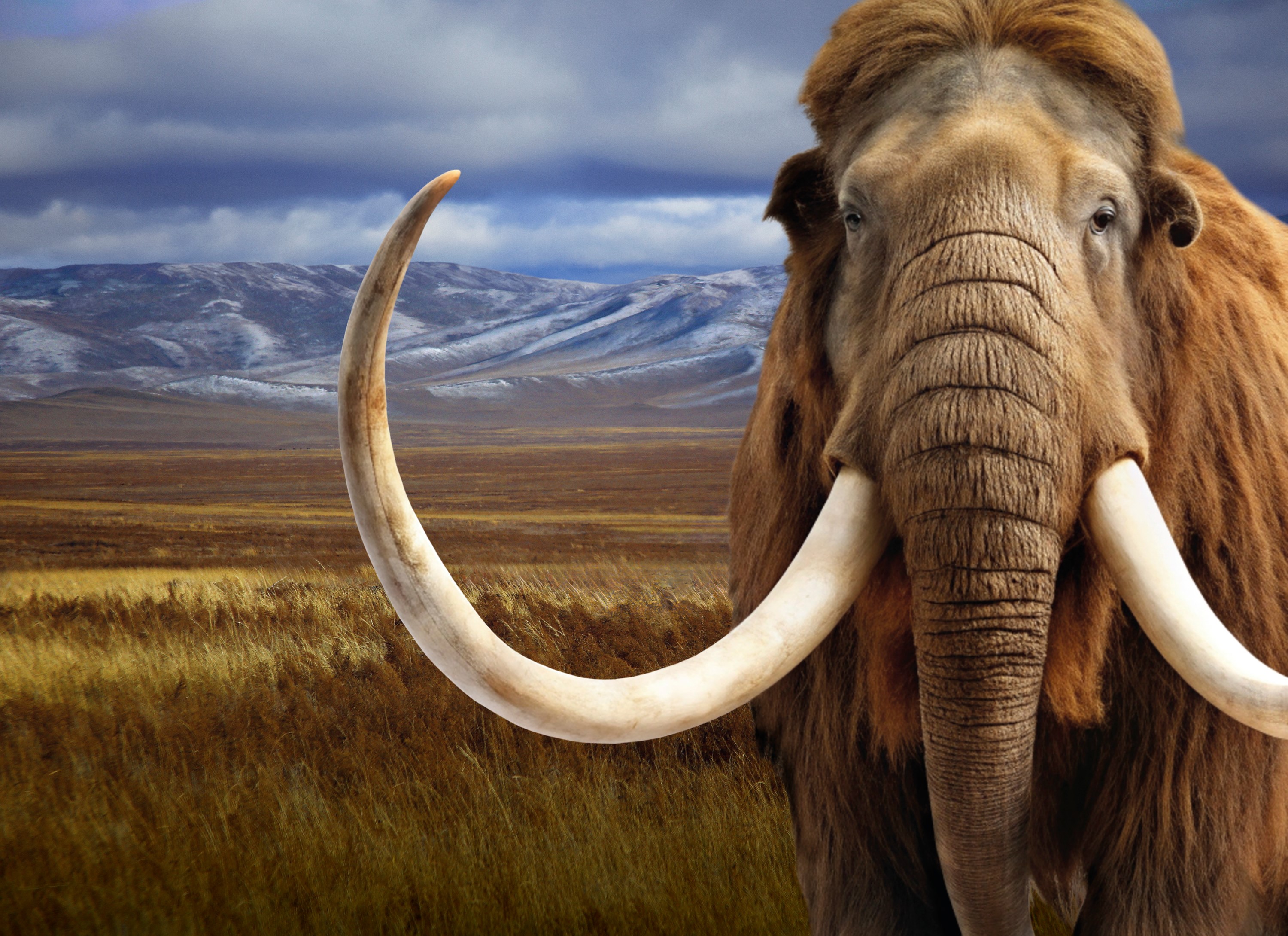
The era of modern man, Homo sapiens, began in Europe around 40,000 years ago. Our ancestors moved from one campsite to the next, following the herds of animals and eating what nature offered them. They camped by the fire and found shelter in tents. Parts of Europe were covered in glaciers and ice sheets and the average temperature on earth was around 6 degrees Celsius below today's level. Human life was characterised by strong, cyclically recurring climatic fluctuations. These resulted in frequent changes to the environment, to which the groups of hunter-gatherers had to react creatively in order to survive. This can be seen in the finds of hunting tools, stone implements, antlers and bones, as well as jewellery and cult objects such as the famous Venus statuettes. Using around 300 impressive original objects and replicas, the ICE AGE exhibition explains the living conditions from the early Upper Palaeolithic to the Mesolithic, until people began to settle down with the arrival of the first farmers from the Middle East. Some of the oldest finds include stone tools, bones and bone implements. On display are artefacts from the Aurignacian period from Krems-Hundsberg, dated to 34,000-45,000 years ago.
Highlights of the exhibition
The 27,000-year-old twins from Krems-Wachtberg were buried as newborns just a few weeks after each other. Wrapped in red ochre with mammoth ivory beads and protected by a mammoth shoulder blade, it gives an idea of the esteem in which the youngest members of society were held. This find from Lower Austria is considered a sensation, as there are only a few well-preserved remains of children from this period. Only about one metre away from the twins' grave is the site where another baby, a cousin of the twins, was found. This find is being shown to the public in its original form for the first time. Together with a replica of the twins, all three burials can be seen together for the first time.
An important archaeological site for the Epigravettian period is located in Kammern-Grubgraben. With stone artefacts, flints, jewellery, bones and a large number of tools and projectile points, this site provides a picture of how people lived around 22,500 years ago. Of particular note is the only known flute found in Austria, made from a reindeer bone, which was discovered here in the 1990s. Unique in Lower Austria is the perforated stick found here, which is considered a sign of expertise in the production of hunting weapons. The perforated and carved pieces of antler were probably used to straighten spear shafts that had been heated in the fire, making them more effective in the production of hunting weapons. Even a so-called meat cache, a Stone Age refrigerator, could be reconstructed here. Many sewing needles with eyelets and bones from reindeer and horses suggest that these animals were hunted primarily to make clothing.
Around 30,000-year-old mammoth bones bear witness to the fact that mammoths were native to our latitudes. On display are tusks, skulls and molars that indicate the physical dimensions of such an animal. It was not until spring 2024 that a Lower Austrian winegrower in Gobelsburg-Rossgraben found mammoth bones in his wine cellar. The sensation was not long in coming: the remains of 3 to 4 mammoths as well as two flint artefacts and charcoal were unearthed, suggesting the presence of humans. These artefacts can also be seen for the first time in the ICE AGE exhibition.
Hunting and gathering in the Stone Age - a life-size mammoth and a variety of animal specimens
The lives of our ancestors were characterised by constant movement. They moved from one campsite to the next and developed strategies for killing, preparing, protecting and preserving their prey. They usually hunted in groups and used different methods with stones, slingshots, nets, javelins, javelins and traps. A life-size mammoth in the exhibition gives an idea of the skill required to conquer an animal of this size. Animal specimens of foxes, ducks, ptarmigans, geese, birds of prey and other small animals, as well as reindeer, wild horses, wolves, brown bears and mountain hares provide an overview of the hunting spectrum of humans and the diversity of animals many thousands of years ago. Gathering is also considered an essential means of survival at this time. Depending on the season, people helped themselves to various fruits, tubers, seeds and leaves. All members of the group, from infants to the elderly, were able to carry out these tasks. The widespread notion that only men hunted and women gathered cannot be substantiated. Thanks to modern analyses of genetic material at archaeological sites, much more is possible: it is assumed that modern humans retained their dark skin colour until long after the invention of agriculture and even had bright blue eyes in between. He also did not tolerate milk and was lactose intolerant.
Adventure areas for children – interactive immersion in EISZEIT
Children and their parents are invited to actively participate at a total of six stations. Which animals were hunted and how was food cooked? Did colours exist in the Ice Age and how were they made? What do animal tracks and bone finds tell us? What did a camp look like and what kind of dwellings did people live in? And how long did it take to drill a hole in a bone flute? The topics of hunting, art, animals, dwellings and experimental archaeology are explored in a playful way. An exciting puzzle booklet also guides you through the exhibition.
Contact
Astrid Pircher | Science Communication
Austrian Archaeological Institute at the
Austrian Academy of Sciences
T +43 1 51581-4060
astrid.pircher(at)oeaw.ac.at