


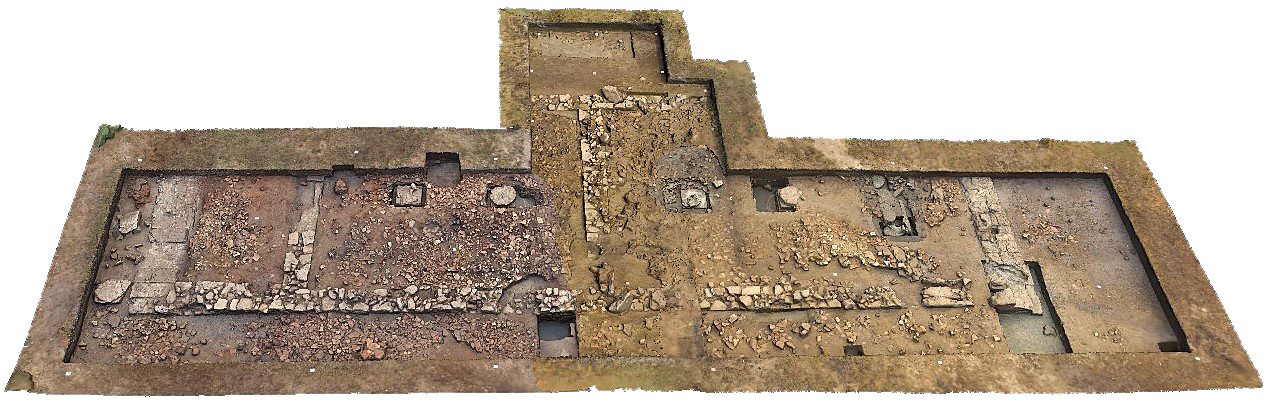
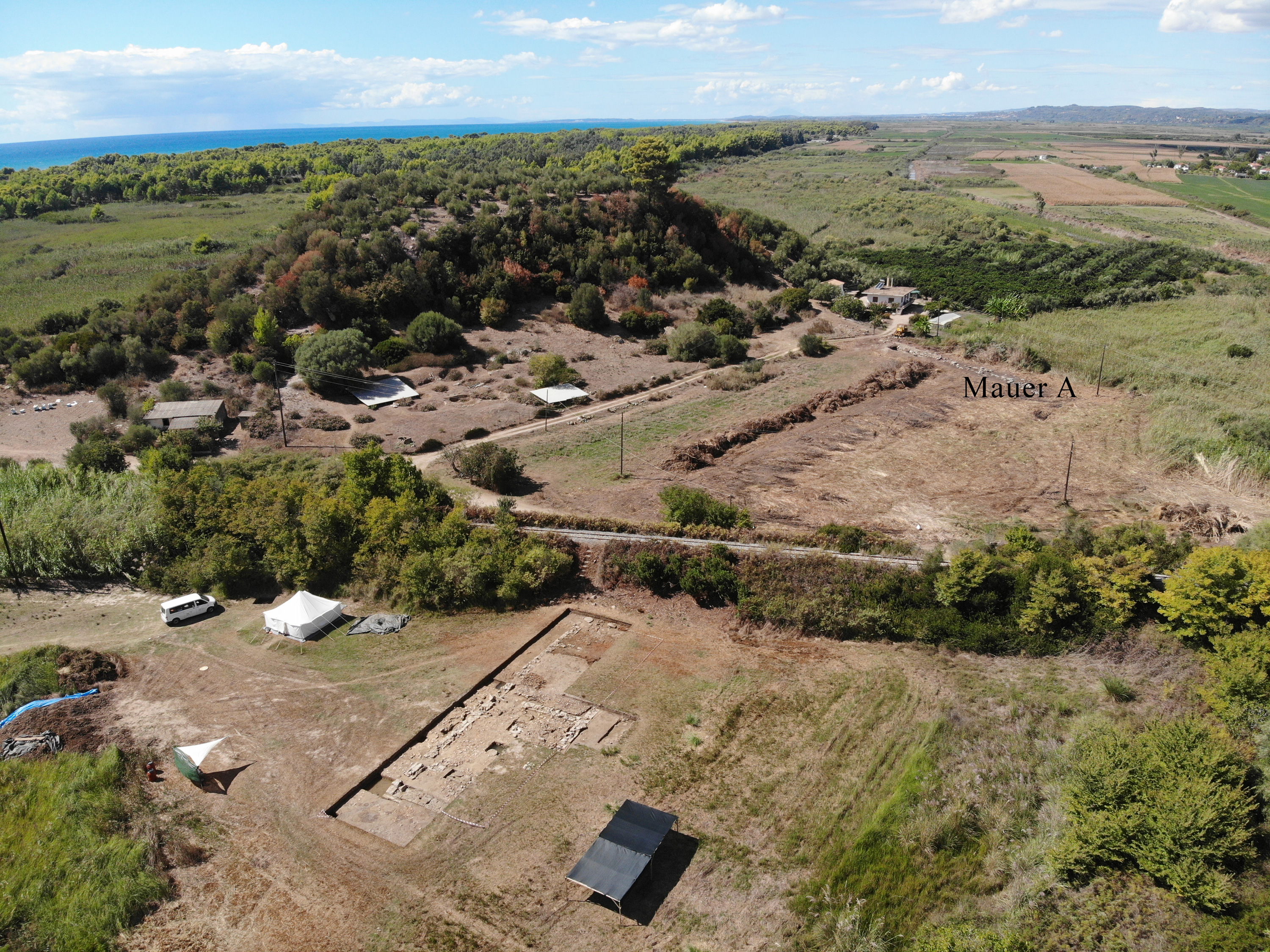
After more than a century of intensive searching, archaeologists have succeeded in discovering the sanctuary of Poseidon of Samikon on the west coast of the Peloponnese and excavating a large temple there. A team of Austrian and Greek archaeologists, supported by geophysicists from Kiel and geoarchaeologists from Mainz, unearthed the foundation walls of the impressive building back in 2021. It was found at the same location where the ancient historian Strabo locates the famous sanctuary of Poseidon in his 8th book. This was the religious and ethnic centre of the important confederation of Triphylian cities. Researchers with the participation of the Austrian Archaeological Institute of the Austrian Academy of Sciences have now uncovered the entire length of the building and also made new discoveries.
The 28 metre long and almost 9.5 metre wide temple is divided into two large rooms, each divided by central inner pillars and a vestibule with two columns. »According to current knowledge, it is an archaic double temple that probably dates back to the 6th century BC. The roof was apparently dismantled around 300 BC and deposited inside the building,« explains Birgitta Eder, a researcher at the Austrian Archaeological Institute, who also heads the branch office in Athens.
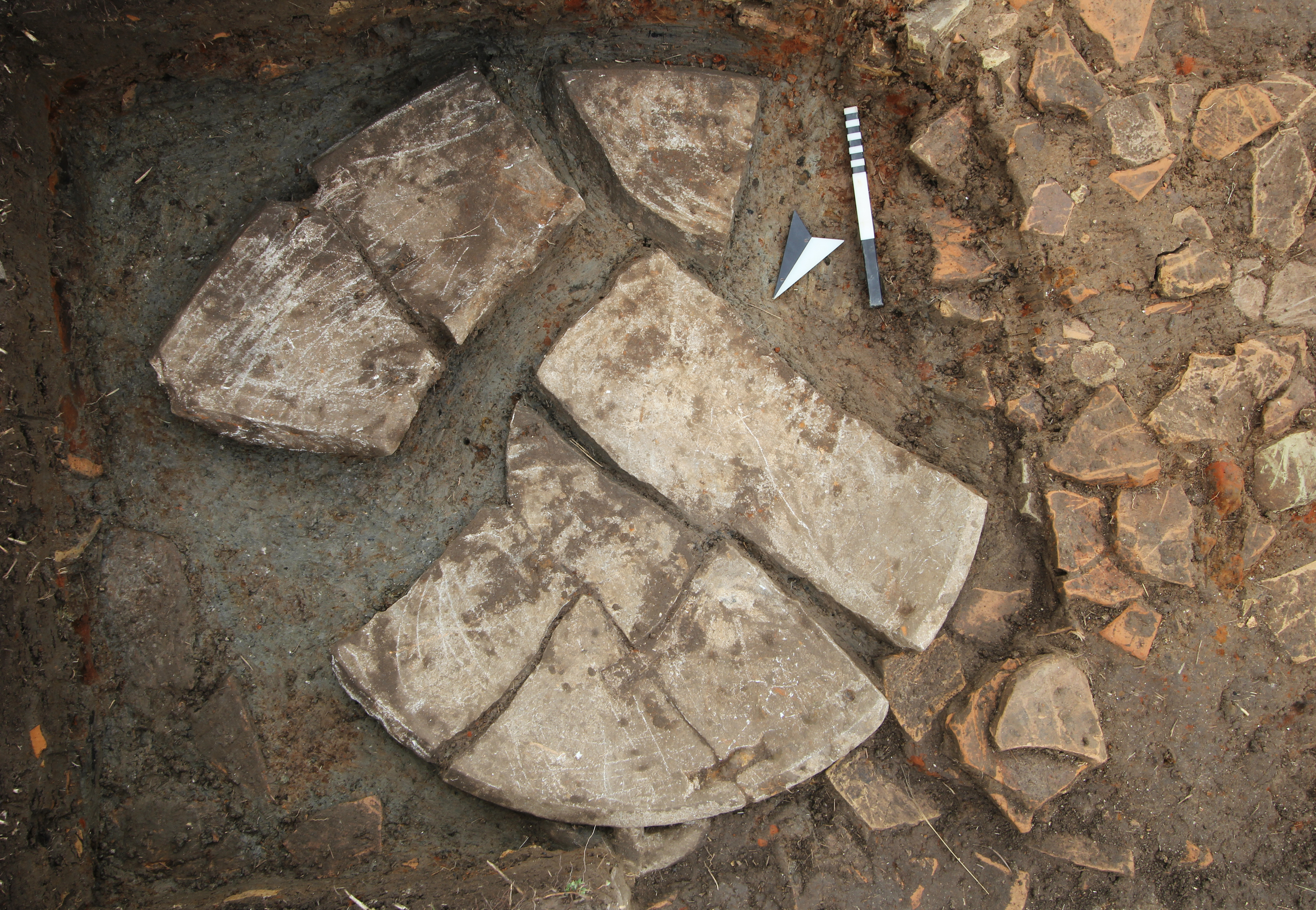
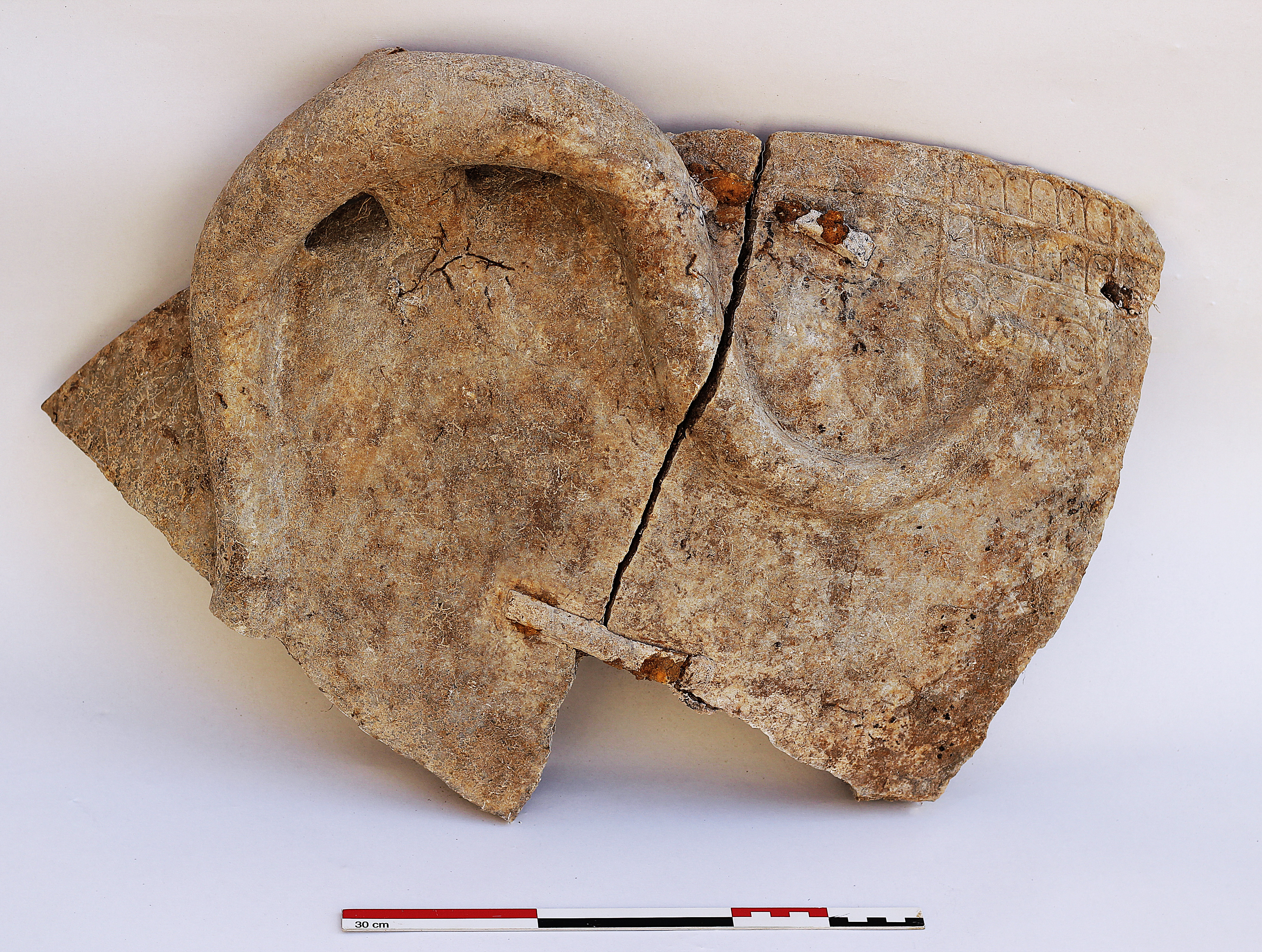
The archaeologists also discovered fragments of an impressive archaic marble basin with a diameter of around one metre, a so-called perirrhanterion. This ritual purification vessel imitates a bronze bowl and features ancient repairs with iron clamps. Together with a part discovered in 2022, it can be almost completely reconstructed.
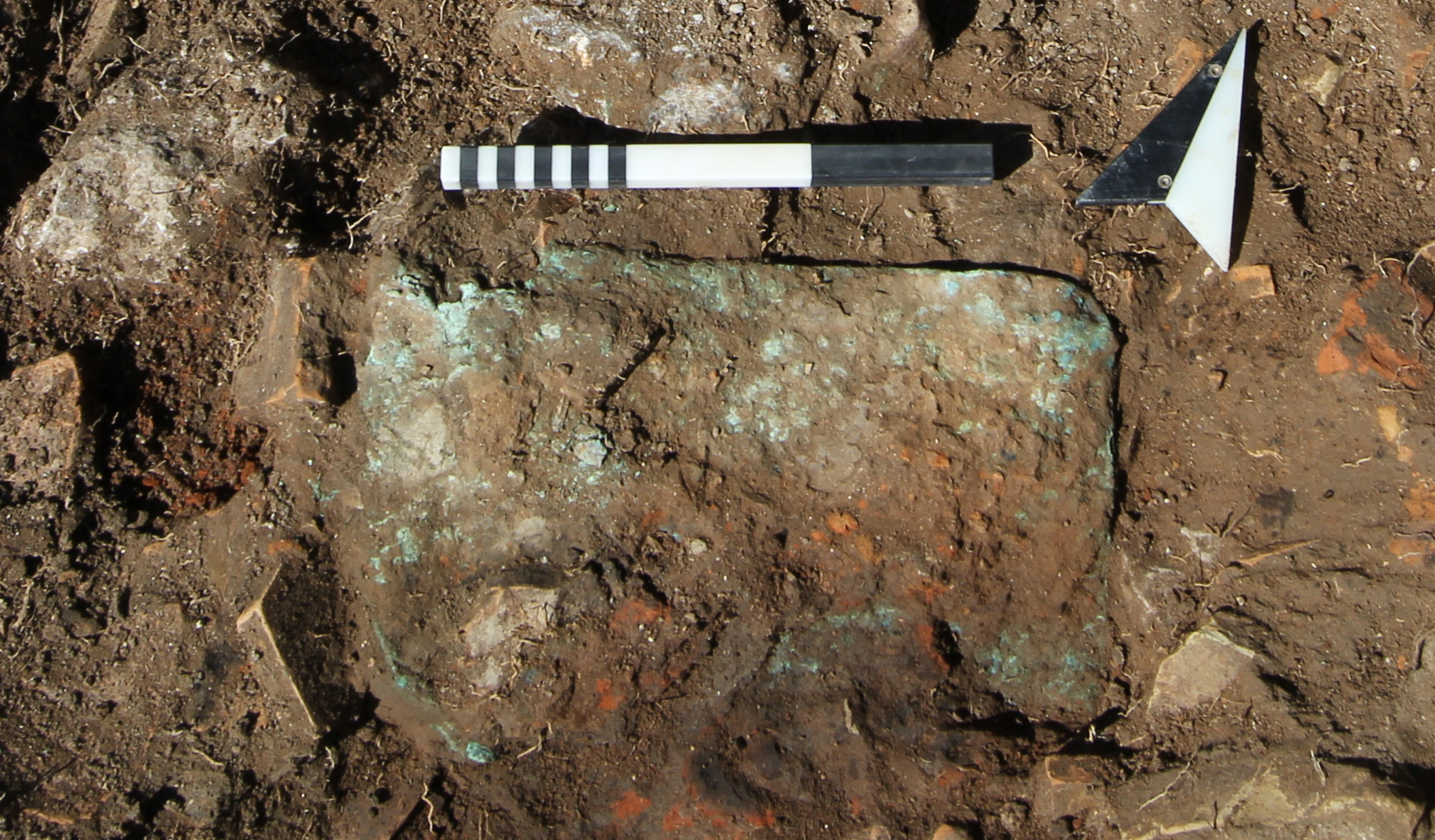
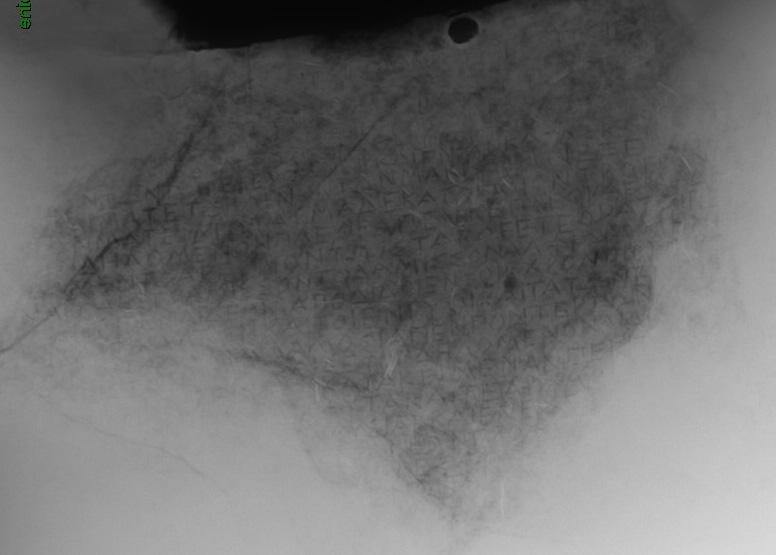
Also noteworthy is the discovery of a large bronze plaque that was originally attached to one of the temple's mud-brick walls. Due to its fragile condition, the plaque was recovered in a block. »Initial X-ray images show parts of an extensive inscription, but it will only be fully legible after extensive conservation,« explains archaeologist Eder. The reading of this inscription could provide further valuable insights into the history and use of the sanctuary, which was an important place of communication in the ancient region.
When clearing the area of dense vegetation to the north of the temple, the course of a mighty double-shelled wall was also documented. This wall, which possibly marks the sacred precinct of Poseidon, was first mentioned by the German Wilhelm Dörpfeld (1853–1940) at the beginning of the 20th century. It probably served as protection from the nearby lagoons at the time. Birgitta Eder is certain: »The ongoing archaeological work is shedding new light on the sanctuary of Poseidon, which played a central role in the region for centuries.«
Contact
Astrid Pircher
Science Communication
Austrian Archaeological Institute at the
Austrian Academy of Sciences
T +43 1 51581-4060
astrid.pircher(at)oeaw.ac.at
Birgitta Eder
Head of the OeAI in Athens
Austrian Archaeological Institute at the
Austrian Academy of Sciences
T +30 210 82 13 708-109
birgitta.eder(at)oeaw.ac.at