


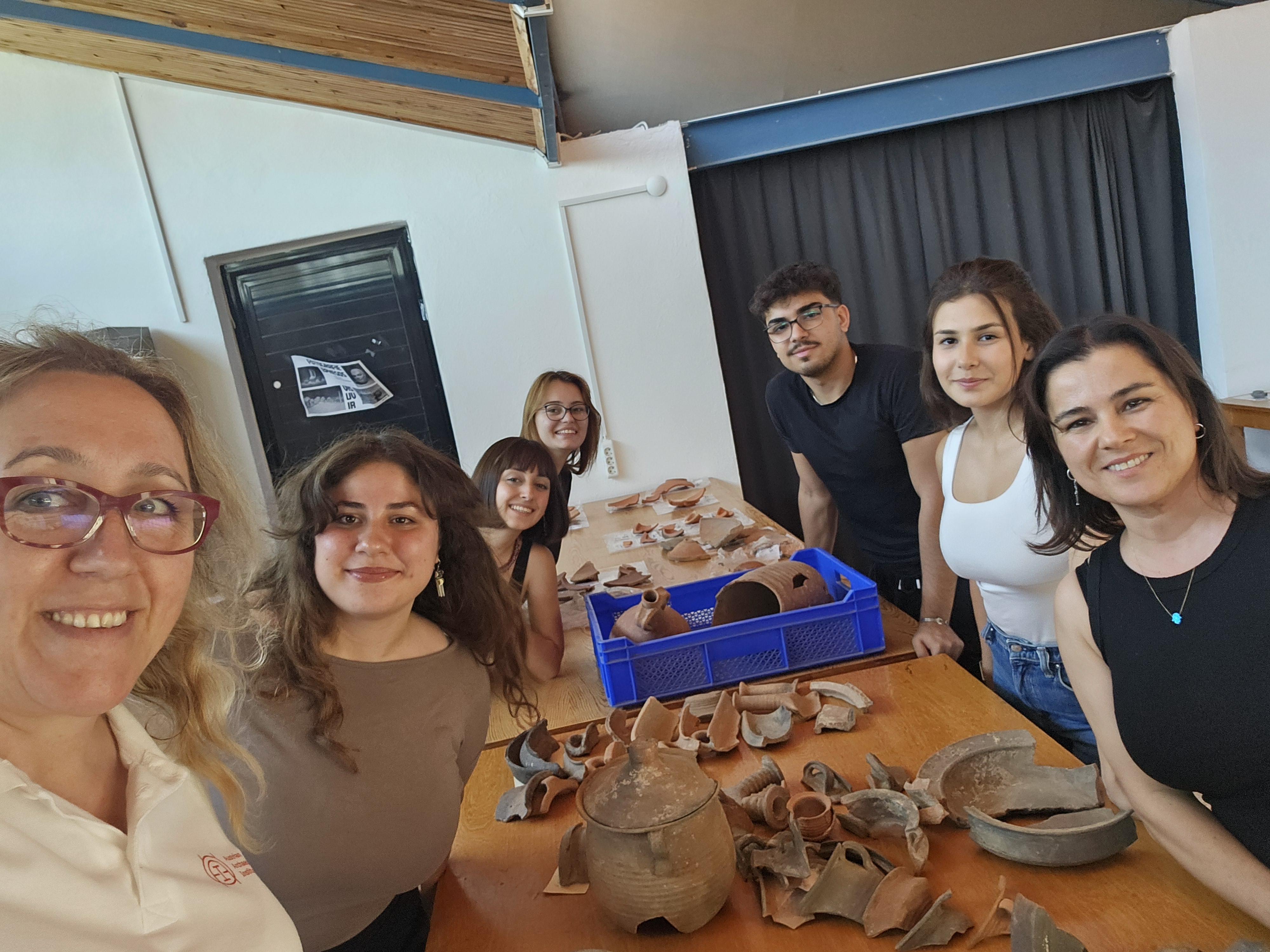
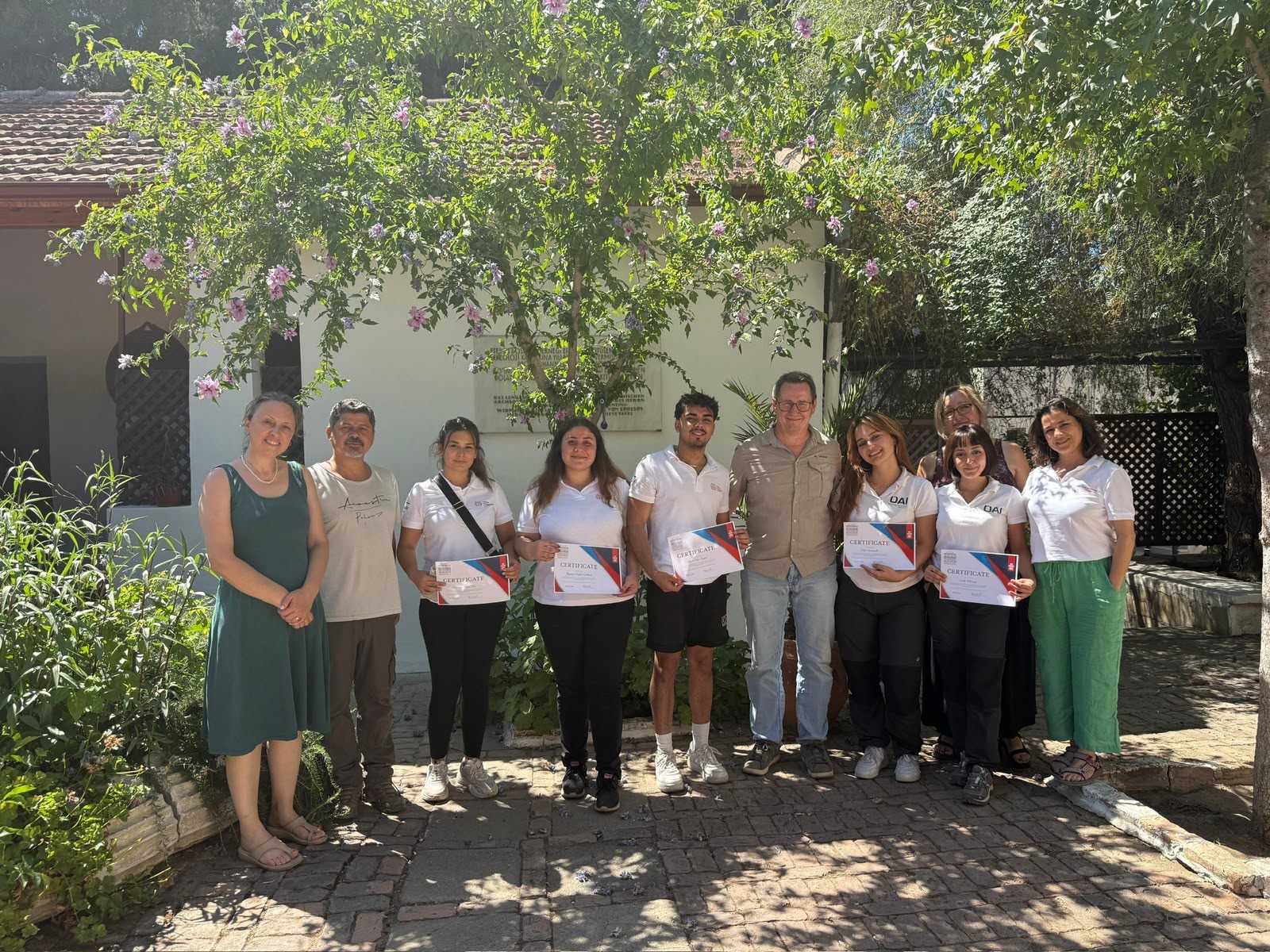
From 5 to 24 July 2026, two one-week Ephesos Pottery Summer Schools took place at the Austrian Archaeological Institute (OeAI) in Ephesos. A total of 11 students from the Universities of Isparta, Muğla and Trakya took part. The summer schools were led by our colleagues Alice Waldner and Kadriye Güler.
Following a theoretical introduction, the session moved straight on to practical work: using the OeAI’s study collection, the participants learnt about the most important types of pottery from the Hellenistic to the Early Byzantine periods. Among the items presented were mould-formed relief cups and Ephesos lamps, Ephesian grey ware with a black slip, Hellenistic glossy clay pottery, Eastern Sigillata A–C, Italic Sigillata, Late Roman C, African red slip ware, the so-called Meander Valley Sigillata, as well as kitchenware, utilitarian ware and transport pottery (amphorae).
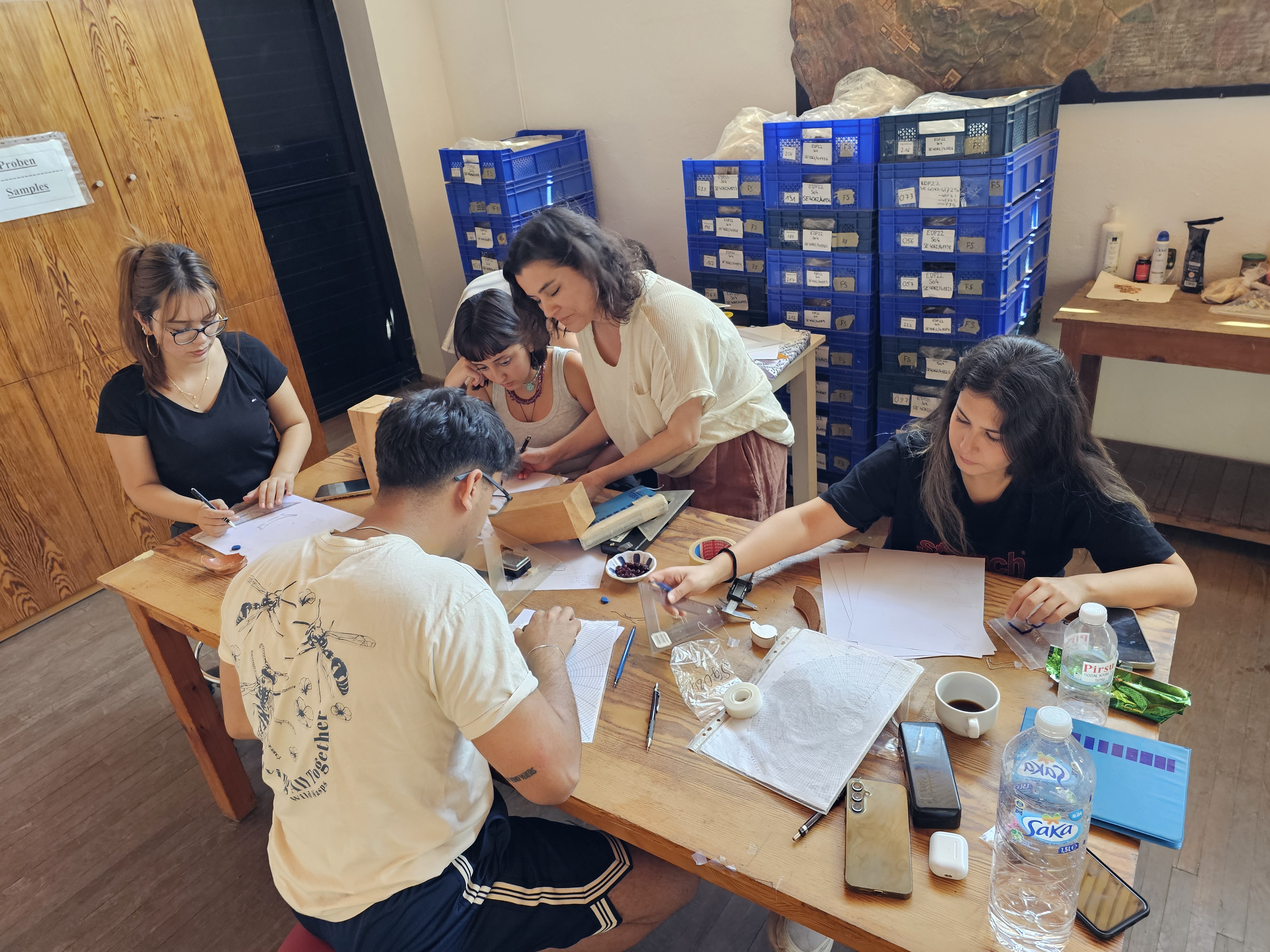
The students were then able to put their newly acquired knowledge into immediate practice: they assisted with the processing of finds from the 2026 Serapeion excavation, helping to sort the material and compile find statistics. Another key focus was on the graphic documentation of ceramic finds.
Each summer school concluded with a group guided tour of the antique city of Ephesos – the very place where many of the ceramic vessels discussed earlier were once used.
A big thank you to all the participants for their keen interest, motivation and dedication. We’re already looking forward to next year’s Ephesos Pottery Summer School!