


Lecture by Maria Choleva, Université Catholique de Louvain
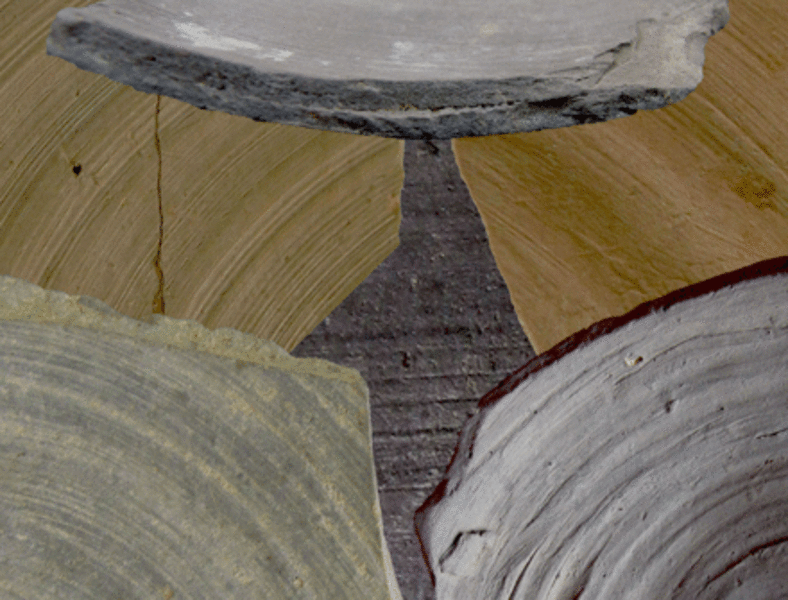
The appearance of wheel-made pottery within an archaeological context is usually associated with the invention of the wheel-throwing technique (i.e., throwing from a lump of clay) and the so-called fast wheel. The traditional approach thus confers to the potter’s wheel a series of techno-functionalist properties such as efficiency, standardisation, and intensification in pottery productions. However, the pioneering work by Valentine Roux has revised this techno-economic determinism. She was able to show that the first wheel-made pottery in Levant (late 5th– 4th millennium BC) was the outcome of hybrid manufacturing processes combining the potter’s wheel with traditional hand-building techniques such as coiling. The identification of this wheel-coiling technique has shed light on the sinuous trajectory in the innovation and adoption process of the potter’s wheel throughout time and space, and it urged scholars to look for the complexity in the different ways of using this tool within ceramic production. In this framework, a technological study of several ceramic assemblages from the Greek Mainland and the northern and eastern Aegean has revealed the wheel-coiling technique to be the main craft practice for producing the early wheel-made pots that appeared in the Aegean during the late 3rd millennium BC. The identification of various ways of using this technique, each one implying distinct craft knowledge and different degrees of technical specialisation, showed complex phenomena of appropriation of the wheel technology by the local communities and revealed the embeddedness of the new tool in particular potting traditions.The aim of this presentation is to (a) investigate the craft behaviours enabling the first wheel-made production in different regions of the Aegean world, (b) delineate the emergence of the new pottery traditions grounded on the innovative craft knowledge, (c) explore the impact of the new tool on the local technological systems, and (d) shed light on the mechanisms of transmission underlying the dissemination processes of the potter’s wheel throughout theAegean.
OREA Lecture Room, Hollandstraße 11–13, 1020 Wien