


Current Approaches and Challenges in Medieval Iberian Studies
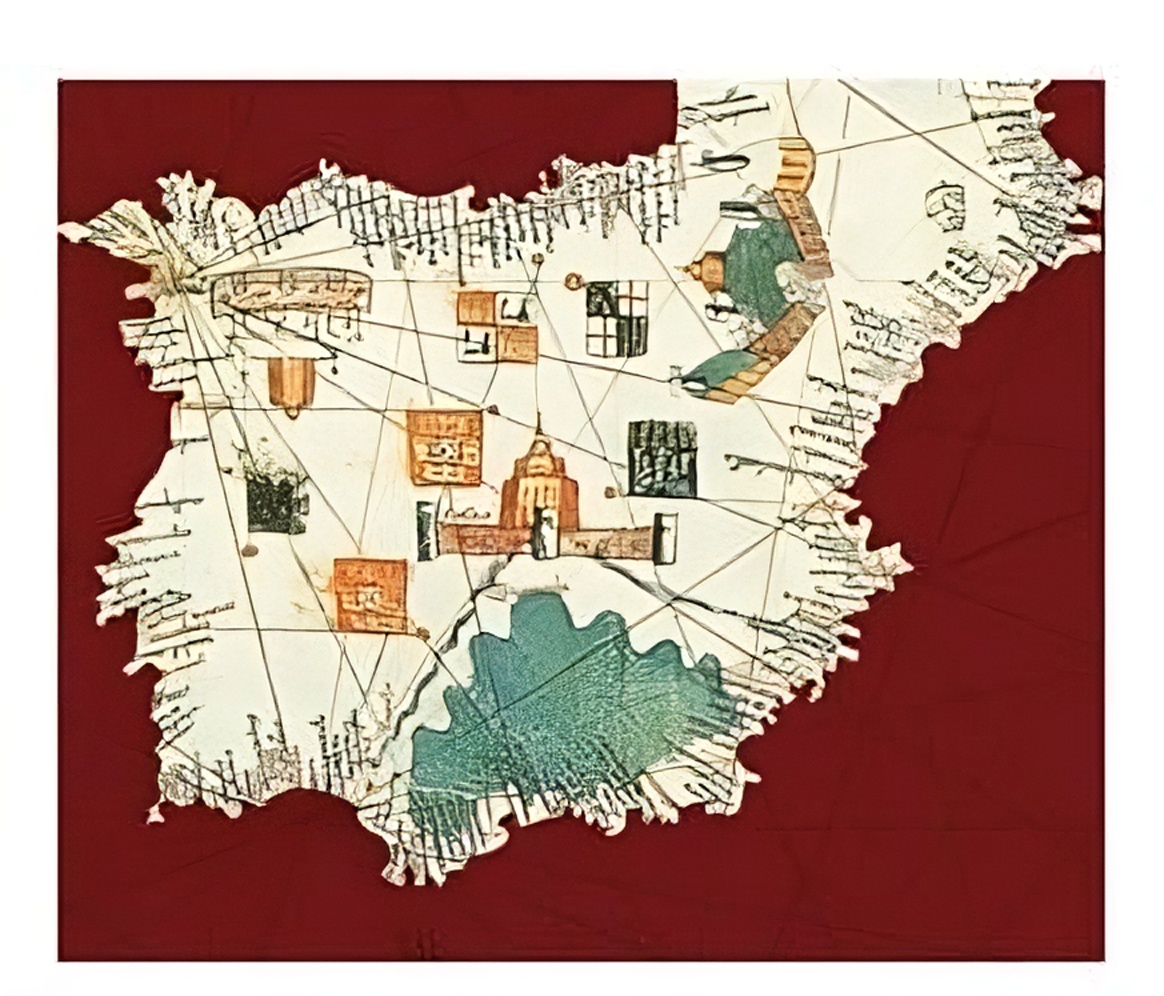
The workshop brings together scholars from different scholarly and national communities, yet all working on the Medieval Iberian Peninsula. With this event, we hope to encourage stronger interaction between these groups. The workshop, therefore, has the goal to put various scientific communities into conversation, and to generate new synergies between different scholarly traditions. 25 participants from several disciplines of Medieval studies coming from ten different countries are promising a fruitful exchange about one of the most exciting European areas of the Middle Ages.
In addition to the individual presentations, four experts have been invited who will complement to this event by giving a workshop each. The four experts are (1) Carmen Cardelle de Hartmann, Professor for Latin Philology at the University of Zurich; (2) Susanne Wittekind, Professor of Art History at the University of Cologne; (3) Patrick Henriet, historian and Directeur d'études at the École Pratique des Hautes Études in Paris; and (4) Nikolas Jaspert, Professor for Medieval History at the University of Heidelberg.
Programm | Programme
Wed 10 Sept 2025
09.00-09.30 Introduction
Alexander Marx and Patrick Marschner
09.30-11.30 Workshop 1
Nikolas Jaspert | University of Heidelberg
11.30-12.00 coffee break
12.00-13.30 Session 1
Session 1. a: Literary Approaches and Textual Traditions
Moderator: Mats Pfeifer
Covadonga Baratech Soriano | Centro de Ciencias Humanas y Sociales: Literary Sources for the Statistical Analysis of Andalusi Societies:
Possibilities and Limitations
Lukas Villegas-Aristizábal | Queen’s University Canada, London Campus:
Stoic and Islamic Influences in the Chronicle of the Conquest of Lisbon
Iason Thiele | University of Heidelberg / École des Hautes Études en Sciences Sociales, Paris:
The Liber sermonum of Juan Gil de Zamora
Session 1. b: Hagiographical Texts
Moderator: Matthias M. Tischler
Clara Renedo i Mirambell | University of Lleida:
Saint Vincent of Saragossa between the Iberian Peninsula and Gaul: Aimoin's Translatio sancti Vincentii
Constanze Albers| Albert-Ludwigs-Universität Freiburg i. Br.:
Hagiography in the Iberian Peninsula
Óscar Perdomo | Freie Universität Berlin
Rethinking Anti-Jewish polemics in the Liber de variis quaestionibus adversus Iudaeos
13.30-15.00 lunch break
15.00-17.00 Workshop 2
Carmen Cardelle de Hartmann | University of Zurich
17.00-17.30 coffee break
17.30-19.00 Session 2
Session 2. a: The Visigoths and the late eighth century
Moderator: Patrick Marschner
Cornelia Scherer | University of Erlangen-Nürnberg:
Orderly Orthodoxy: The Collectio Hispana in the Visigothic Kingdom
Gonzalo Landau Brenes | University of Hamburg:
Visigothic Violence: Narratives of Transgression
Sergi Tella Pamies | University of Lleida:
Locating Felix of Urgell during the Adoptionist Controversy: Insights on the Early Carolingian Presence in the Spanish March
Session 2. b: Heretics and Orthodoxy
Moderator: Nikolas Jaspert
Stefanie Lenk | University of Göttingen:
Using Material Evidence to Fight Heresy – Lucas of Tuy’s De altera vita on Orthodox Imagery
Thomas H. Kaal | Queen Mary University of London:
Racializing Religious Instruction? Pedro Jiménez de Prejano’s Lucero de la vida cristiana and Converso Religiosity
Isaac Lampurlanés i Farré | University of Lleida:
The Tortosa Disputation (1413-1414) and the De publicatione haeresum vanitatum et abusionum contentarum in libro Talmud by André Dias de Escobar (1417): Preliminary Findings of an Ongoing Critical Edition
19.00 Reception
Thurs 11 Sept 2025
09.00-11.00 Workshop 3
Patrick Henriet | École pratique des hautes études
11.00-11.30 coffee break
11.30-13.00 Session 3
Session 3. a: Interreligious Conflict and ‘Otherness’
Moderator: Patrick Marschner
Mats Pfeifer | University of Bamberg:
Pseudo-Methodius in the so-called “Códice de Roda” (Cod. 78) of the Biblioteca de la Real Academia de la Historia in Madrid
David De Pablo | University of Prague:
Emotions, Sins, and Legitimacy: Representations of Muslim Corporality in 13th-Century Castilian Sources
Onuralp Çakır | Bilkent University, Ankara:
Representations of ‘Other’ in Medieval Mediterranean Maps
Session 3. b: Economic and Maritime History
Moderator: Eva Cersovsky
Elías Salgado Arcas | Universidad Complutense de Madrid:
Una cum uxore mea imperatrice domina rrica: An Essay on the Attribution of a Unique Conjugal Monetary Type of the Emperors Alfonso VII and Rica of Poland
Victòria Burguera i Puigserver | University of Heidelberg:
The Aftermath of Medieval Mediterranean Naval Campaigns. The Fate of Captives as Spoils of War
Laurin Herberich | University of Heidelberg:
Mediterranean Entanglements – Digital tools as Challenge and Chance for Medieval Iberian Studies?
13.00-15.00 lunch break
15.00-17.00 Workshop 4
Susanne Wittekind | University of Cologne
17.00-17.30 coffee break
17.30-19.15 Session 4
Session 4. a: Political History between War and Peace
Moderator: Alexander Marx
Burton Westermeier | University of Yale:
Violence, Peace, and Negotiation in the Gesta Berengarii de Landoria
Daria Safronova | University of Tübingen:
Forging Consensus and Giving Advice in Northern Iberia, c. 900–1100
João Pedro Alves | NOVA University of Lisbon:
Knights and Justice – The Challenges of Studying Seigneurial Justice in Late Medieval Portugal: A Perspective on the Military Orders of Avis and Santiago
Glauber Wisniewski | Saint Louis University:
The Jews and the Military Orders in Aragon and Castile (12th-15th centuries)
Session 4. b: Materiality and Craftsmanship
Moderator: Laurin Herberich
Eva Cersovsky | University of Cologne:
Experiència, maestra de les coses. Craft Knowledge and Royal Courts in the Late Medieval Crown of Aragon
Arianna Vignati | Universidad Autónoma de Madrid:
The Transfer of Models through the Circulation of Artists and Ideas in Tardogothic Hispanic Architecture (1450–1500)
Nieves Rico Parreño | University of Oviedo:
Comfort, Technique, and Status: An Analysis of Pillows, Their Morphology and Meaning in Hispanic Medieval Times
María Carrión Longarela | Universidade de Santiago de Compostela:
The convent of Santa Clara de Palencia in the 15th and 16th centuries. Material and architectural traces in a long-time inhabited setting
subject to change
Information
10 -11 Sept. 2025
Location
Institute for Medieval Research
Austrian Academy of Sciences
Dominikanerbastei 16
1010 Wien
Organizers
Alexander Marx
Institute for Medieval Research, ÖAW
alexander.marx[at]oeaw.ac.at
Patrick Marschner
Dipart. di Musicologia e Beni Culturali, Università degli studi di Pavia
patricksebastian.marschner[at]unipv.it
Sponsored by
FWF - Österreichischer Wissenschaftsfonds
ÖFG - Österreichische Forschungsgemeinschaft
Scribemus - Scribes of Musical Cultures