In the biology cluster we address how biological organisms perceive and produce sounds. Currently, all of our work is focused on animals (including humans) though acoustics also play a role in plants and fungi. While hearing and vocalizing is very common in the animal kingdom, how animals interpret what they hear and what kind of sounds they produce can vary greatly. There are many factors that can influence this variation including differences in cognition, acoustic environments, communication needs, physiology, and the level of sociality in a given species. The goal in our cluster is to assess how these factors work together to promote the wide-ranging acoustic behaviours we find across the animal kingdom.
As part of our long-term strategic direction, the biology cluster contributes to the Lighthouse Project The Biology of Music.
Head: Marisa Hoeschele
This group merges music and biology to study the origins of music through cross-species studies. Like language, music is found in all cultures around the world. Even isolated cultures have music, and all musical systems share important parallels such as the use of discrete notes and a steady beat.
Here we study other animals to try and understand what aspects of music are uniquely human and why humans may have developed these abilities. Specifically, here are some active research directions of the group:
The Budgerigar Lab was originally founded in 2013 by Marisa Hoeschele in the Department Cognitive Biology (now Department of Behavioral & Cognitive Biology) at the University of Vienna. Since April 2021, the Budgerigar Lab is located at the Institute of Acoustics Research of the OeAW.
Head: Angela Stoeger-Horwath
Mammal Communication focuses on the vocal communication of mammals, specifically the diversity of acoustic signals, developed perceptual systems, and underlying cognitive capacities across species. Our work comprises all main thematic complexes of communication, from sound production to the function relevance of communicative signals.
We aim at understanding mechanisms and the selective forces that shaped specific signals, cognitive vocal skills and communication systems. A research focus is on vocal learning, where the group significantly contributed to the field by demonstrating imitative capacities in African and Asian elephants. Vocal learning is critical for the development of speech and language in humans. Using a cross-species comparative approach, research aims at revealing which species, apart from humans, are capable of vocal learning and to what extent. Despite the diversity of vocalizing species, vocal learning has only been detected so far in eight animal groups, including humans, bats, cetaceans, pinnipeds (seals), elephants, and three distantly related bird groups including songbirds, parrots, and hummingbirds.
In addition, we aim to explore the potential for employing artificial intelligence to decipher animal communication and apply this knowledge to conservation efforts (e.g., explore “smart” acoustic monitoring systems)
We are collaborating with many international facilities and researchers, as well as companies supporting our research.
The overarching goal of this project is to understand the unique phenomenon of human music from a biological perspective. The reason we consider music from a biological perspective is that music can be found in all cultures around the world, even isolated cultures develop music. As a result, music seems to be something that humans automatically do as a species just like language, walking, and making tools. Even babies are interested in music before they can speak. All musical cultures share similar basic concepts, such as rhythm, meter, discrete tones, and harmonies. These similarities across cultures provide a clue as to which aspects of music may have roots in biology, while the differences are likely culturally driven.
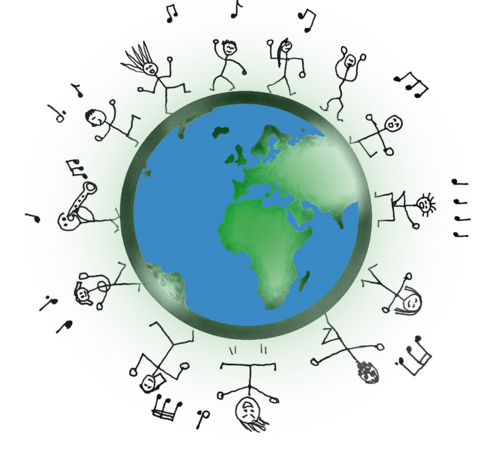
At the same time, we are not the only species on the planet to share many of these musical capabilities. Other animals also pay attention to rhythm and pitch and sometimes actively produce sequences of sounds that we might refer to as musical. We take a cross-species approach to understanding the biology of music by comparing humans to other animals. By doing so, we can discover what traits might be linked to being musical, which can help us understand what drives human behaviour.
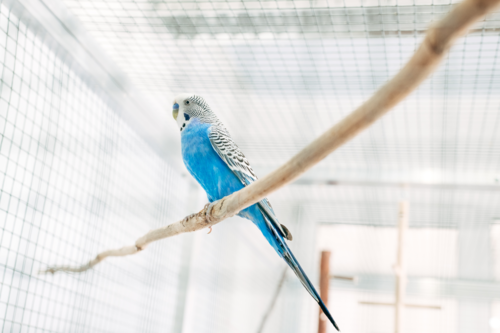
For example, we have shown that the female parrots in our laboratory, budgerigars, actively enjoy listening to rhythmic sounds. We know that the males perform rhythmic dance displays for the females and that the females can influence male vocalizations. Parrots in general are similar to humans in that they can find the beat in music and dance to it, something which appears to only occur in animals that can imitate sounds. We humans are in some ways like the parrots of primates, because we are the only members of the primate lineage that can imitate sounds in our environment. Fascinatingly, it’s this ability to imitate sounds that may be linked to our ability to dance: Both the ability to move to a beat and to imitate sounds requires us to coordinate body movements (either the whole body or the vocal apparatus) along with external acoustic information.
Another example is that musical scales around the world share many similar musical intervals and are usually based on the octave: That is, note names repeat every time frequency doubles (in Western music C D E F G A B and then C again form a C major scale). The common intervals found across cultures, including the octave, are found in the natural harmonics of the human voice, which are especially clearly produced relative to other animals because of a vocal adaptation that we have that is unique among primates, that allow us humans to produce particularly musical vocalizations. When children learn to speak or sing, they often imitate sounds outside their vocal range (e.g., a man with a low voice) using an octave relationship thereby matching the harmonic information.

Other species also produce harmonics and they therefore in some cases also attend to these same musical intervals. For example, we showed that rats treat notes separated by an octave as similar, just like humans do. As a result, we have argued that we humans produce scales the way we do because of our especially clearly harmonic vocalizations, our ability to learn vocalizations (which is quite uncommon in the animal kingdom: most vocalizations are innate), our different vocal ranges, and the fact that we sing at the same time. Other animals have subsets of these traits (e.g., some sing at the same time, some learn their vocalizations etc) so now we are working on disentangling which of these traits are most important in making a species musical.