


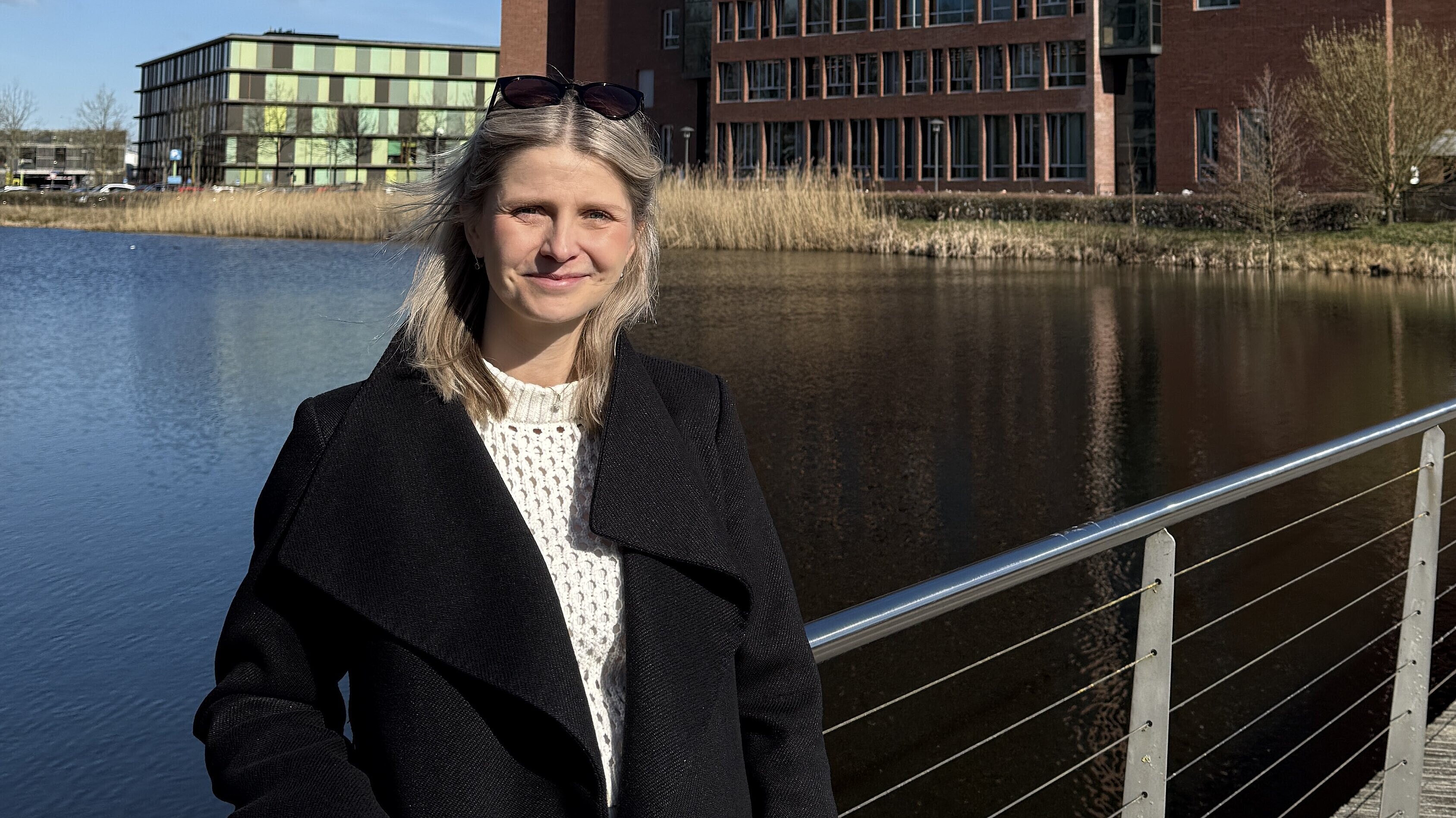
Elwira Smakowska-Luzan was a postdoc in Youssef Belkhadir’s group at the GMI from 2014 to 2018. She is now an independent group leader at Wageningen University. Elwira was an invited speaker at the GMI 25th anniversary Scientific Symposium, where current and former GMI members celebrated the institute’s vibrant community and scientific achievements.
We spoke to Elwira about her time at GMI and what she takes from the experience into her current career.
How did you come to join GMI?
It’s a bit of a story! After obtaining my PhD studying mitochondrial oxidative stress, I wanted to move into a more dynamic area. I was interested in signaling and saw that Youssef Belkhadir had started his group at GMI, so I contacted him even though he didn’t have any advertised positions. We applied for a grant together and, in the meantime, he secured some initial funding, so I started with a one-year position and then successfully applied for my own fellowship.
What makes GMI special compared to other places you’ve worked?
The GMI’s combination of excellent people and outstanding facilities is found nowhere else. Whatever idea you have, you can make it happen here. There’s no limitation in terms of resources or expertise—it’s all about your own motivation and drive. In many places, there’s always something missing—either the expertise, the equipment, or the collaborative environment—but at GMI and the Vienna BioCenter, everything is there, right in place to help you aim high and achieve your goals.
How did the interdisciplinary environment at the Vienna BioCenter contribute to your experience?
It was hugely inspiring and one of the reasons I decided I wanted to pursue an academic career. The way the campus is structured allows you to interact with experts in many fields and use shared technologies and facilities. During my postdoc, I collaborated extensively with the protein technologies facility—I probably spent half my time there! I still keep in touch with colleagues from that time, and I continue to reach out for advice and ideas.
What did you learn at GMI that you now apply in your own research group?
One of the most important lessons was how crucial it is to be a team player. Youssef ran the lab in a very collaborative way, encouraging both internal collaboration and reaching out to colleagues for expertise. I really saw how much more you can achieve when you work together and help each other.
I also learned to appreciate how different people bring different strengths. You can’t apply one formula to everyone, but instead need to work with people as unique individuals, and that’s something I try to do now with my own team.
Are you still in contact with the GMI?
Of course. I’ve been back three or four times, and remain in close contact with several former colleagues, including Yasin Dagdas and Ortrun Mittelsten Scheid, who continue to be valued mentors to me. It’s really nice to have that ongoing connection and people I can turn to for advice or just to have a chat.
Are there any personal highlights that stand out from your time at GMI?
When I was preparing my talk for the 25th anniversary, I looked back at photos from my time at GMI, and it really reminded me how intense and fun those years were!
I worked very hard, but it was because I wanted to. I knew how unique an opportunity working at the GMI was, and I wanted to make the most of it.
Looking back, it was probably the most productive and enjoyable period of my career so far. And of course, the friendships I made at the GMI are friendships for life. And as a member of the “Polish mafia” at the GMI, it’s nice to know that the strong Polish community continues to be present on campus!