


Shedding Light on the Protection of Photosynthetic Membranes
21.09.2026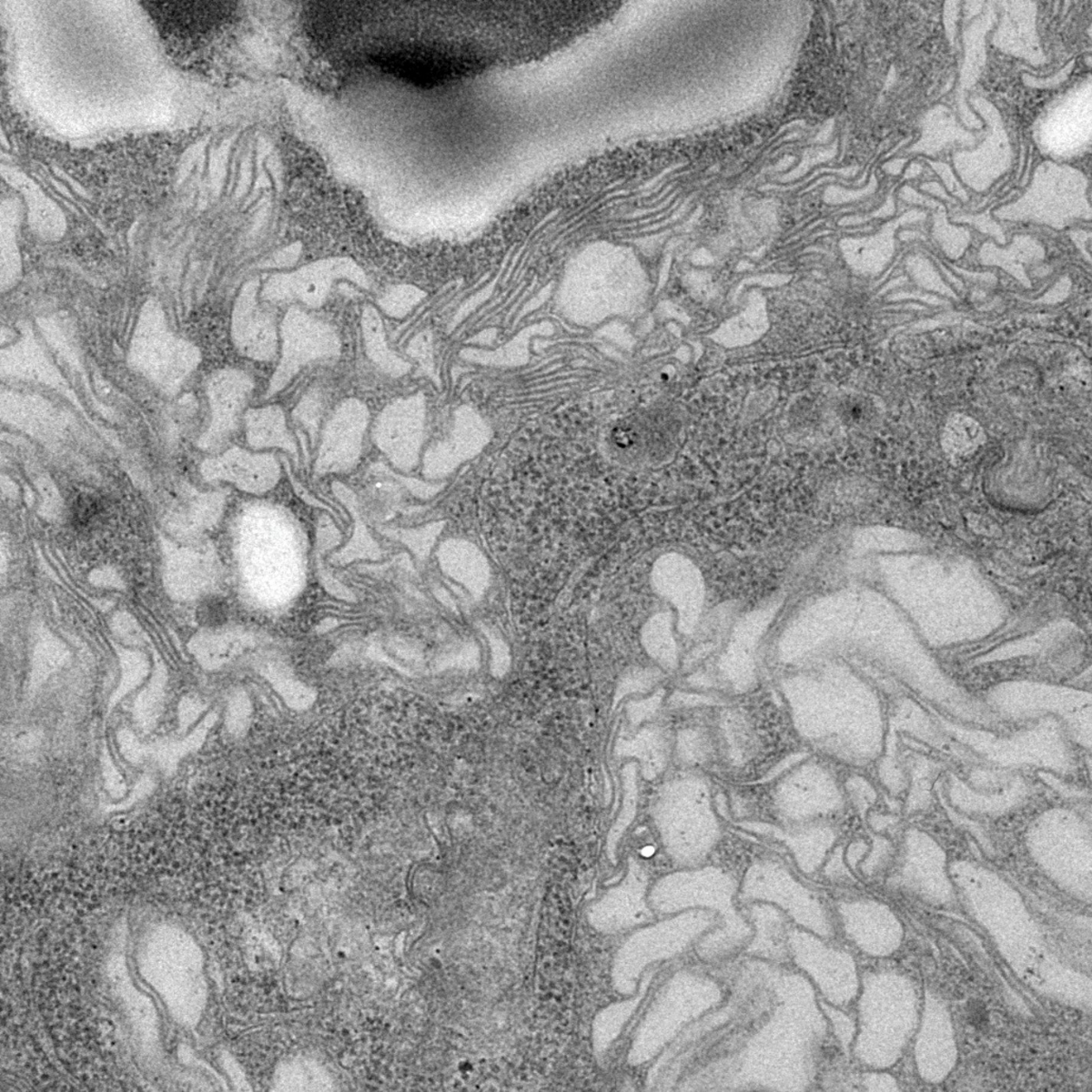
Photosynthesis is an essential biological process, supporting nearly all life on Earth. Plants and algae rely on a network of membranes in the chloroplast, called thylakoid membranes, to capture light energy and convert it to energy for growth. However, these membranes are particularly vulnerable to excess light, which can cause oxidative damage to their lipids and proteins and impair photosynthesis. How organisms preserve thylakoid membrane structure under stress has remained an important open question.
Missing factor sheds light on protecting photosynthetic membranes
A team of researchers led by PhD student Pamela Vetrano and group leader Silvia Ramundo at the GMI of the ÖAW investigated how photosynthetic organisms maintain the integrity of chloroplast membranes using the model alga, Chlamydomonas reinhardtii. The researchers screened poorly characterized proteins activated by the chloroplast unfolded protein response mechanism (cpUPR), a cellular stress program that helps chloroplasts cope when their proteins become damaged. This led them to identify the conserved protein VIA1 as a critical factor protecting thylakoid membranes under excess light.
A conserved complex is key for membrane integrity
The researchers then localized the VIA1 protein to the thylakoid membranes, and showed that it interacts with VIPP1, a protein already known to help build and repair these membranes. The team then predicted the binding interface between the two proteins and introduced targeted mutations to disrupt it. Once the contact between the two proteins was broken, VIA1 lost its protective function entirely, establishing that the interaction with VIPP1 is what enables VIA1 to guard against light-induced thylakoid membrane damage.
The VIA1–VIPP1 complex also turned out to be remarkably ancient. Working with collaborators at the Biodesign Institute at Arizona State University, the team found the same two proteins working together in cyanobacteria, the evolutionary ancestors from which chloroplasts are thought to have originated. That such an old and widely conserved complex went unnoticed for so long is a striking reminder that even fundamental biological processes still hold major surprises.