


Polina Foteva receives PhD Fellowship from the Boehringer Ingelheim Fonds
14.08.2026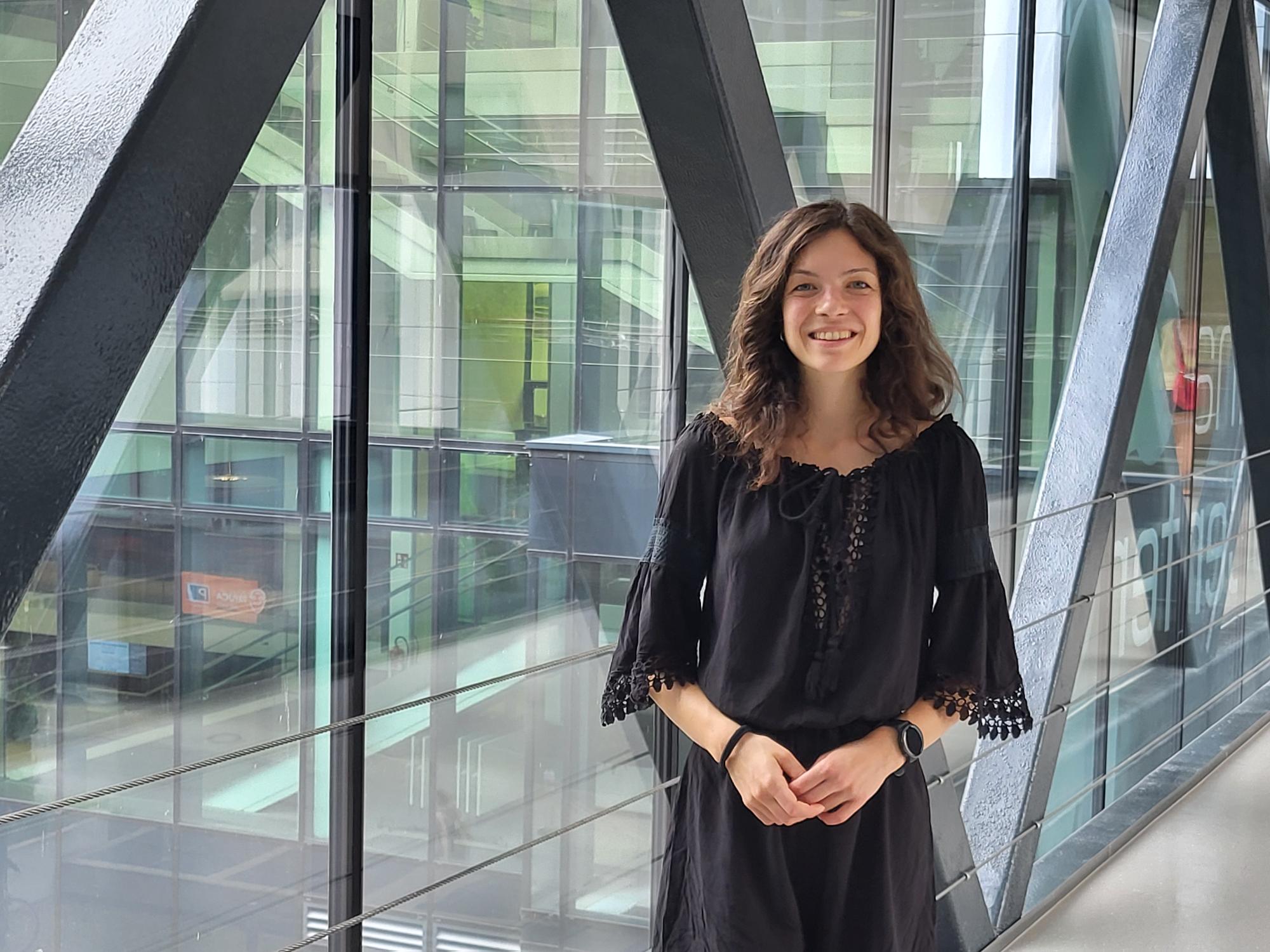
Polina Foteva, PhD student in the research groups of Silvia Ramundo (GMI) and Sven Klumpe (IMBA/IMP), has been awarded a PhD Fellowship from the Boehringer Ingelheim Fonds (BIF). This highly competitive fellowship will support her project, “Novel alga–virus system to discover transferable dsDNA sensors and signaling systems”.
DNA is normally located in the nucleus of the cell and carries the genetic information of life, but what happens when it ends up in the wrong cellular compartment? In mammals, when double-stranded DNA (dsDNA) enters into the cytosol - the fluid-filled space of the cell - it serves as a danger signal, triggering an immune response via the cGAS-STING pathway. While this response protects against infection, it can also contribute to autoinflammatory disease when improperly activated. Despite its biomedical importance, no such DNA sensor has been identified outside of vertebrates, leaving a gap in our understanding of how other organisms recognize and respond to misplaced DNA.
To address this, Polina will establish the single-celled alga, Chlamydomonas reinhardtii, as a genetically tractable model system for investigating cytosolic dsDNA suveillance mechanisms. Chlamydomonas offers a unique opportunity to combine genetic tractability with natural infection; it is subject to stress-induced organelle membrate disruption - a potential source of self-DNA - and can be infected by Punuivirus, a recently discovered dsDNA virus.
Through her work, Polina aims to identify whether cytosolic dsDNA sensors exist in photosynthetic organisms and if such sensors can discriminate viral DNA from self. She will combine a virus-responsive reporter system, reverse genetics, in situ cryo-electron tomography (cryo-ET), and biochemical assays to identify candidate DNA sensors and reveal how they operate in the physiological and virus-infected context.
By establishing Chlamydomonas as a new discovery platform, Polina’s work will not only contribute to addressing fundamental questions in the evolution of immunity, but may also create valuable new tools for the future of experimental biology.
About Polina Foteva
Polina Foteva completed her Bachelor’s degree at the University of St. Andrews in the UK. During her studies, she had the opportunity to visit the Ramundo lab as a Vienna BioCenter summer school student and immediately knew she wanted to return to the VBC in the future. She received her Master’s degree in Chemical Biology at the University of Geneva, Switzerland, and returned to Vienna to begin her PhD in the groups of Silvia Ramundo and Sven Klumpe. Beyond her interest in science, Polina enjoys running, trail running, hiking, and traveling.
About the Boehringer Ingelheim Fonds (BIF) PhD Fellowship
The Boehringer Ingelheim Fonds awards fellowships with a duration of 2 to 3.5 years to ambitious PhD candidates in basic biomedical research. Through a highly selective peer-review process, applicants are evaluated on their achievements and the scientific quality of their projects. Additionally, the program offers seminars, travel allowances, and individual and personal support, and connects recipients with a worldwide network of more than 1,900 fellows and alumni.