


Key regulator of plant branching architecture identified
22.07.2025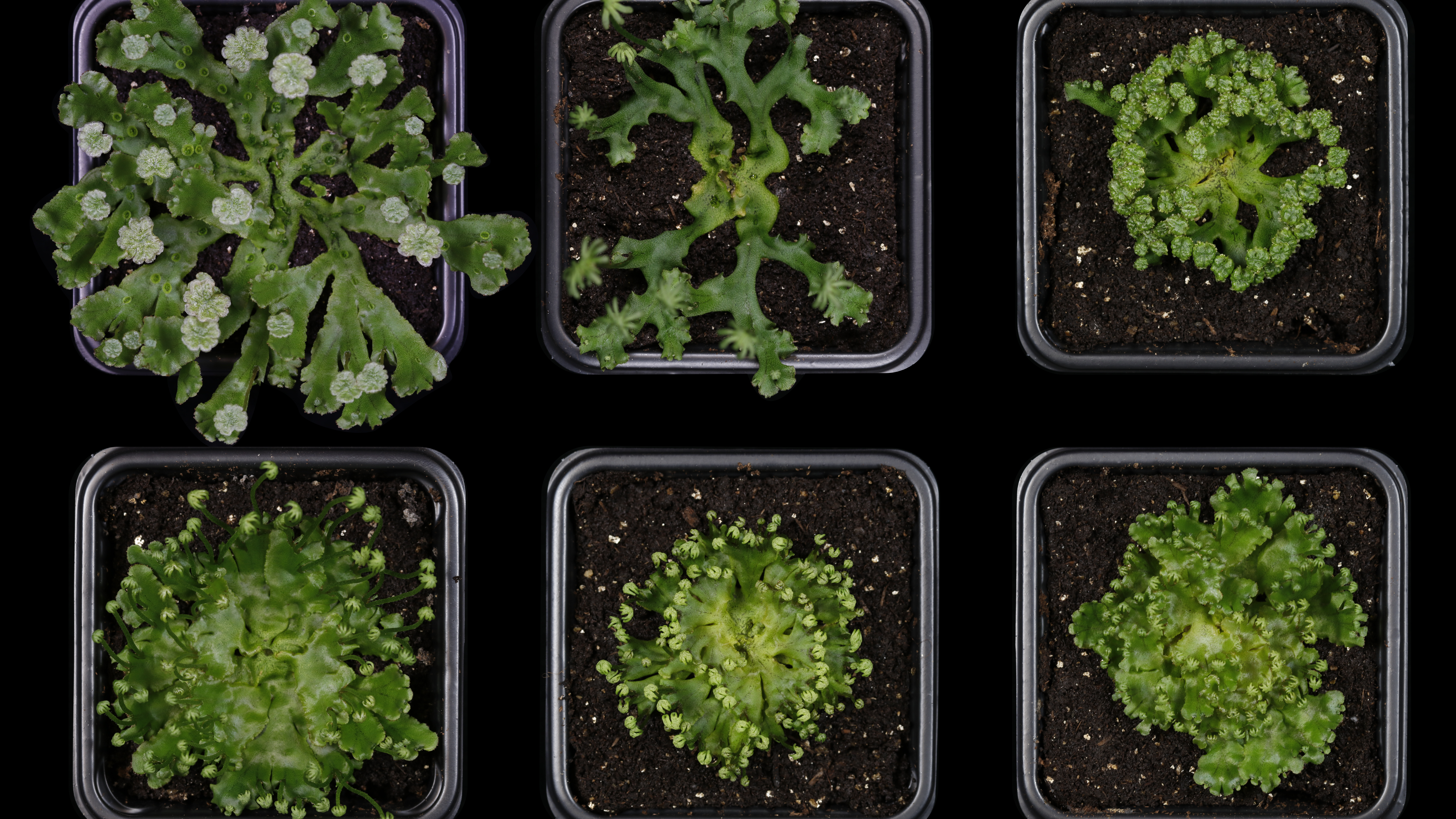
Plants grow branches in specific three-dimensional patterns that shape their overall body shape. This finely tuned “architecture” enables efficient use of light, space and other resources needed for growth. Stem cell containing regions called meristems produce new cells that together form new branches. But how does a plant coordinate the activity of stem cells to establish this architecture?
Vicky Spencer and colleagues in Liam Dolan’s Lab at the Gregor Mendel Institute of Molecular Plant Biology (GMI) identified the CYP78E1 gene as a key regulator of branching architecture in the bryophyte Marchantia polymorpha, a model organism frequently used in plant biology.
The team discovered that CYP78E1 regulates meristem activity during branch growth. The researchers showed that mutations in CYP78E1 disrupt meristem function, drastically altering the plant’s architecture. These mutant plants form many more branches than plants with a functional CYP78E1 gene. The authors also showed that the CYP78E1 gene is part of the mechanism employed by plants to modify their branching pattern in changing light conditions.
These findings demonstrate the role of one gene that modulates meristem activity, controlling the formation of branches in changing environments. The ability of plants to adapt their growth to changing conditions is important for their survival in the wild and securing yields in crops.
- Duckweed differentially marks old and new transposons

Duckweed differentially marks old and new transposons
