After the successful flagship edition of “Emerging Voices in the DH” within the ACDH Research Days in 2025, the Austrian Centre for Digital Humanities once again invites early career researchers in the Digital Humanities to submit contributions. The 8th ACDH Research Day is organised in cooperation with the section Digital Humanities and Quantitative Methods of the Doc School of the Faculty of Philological and Cultural Studies at the University of Vienna and is once again dedicated to emerging research in the Digital Humanities.
If you wish to take part in the ACDH Research Day, please register below.
09:00-09:15 | Opening & Introduction |
09:15-09:35 | Constanza Toledo (University for Music and Performing Arts Vienna) | |
09:35-09:55 | Aitana Menarguez-Box (Universitat Politècnica de València) | |
09:55-10:15 | F. Cole Thierrin (McGill University) | |
10:15-10:30 | Panel Discussion | |
10:30-11:00 | Coffee Break | |
11:00-11:20 | Dorothea Sichrovsky (University of Vienna) | |
11:20-11:40 | KI-gestützte Word Sense Disambiguation im Mittelhochdeutschen | Julia Hintersteiner (University of Salzburg) |
11:40-12:00 | Sabrina Bach (University of Vienna) | |
12:00-12:20 | Jona Hassenbach & Melissa Sheena Lantzberg (University of Vienna) | |
12:20-12:40 | Panel Discussion | |
12:40-13:30 | Lunch Break | |
13:30-13:50 | From Plain Text to Structured Data: Extracting Deportation Patterns of Germans in Soviet Kazakhstan | Tomiris Nurgaliyeva-Kaminski (Central European University ) |
13:50-14:10 | Vom Gossip zum Graph: Das Wiener Salonblatt als frühe Social-Media-Plattform | Christian Lendl (Austrian Centre for Digital Humanities) |
14:10-14:30 | Digital Workflows for Semi-Automatic Recognition of Hieratic Signs Using Deep Learning | Margot Belot (Freie Universität Berlin) |
14:30-14:50 | Carlos O. Rocha Ochoa (Vienna University of Economics and Business) | |
14:50-15:10 | Panel Discussion | |
15:10-15:30 | Coffee Break | |
15:30-15:50 | Language polymorphism markers: a new way to predict language variation and change | Ilia Afanasev (University of Vienna) |
15:50-16:10 | Juliane Benson (University of Vienna) | |
16:10-16:30 | Modelling Data, Capta, Texts and Objects: What do we read when we are reading code? | Susanne Schmalwieser (University of Vienna) |
16:30-16:50 | Rethinking Art and Creativity in the Age of Artificial Intelligence | Gabriella Manzenreiter (University of Pécs) |
16:50-17:10 | Panel Discussion | |
17:10-17:20 | Closing Remarks | |
Constanza Toledo | University for Music and performing Arts Vienna
This paper describes a dissertation project that aims to analyse musical exchanges and international cooperation networks of Chilean art music composers, performers, producers and musicologists in (self-) exile in the DACH region during the military regime in Chile (1973–1990). The focus will be on identifying places in Austria, West and East Germany, and German-speaking Switzerland where Chilean art music activity took place. Thus, the repertoire, participants, institutions, geographic networks and collaborations involved will be examined. This dissertation intends to characterize Chilean art music activity in the context of exile in an international region, while also examining the role of local European cultural and governmental institutions, independent communities, solidarity movements and their integration strategies.
The approach and methodology of this study is essentially interdisciplinary, combining different methods of historical musicology (archival and documentary research) and ethnomusicology (oral history) for the data collection phase. This project uses digital humanities both for the analysis and dissemination phases, specifically the open-access software Nodegoat, which will be used to organize and visualize the collected data. This software enables humanities scholars to create their own models for generating datasets and offers relational analysis modes with spatial and chronological contextualization (van Bree & Kessels 2015). Thus, geographical visualizations can be generated in the context of a specific period, as well as trajectories across time and space. In addition, Nodegoat also offers the possibility of creating relational cross-reference maps represented with node-based visualizations that are used to illustrate the links between two or more categories. This provides an ideal format for understanding the different elements that make up the macro network that configures musical activities and, at the same time, supporting a social network analysis (Wetherell 1998) that considers the complexities of the migration phenomenon.
As this research project is set in the context of the Chilean military dictatorship and considers the musical flows that emerged from the exile and self-exile of Chile’s art music diaspora, this dissertation addresses issues related to memory and remembrance culture. In this context, places and the activities they host (whether it be concerts, festivals, workshops or conferences) will be the medium for examining the configuration of Chilean art music activity and its transnational networks in the process of coming to terms with forced mobility. Thus, travelling memory (Erll 2011) and place identity (Cuba & Hammon 1993) will be examined in the context of the military regime in Chile, paying particular attention to Chilean musical practice, its reception and relationship to place in a different field of production (Bourdieu 1983).
Aitana Menarguez-Box | Universitat Politècnica de València
This talk presents ongoing doctoral research at the intersection of Computer Science and Digital Humanities, situated within musicological aspects and currently conducted during a research stay at the Austrian Academy of Sciences (ÖAW). With an academic background in Artificial Intelligence, Pattern Recognition, and Digital Imaging, the project focuses on the computational analysis of historical musical manuscripts, with particular attention to medieval plainchant sources.
The research aims to enable the automated inventory and analysis of chants in digitized manuscript collections. It addresses several interconnected challenges, including the identification of chant boundaries in page images, the classification of chant types, and the extraction of musical features such as modal information. By combining image processing techniques with symbolic music representations, the project supports large-scale analysis of musical repertoires that remain difficult to access through manual approaches.
Methodologically, the work adopts a Digital Humanities perspective by treating musical notation as structured data. Music is approached as a symbolic system shaped by historical and notational conventions and amenable to computational modeling. In this context, the notion of music as a kind of a language is used as a methodological perspective. Musical notation is modeled as a symbolic sequence whose internal regularities can be statistically explored, enabling the application of techniques such as segmentation, and pattern modeling while remaining grounded in musicological research questions.
In addition to detection and classification tasks, the project engages with challenges emerging from Musical Information Retrieval, aiming to improve access to and exploration of large chant corpora. Its broader goal is to develop tools and methods that support scholars in navigating extensive manuscript collections and facilitate both detailed and large-scale analytical approaches.
Building on a series of ongoing and recent publications developed throughout the doctoral project, the presentation will provide a synthetic overview of both current and previous work. It will outline ongoing research and preliminary results, with particular emphasis on methodological challenges and open questions, and reflect on the role of computational approaches in the study and preservation of musical cultural heritage within the Digital Humanities.
F. Cole Thierrin | McGill University
The identification of music engravers is an underexplored dimension in musicological research. Musical engraving, the practice of carving notation into metal plates, was the dominant sheet music printing method until the late twentieth century. Individual engravers and engraving firms developed their styles through the use of specialised punches.
This paper presents a machine learning system for identifying engravers from digitised scores using computer vision. While noteheads remain largely consistent across engravers, complex symbols such as clefs exhibit significant stylistic variation, and may function as distinctive visual fingerprints. Exploiting these patterns aims to assist two practical objectives: determining the provenance of scores with missing publication information, and improving Optical Music Recognition (OMR) by constraining symbol detection to engraver-specific forms.
The system developed for this paper employs a You Only Look Once (YOLO) object detection architecture trained on 1,800 scores spanning nine engravers drawn from the International Music Score Library Project (IMSLP). At the symbol level, the system achieved an overall F1 score of 62.9%, with G clefs and F clefs yielding the strongest performance (F1: 83.0% and 80.0% respectively). At the score level, plurality-based attribution achieved 86.6% accuracy across nine engravers.
These results establish the feasibility of automated engraver identification from historical prints. These findings demonstrate that engraver-specific stylistic signatures are sufficiently distinctive to support automated recognition. At the same time, the need for larger annotated datasets of historical engraved music is necessary to help improve the system to a level that will enable deployment in library cataloguing and musicological research workflows.
Dorothea Sichrovsky | University of Vienna
Die Literaturproduktion des 12. Jahrhunderts ist maßgeblich von einem stärker werdenden Interesse an volkssprachlicher Literatur geprägt, das sich exemplarisch in der Entstehung der Vorauer Sammelhandschrift zeigt (Müller/Schneider 2010). In meiner Masterarbeit beschäftige ich mich mit den historiographisch-chronikalen Texten in Cod. 276, der mittelhochdeutschen Kaiserchronik und den lateinischen Gesta Friderici I imperatoris. Anhand der Dialogverwendung in den Texten möchte ich der Frage nachgehen, inwieweit das Genre der Chroniken in Latein und Volkssprache zwischen historiographischem und narrativem Erzählen oszilliert und inwieweit Methoden aus den Digitalen Geisteswissenschaften die Ermittlung dieser komplexen Verhältnisse unterstützen kann.
Kaiserchronik (erstes Drittel der Handschrift) und Gesta Friderici (letztes Drittel der Handschrift) rahmen eine Sammlung kleinerer geistlicher Dichtungen (Polheim 1958) und schließen inhaltlich aneinander an (Pretzer 2023). Die beiden Chroniken wurden seit dem Auffinden der Handschrift im Stift Vorau 1841 in Bezug auf den ungewöhnlichen Aufbau der Handschrift vielfach diskutiert, eine textübergreifende Auseinandersetzung mit den narrativen Elementen bleibt allerdings aus (Kohnen/Eisl/König 2025).
In meiner Masterarbeit beschäftige ich mich mit ebendieser Narrativität am Beispiel von Dialogen und gehe der Frage nach, wie und an welchen Stellen Dialoge in den Texten verwendet werden und welche Stimmen in und neben den Dialogen auftreten.
Methodisch nähere ich mich dem Thema mit (1) einer digitalen Annotation, die ich in CATMA durchführe, sowie (2) Topic Modeling, einer Technik des Natural Language Processings (NLP), die Texte automatisiert in thematische Cluster einteilt und so latente Strukturen aufdecken soll. Zur Durchführung des Topic Modeling nutze ich BERTopic (s. Grootendorst 2022). Ich verschränke quantitative (digitale) und qualitative Analyse, indem die beiden quantitativen Zugänge auch als Auswahlmechanismus für die qualitative Analyse genutzt werden. Über die Annotation werden besonders Dialog-dichte Passagen identifiziert, die vergleichend analysiert werden. Topic Modeling wird gesondert an den beiden Chroniken durchgeführt, um über die Ergebnisse ähnliche Topics zu ermitteln und jene Textstellen vergleichend zu analysieren, auf die ebendiese Topics zurückgehen. So möchte ich (1) die Dialoge in den Texten und (2) die Rolle der Dialoge im Text untersuchen.
In meinem Vortrag gebe ich einen Einblick in die Möglichkeiten, die Topic Modeling zur quantitativen (und qualitativen) Analyse in den Literaturwissenschaften bzw. insbesondere in der Mediävistik schaffen kann.
Julia Hintersteiner | University of Salzburg
Die Ambiguität natürlicher Sprache stellt eine der zentralen Herausforderungen der digitalen Lexikographie und Philologie dar. Besonders in der Mediävistik erschweren Phänomene wie Polysemie und Homonymie die automatisierte Analyse historischer Texte. Das vorgestellte Dissertationsprojekt adressiert dieses Problem am Beispiel der Mittelhochdeutschen Begrifsdatenbank (MHDBDB). Obwohl die MHDBDB als Langzeit-DH-Projekt über einen einzigartig kuratierten Datenpool verfügt, verbleibt ein erheblicher Anteil an Lexemen, deren präzise semantische Bedeutung im Textkontext bisher nicht systemisch aufgelöst wurde.
Die Dissertation verfolgt einen hybriden methodischen Ansatz zur Word Sense Disambiguation (WSD), der moderne KI-Verfahren mit traditioneller philologischer Expertise verbindet. Da Large Language Models (LLMs) selten explizit auf Mittelhochdeutsch trainiert wurden und oft als „Black Boxes“ agieren, liegt der Fokus auf der Erprobung eines Multi-Modell-Ensembles.
Dieser Workflow integriert vier zentrale Komponenten:
Transformer-basierte Modelle (z. B. Adaptation von GHisBERT),
Kontextuelle Embedding-Systeme zur Abbildung diachroner Varianz,
Regelbasierte linguistische Verfahren, die morphosyntaktische und gattungsspezifische Muster (z. B. aus der höfischen Epik vs. Urkunden) explizit modellieren,
Eine Human-in-the-Loop-Integration, die mittels Active Learning die Expertise von Mediävist:innen efizient in den Trainingsprozess einbindet.
Das Ziel des Vorhabens ist zweifach: Einerseits sollen neue sprachwissenschaftliche Erkenntnisse über den Bedeutungswandel im Mittelhochdeutschen gewonnen werden. Andererseits fungiert das Projekt als Proof of Concept für Low-Resource-Sprachen. Es wird aufgezeigt, wie skalierbare Workflows zur semantischen Disambiguierung auch in ressourcenarmen Kontexten – von historischen Sprachstufen bis hin zu Dialekten – robuste und wissenschaftlich valide Ergebnisse liefern können.
Im Rahmen des Forschungstages soll der aktuelle Stand präsentiert und diskutiert werden, wie die Balance zwischen automatisierter Skalierung und philologischer Tiefenerschließung gewahrt werden kann.
Sabrina Bach | University of Vienna
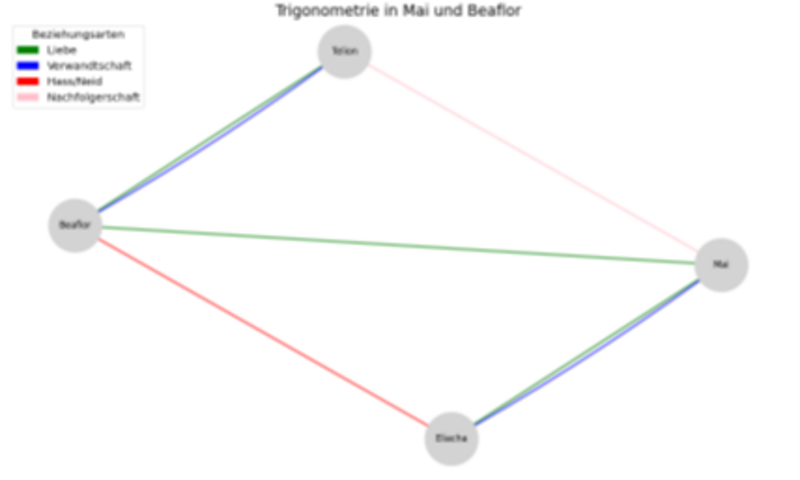
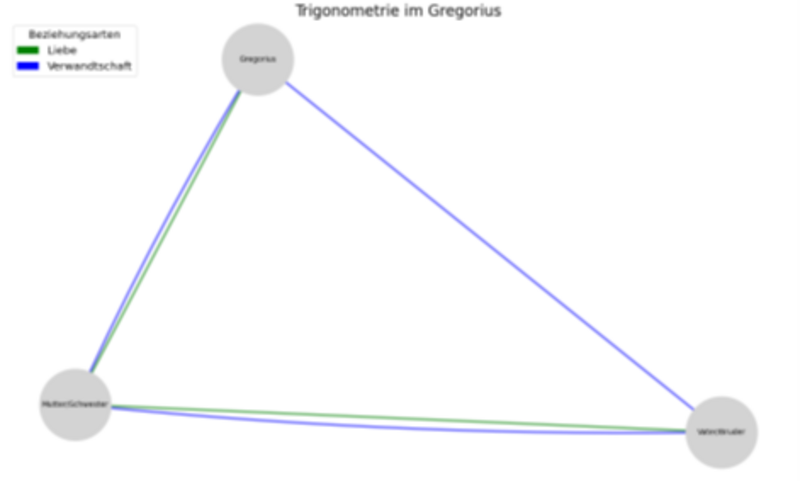
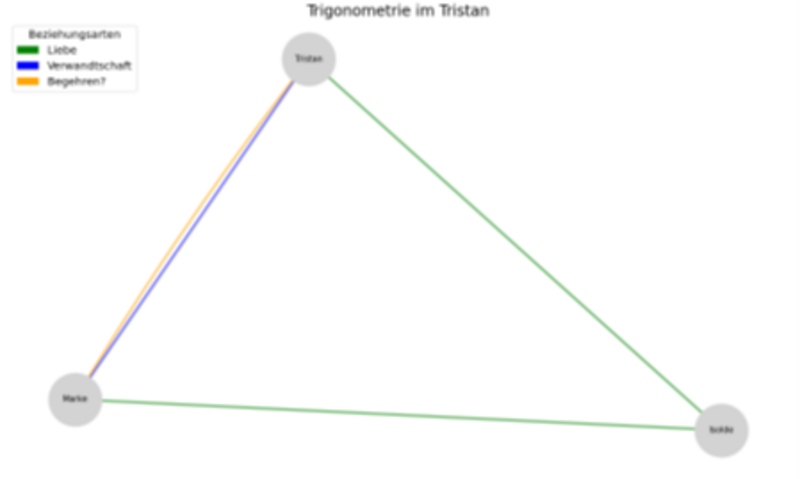
Die vorliegende Untersuchung stellt einen Teilbereich meines Masterarbeitsthemas an der Germanistik dar: Das Ziel meiner Arbeit ist es, etwaige sprachliche, motivische und strukturelle Parallelen zwischen „Mai und Beaflor“ und „Tristan“, sowie „Gregorius“ zu analysieren. Der Grundgedanke ist, dass „Mai und Beaflor“ aufgrund der verwendeten Themen eine intertextuelle Kombination aus „Tristan“ (von Gottfried) und „Gregorius“ (von Hartmann) sein könnte. „Mai und Beaflor“ bezieht sich auf eine Fortsetzung des Tristans (vermutlich auf jene von Ulrich); zu „Gregorius“ gibt es primär strukturelle Parallelen. Der Roman verhandelt dabei, wie Weltlichkeit und Geistlichkeit miteinander vereinbart werden können.
Da ich eine Intertextualität zwischen den behandelten Texten erkenne, ist es sinnvoll, die Figurenkonstellation näher in den Blick zu nehmen: Im Fokus steht, ob sich funktionale Entsprechungen zwischen Figuren der unterschiedlichen Werke erkennen lassen. Methodisch greift der Beitrag auf digitale Verfahren zurück und nutzt sogenannte Character Networks zurVisualisierung der Figurenbeziehungen. Die Visualisierungen wurden durch die Python Packages matplotlib und networkx erstellt. Dafür wurden für jedes Werk csv-Dateien erstellt,die die Parameter der Knoten (Quelle, Ziel), Kanten (Beziehung) und Gewichtung (Intensität) beinhalten.
Die Knoten bilden die Figurennamen ab, die Kanten beschreiben die Beziehungen der Figuren zueinander – beides wurde den Texten entnommen. Eine möglichst objektive Benennung war für mich von Bedeutung, da die Gewichtung ohnehin subjektiver Natur ist: Es handelt sich um eine qualitative Einordnung[1] der Beziehungen nach Wichtigkeit in drei Abstufungen (1-3-5).[2] Dies ist vor allem in dem vorliegenden Fall sinnvoll, bei dem es sich um Multigraphs (Netzwerke mit Mehrfachkanten) handelt, in denen die jeweiligen Beziehungen divers dargestellt werden sollen.
Neben Gesamtvisualisierungen der Figurenkonstellationen werden spezifisch sogenannte Begehrensdreiecke (nach Girard (1999) und Barandun (2009)) modelliert. Dabei kam die gemeinsame Konstellation heraus, dass es in allen Romanen eine weibliche Figur gibt, die sich in zwei Liebesbeziehungen befindet – einer illegitimen und einer legitimen.[3]
Die Ergebnisse verdeutlichen, dass sich intertextuelle Zusammenhänge nicht nur auf motivischer Ebene, sondern auch in der Struktur der Figurenbeziehungen nachweisen lassen. Der Beitrag zeigt damit das Potential digitaler Netzwerkmethoden für die mediävistische Literaturwissenschaft auf.
[1] Eine quantitative Bestimmung wäre möglich, wie Ketschik (2023) in ihrer Dissertation gezeigt hat, ist allerdings komplex und äußert zeitintensiv, was allerdings nicht im Rahmen einer Masterarbeit gewesen wäre. Die Gewichtung trägt trotz Limitationen erheblich zur visuellen Einordnung der Beziehungen bei.
[2] 1 steht für Beziehungen, die für den Fortgang der Handlung keine Rolle spielen. 3 bezeichnet Beziehungen, die zwar eine gewisse Bedeutung haben, den gesamten Handlungsverlauf jedoch nicht prägen (z. B. die Ehe zwischen Zieheltern) oder in denen kein klares bzw. aktives Handeln erkennbar ist (z. B. göttliches Eingreifen).
[3] Siehe Anhang.
Jona Hassenbach & Melissa Sheena Lantzberg | University of Vienna
The Christianisation of East Central Europe between the 8th and 13th centuries produced a dense network of rural churches that functioned as both sacred and socio-political spaces. A longstanding hypothesis in medieval archaeology and archaeoastronomy proposes that these churches were intentionally aligned with the sunrise on their patron saint's feast day, or with equinoctial east. Regional studies have offered partial support for this idea, yet inconsistencies persist.
This project presents a reproducible, data-driven workflow for analysing the relationship between church orientations and their patron saints' feast days. Approximately 900 medieval churches in present-day Austria and the Czech Republic were examined based on polygon geometries of standing structures, patron saint dedications, and construction period. The data were sourced from the OpenAtlas database of the THANADOS network (Eichert et al. 2024, Richards et al. 2023, Eichert 2021).
For the computational prediction of church axes, several algorithms, including minimal bounding rectangle and principal component analysis, were evaluated against a manually compiled gold standard. The highest-performing approach used SciPy's differential evolution optimisation function to calculate the maximum inscribed rectangle of a polygon geometry, and was subsequently applied for the overall axis prediction, followed by manual correction.
For the computation of the horizon, i.e. the point of intersection of a church’s extended axis and the terrain’s maximal elevation angle, a digital elevation model (DEM) was required to account for the surrounding terrain. This project utilised the DEM from the Shuttle Radar Topography Mission (SRTM), which has a global coverage with 1 arcsecond and 30m resolution. By ray-casting along each church’s azimuth, the horizon point and its corresponding elevation angle were calculated.
The next phase focused on determining on which days the sunrise crosses the horizon point. Using the founding year of each church, the solar positions were simulated for each minute using the pvlib library. The days for which the sunrise azimuth matched the church's axis azimuth within a tolerance of ±0.1°, while also aligning with the elevation angle, were identified. Since the churches predate the Gregorian calendar reform (1584), resulting dates were adjusted to account for both the reform itself and the cumulative drift of the Julian calendar.
Feast day information was sourced from the digital version of the Grotefend catalogue of saints and their corresponding feast days (Grotefend 1892–1899). A church’s patron saint’s feast days were then cross-referenced with the computed day of axis-sunrise-alignment.
Based on the visualisations and statistical tests, including Rayleigh, Kuiper, and Watson, the data will be qualitatively analysed to evaluate whether any regularities or irregularities are present. This investigation combines computational and qualitative methods to explore the hypothesis that churches were intentionally built to align with the sunrise on liturgically significant feast days, or with equinoctial east.
This research was funded by the European Union (ERC-StG, RELIC, 101115501). Views and opinions expressed are however those of the author(s) only and do not necessarily reflect those of the European Union or the European Research Council. Neither the European Union nor the granting authority can be held responsible for them.
Tomiris Nurgaliyeva-Kaminski | Central European University
My research presents a digital humanities approach to extracting and analysing data on deported populations to Soviet Kazakhstan, focusing on individuals identified as ethnic Germans. Drawing on the publicly available OpenList database, which contains over 40,000 semi-structured biographical entries of repressed individuals, the project addresses the methodological challenge of working with large-scale archival data that lacks consistent metadata.
The primary difficulty of the dataset lies in its format: rather than structured fields, the entries consist of plain text descriptions with varying ordering, inconsistent terminology, and missing categories. Key information, such as nationality, place of deportation, or legal status, is embedded within plain text and is not systematically encoded. This makes large-scale analysis impossible without prior transformation of the data.
To address this, the project develops a methodology combining web scraping and rule-based text parsing to convert unstructured biographical records into a structured dataset. The focus of my research is on identifying individuals of German origin through multiple indicators, including explicit mentions of nationality, as well as indirect formulations (e.g., deportation “on national grounds (Germ.)”). The approach prioritises precision over recall, adopting a conservative extraction strategy to minimise false positives.
A pilot analysis of 6,500 processed entries identified 340 individuals of German origin, demonstrating both the feasibility and the limitations of automated extraction from heterogeneous sources. This highlights the interpretive dimension of working with historical data: ethnic identity is not consistently recorded and must often be inferred from context, raising questions about categorisation, visibility, and archival bias.
The project also introduces a method for distinguishing between places of origin and places of deportation by detecting deportation-related language in combination with references to Kazakhstan. This allows for a more accurate reconstruction of forced migration patterns and settlement geographies.
Additionally, the project addresses a significant gap in digital humanities research: the relative absence of Central Asia in DH discourse, particularly in relation to Soviet deportations. Despite the scale and historical importance of these processes, there is currently no widely accessible digital tool that visualises deportation trajectories or settlement patterns in the region. By structuring and analysing this data, the project lays the basis for future development of an interactive web-based platform that would make these histories more visible and accessible to both researchers and the broader public.
By transforming unstructured archival text into analysable data, the project demonstrates how relatively simple computational methods can enable large-scale historical analysis while foregrounding the epistemological challenges of working with incomplete and uneven sources.
Christian Lendl | Austrian Centre for Digital Humanities
Gesellschaftsblätter wie das Wiener Salonblatt waren fester Bestandteil der Wiener Medienlandschaft des Fin de Siècle. Das illustrierte Wochenmagazin erschien durchgehend von 1870 bis 1938 und zeichnete sich inhaltlich vor allem durch Kurznachrichten aus. Diese wurden von Leser*innen eingesendet, waren zumeist nur wenige Sätze lang und stammten überwiegend von Angehörigen des Habsburgischen Adels. Sie deckten ein breites Spektrum ab, darunter Reisen, Geburten, Hochzeiten oderVeranstaltungen. Illustriert wurde die Zeitschrift durch ebenfalls eingesendete Lithografien und Fotografien, welche in den meisten Fällen Portraitaufnahmen darstellten.
Die hochgerechnet 300.000 Kurznachrichten und 20.000 Abbildungen dienten weniger der reinen Information als dem gesellschaftlichen Austausch und der medialen Selbstdarstellung. Diese Art der Kommunikation ist vergleichbar mit heutigen Beiträgen (Postings) auf digitalen Social-Media-Plattformen wie Facebook oder Instagram. Damit fungierte das Wiener Salonblatt nicht nur als Unterhaltungsmedium, sondern ebenfalls als multimediale Kommunikationsplattform.
Im Rahmen des Dissertationsprojekts „Das Wiener Salonblatt als PR-Netzwerk und Social-Media-Plattform des Habsburgischen Adels“ (Christian Lendl) werden die Zeitschrifteninhalte mit multimodalen KI-gestützten Methoden erforscht. Damit werden die Auswirkungen der Transformation des Habsburgischen Adels auf dessen mediale Selbstdarstellung zwischen 1870 und 1938 analysiert sowie thematische, zeitliche und örtliche Trends sichtbar gemacht. Ergänzend wird das Bildkorpus einer mehrstufigen Bildanalyse zugeführt, um auch die visuelle Selbstdarstellung aus der Perspektive der Visual History einzubeziehen.
Der Workflow umfasst vier Schritte: (1) Zu Beginn erfolgt die Layout- und Texterkennung durch die Plattform Transkribus. Dafür wurden sowohl Layout- als auch Textmodelle trainiert, um das komplexe Zeitschriftenlayout möglichst präzise zu transkribieren. (2) Anschließend werden die aus Transkribus exportierten Daten durch eigens entwickelte Python-Skripte bereinigt, strukturiert und in eine Datenbank überführt. Diese ermöglicht den gezielten Zugriff auf die Kurznachrichten und deren systematische Weiterverarbeitung. (3) Danach erfolgt die Extraktion aller in den Kurznachrichten vorkommenden benannten Entitäten sowie deren Relationen durch Named Entity Recognition sowie eine thematische Auswertung mittels Topic Modelling. (4) Ergänzend werden die abgedruckten Abbildungen durch Computer- Vision-Verfahren analysiert und durch multimodale Sprachmodelle semantisch annotiert. Die Kombination dieser Verfahren erlaubt erstmals eine datenbasierte Rekonstruktion adeliger Kommunikationsnetzwerke im langen 19. Jahrhundert.
Der Beitrag stellt den Workflow der verwendeten digitalen Methoden dar, um ausden gescannten Ausgaben des Wiener Salonblatts strukturierte und maschinell weiterverwertbare Daten zu extrahieren. Er präsentiert beispielhafte Datensätze und beschreibt sowohl Herausforderungen als auch Erfahrungen bei der laufenden Umsetzung. Damit leistet er einen Beitrag zur Diskussion über den Einsatz KIgestützter Verfahren in der historischen Quellenerschließung.
Margot Belot | Freie Universität Berlin
Motivated by the rich historical information embedded within ancient Egyptian manuscripts, this project proposes a novel computational approach to analyze the cursive hieratic script. Culturally significant sources, such as the Papyrus Westcar, present a fascinating, complex writing system characterized by fading ink, intricate ligatures, and numerous scribal abbreviations. While these material realities pose challenges for traditional optical character recognition (OCR) pipelines, our methodology uses advanced digital tools to aid expert analysis and open new avenues for Egyptological research.
Compounding these physical difficulties is the linguistic structure of the texts themselves. The Egyptian language features a highly uneven distribution of signs, with a small set of grammatical characters appearing frequently alongside hundreds of rare lexical items. Because this combined material and statistical imbalance makes fully automated transcription difficult to reconcile with philological standards, we present a human-in-the-loop framework that combines computational efficiency with expert Egyptological analysis, accelerating the scholarly editing process while maintaining academic accuracy. To achieve this, we developed a modular workflow comprising two distinct, consecutive systems.
The first component is a semi-automated, vector-based recompositor. By drawing upon domain-specific hieratogram encodings from the online database Paläographie des Hieratischen und der Kursivhieroglyphen (AKU-PAL), this tool reconstructs the papyrus lines as modular SVG graphics. Rather than viewing damaged manuscript images as obstacles to bypass, we use the high-quality, manually curated expert data provided by AKU-PAL to preserve the precise spatial layout, reading order, and palaeographic peculiarities of the original text through standardized encoding.
Building directly upon this structured spatial layout, the second component, HieraticAI, performs continuous manuscript detection. We use a deep learning architecture based on Faster R-CNN in Detectron2, chosen for its robust performance in detecting distinct objects in complex, high-density visual fields. The model is trained to detect and classify 634 signs directly on the continuous facsimile image, using the established Gardiner Egyptian hieroglyphic sign classification scheme.
A key feature of this workflow is its interactive validation interface, in which each prediction feeds into the system for expert review. Once validated, signs are instantly cross-referenced with metadata from the Thesaurus Linguae Aegyptiae (TLA) and AKU-PAL, immediately linking them to paleographic variations, transliteration, semantic translation, and historical corpus frequency.
This process ultimately delivers a scalable, semantically enriched digital edition. By combining computational efficiency with expert oversight, the workflow opens new possibilities for comparative palaeographic study and large-scale manuscript analysis. Results demonstrating the efficacy of this approach will be shown on selected papyri featuring a ground truth, such as Papyrus Westcar, focusing specifically on the most common hieratic characters.
Carlos O. Rocha Ochoa | Vienna University of Economics and Business
The increasing availability of digital lexical resources in specialised domains contrasts with their limited interoperability, heterogeneous structure, and insufficient representation of lexical and conceptual variation. This paper addresses these challenges by showcasing the development of a Spanish Thesaurus of Financial Education, a concept-oriented resource designed to model and integrate lexical variation across Spanish varieties. The study proposes a methodology for transforming dispersed institutional glossaries into a structured knowledge organization system (KOS) aligned with Semantic Web standards. The empirical basis consists of a corpus of 59 digital financial education glossaries produced by financial institutions across 18 Spanish-speaking countries. The resources exhibit diatopic, terminological, and conceptual variation, including lexical borrowing and inconsistent domain labelling (Rocha Ochoa, 2024a, 2024b, 2025). The terminological analysis addresses different types of denominative variation, considering such variation as an intrinsic feature of domain knowledge (Freixa, 2006). This perspective is supported by recent work situating lexicography and terminology within broader practices of knowledge organization (Costa et al., 2023). From a functional perspective, the approach is informed by user-centred specialised lexicography, emphasizing the adaptation of lexical resources to specific user needs (Fuertes-Olivera & Tarp, 2014).
Methodologically, the study includes four stages: corpus normalization, concept extraction, identification of semantic relations, and formal modelling of the thesaurus using the SKOS framework (Miles & Bechhofer, 2009). SKOS enables the explicit representation of hierarchical and associative relations, as well as preferred and alternative terms, which makes it particularly suitable for encoding lexical variation while remaining flexible and interoperable (Costa et al., 2021). This approach contributes to the transformation of lexical resources into reusable research data in line with the FAIR principles (Wilkinson et al., 2016) applied to terminology (Vezzani, 2021, 2022). At the same time, it aligns with developments in Linked Open Data, where resources such as the STW Thesaurus for Economics demonstrate the potential of concept systems for integration into distributed knowledge environments (Neubert, 2009; Kempf & Neubert, 2016). By modelling lexical variation within a formalized conceptual structure, this project repurposes available lexicographic resources in Spanish for their integration into knowledge organization systems. The projected thesaurus thus provides both a case study and a methodological contribution to integrating variation into formal knowledge systems.
Ilia Afanasev | University of Vienna
The research is centered around the concept of language polymorphism markers, defined as significant corpus-level skewings in the distribution of language units at all levels of morphosyntax that hint at ongoing variation and change. Their detection may serve several crucial purposes: more effective modelling of the analysed variety (or varieties) using natural language processing (NLP) tools, internal reconstruction of a proto-language, the study of areal history, and the description of grammatical systems in the studied varieties. The study argues that such skewings are often distributive (feature X being significantly more or less frequent in variety L), rather than binary (feature X being present or absent in variety L); therefore, it is necessary to adopt a corpus-based methodology, continuing the growing tradition in variationist linguistics (see, among others, Mahler (2026)).
The talk focuses on material from the southwestern Ukrainian (Bojko, Lemko, and Hutsul) varieties, attested at their historical stage of development (before World War II). The corpus is rather small (approx. 20,000 tokens), but it still allows for both quantitative and qualitative research. The corpus is open access[1].
The study employs a computer-driven approach. It uses the results of morphosyntactic tagging with Stanza (Qi et al., 2020) as a starting point. It visualises the model’s errors, facilitating an overview of the patterns within the data. Qualitative analysis, informed by representations of errors at the morphological, lexical, and syntactic levels, shows that all of them point to a single issue: copular sentences (Moro, 2017), the structure of which differs substantially between Modern Standard Ukrainian and small territorial varieties of the past. A corpus-based comparison between the varieties and a Modern Standard Ukrainian corpus used for Stanza tagging supports the hypothesis through an analysis of the distribution of the verb быти (byti ‘to be’). Overall, this approach demonstrates that approaching language variation and change through polymorphism markers—significant differences in the distribution of units at all levels of morphosyntax—is indeed fruitful in the study of small territorial lects.
[1]doi.org/10.5281/zenodo.19158682
Juliane Benson| University of Vienna
The decline of linguistic diversity is a well-known global trend with predictions that with the beginning of the next century up to 90% of all languages might become dormant (Krauss, 1992). Canada is not an exception to this trend, as most Indigenous languages are endangered (Simons, 2019; Boissonneault et al., 2025). Although the overall linguistic diversity increased in Canada in the last 30 years, which can be traced back to an increase in languages through immigration, the language stability decreased overall which aligns with the fact that languages are becoming more endangered (Benson, 2025). For linguistic diversity research Canada exhibits an interesting geographic area of interest. The unique linguistic diversity of Canada reflects multiple dynamics. There are two official languages which are rooted in colonial history, English and French, that dominate the Canadian linguistic landscape. Furthermore, Canada has more than 70 distinct Indigenous languages from 12 languages families and numerous immigrant languages enrich the linguistic landscape even more.
On a global scale patterns of linguistic diversity were described and correlations with environmental, socio-economic and cultural factors found (Nettle, 1999; Hua et al., 2019; Bromham et al., 2022; Currie & Mace, 2009). In the context of Canada, often a focus was set on the official languages (Castonguay, 2019; Arsenault Morin & Geloso, 2020; Statistics Canada, 2018). Furthermore, the linguistic diversity of Canadian cities was analyzed and compared, multiple studies showed that Montreal is the most linguistically diverse city (Pendakur, 1990; Gullifer & Titone, 2020; Grin & Fürst, 2022). A diachronic census-based study on Indigenous languages revealed high dormancy risks for Indigenous languages and predicted a significant decrease in speaker numbers (Boissonneault et al., 2025). Even though previous research on linguistic diversity used Canada as a case study, no study has followed a diachronic approach that compares the linguistic diversity in Canada on a regional level. The aim of this study is to get a more detailed picture of the linguistic diversity in Canada. This will be the follow-up study of the diachronic study on linguistic diversity in Canada on country level conducted by Benson (2025).
A panel data analysis based on data from the Canadian Census from 1991 to 2021 is planned. The analysis will have three dimensions: languages or language groups, time and space. The languages will be compared not only with each other (or through groups) and in a longitudinal approach, but also on a geographical level. The geographical spaces correspond to the provinces and territories of Canada. The panel data analysis will be performed on L1
speaker numbers of languages. Additionally, the different levels of linguistic diversity (alpha, beta and gamma diversity) will be computed using the Hill numbers framework (Hill, 1973) which altogether enable the temporal and regional analysis of the linguistic diversity in Canada.
Susanne Schmalwieser | University of Vienna
In the Digital Humanities, the concept of ‘data’ lies at the roots of research projects, code structures and research outputs. However, not only is its definition ambiguous amongst researchers, but the term itself is not beyond debate. Johanna Drucker (2011) for instance calls for its replacement with ‘capta’ in the Digital Humanities, describing a humanistic viewpoint on ‘data’/’capta’ as ambiguous, complex and socially constructed. At the same time, voices both within and beyond the academic world speak critically about a ‘trend of datafication’. Overall, current literature shows a consensus to view data as constructed through scientific practices and coding infrastructures and as being assigned their meaning within a specific context and through processes of formalisation. The fact that, in any case, discussions around the definition and role of ‘data’ in the DH have found their way into everyday research practice is not least demonstrated through the topic of this year’s annual conference of the Association of Digital Humanities in German-speaking countries “Not Only Text, Not Only Data”, aimed at changing a focus of the DH that “often remains on more text-centred projects and data-focused results”. This presentation outlines first results from my master’s thesis, which investigates the concept of ‘data’ in the Digital Humanities integrating two analytical approaches: Firstly, the tradition of Science and Technology Studies (STS) and, second, taking into account specifically the computational practices that characterise the Digital Humanities, the field of Critical Code Studies (CCS), reading code as “a social text, the meaning of which develops and transforms as additional readers encounter it over time and as contexts change” (Marino 2020: 5).
Existing research shows that critical review of code is vital for Digital Humanities projects, on the practical side in order to reduce flaws in project output, and on an ethical side in order to reflect on bias reproduced in program architecture, computer code and results. Drawing from established methodology such as close reading, contextual analysis by situating code in discourse, critical reading with regard to algorithmic biases and comparative approaches, all aimed at analysing the program infrastructure, computer code, documentation, comments, the presentation will introduce several case studies and illustrate the benefits of reading code for scholarly self-evaluation. Moreover, following an introduction to STS and CCS as well as an overview of the master thesis’ aims and methodology, a pilot analysis of conceptualisations of ‘data’ and similar concepts will be presented based on a corpus of introductory works and academic communication (e.g. institute websites, calls for papers, etc.) aiming at a comprehensive analysis of where, how and which ‘data’ are created in DH publications.
Gabriella Manzenreiter | University of Pécs
How can the essence of art be defined in the 21st century? How does artistic creativity change when AI-based creation becomes an integral part of our technologized culture? In the transformed creative environment, AI is entering a domain that has previously been exclusively associated with humans. The increasing use of AI in creative practices challenges traditional, human-centered understandings of artistic creation and raises new conceptual questions regarding creativity, authorship, and artistic production.
How do changing perspectives influence the definition of artistic identity as new concepts are being articulated in relation to humans and creativity? The research focuses on the relationship between human and AI-assisted forms of creation, with particular attention to how creative processes are redistributed between human agency and AI-based systems. It also considers how these developments contribute to the transformation of artistic roles and functions within contemporary technologized culture. How could machine creation influence the production and reception of the arts, which have been a fundamental human and cultural experience? How does the phenomenon of machine creation manifest in collective thinking? Rather than treating AI either as an independent creative agent or as a mere tool, the analysis approaches it as part of an evolving socio-technical environment in which creative practices are being reshaped.
The research adopts a philosophical and aesthetic perspective within the framework of digital humanities, aiming to contribute to ongoing discussions about the transformation of art and human creativity in the age of artificial intelligence.
3 June 2026, 09:00–17:30
Theatersaal & Alte Burse
Austrian Academy of Sciences
Sonnenfelsgasse 19
1010 Vienna