


Cells in our bodies display an astonishing diversity of sizes, shapes, and functions despite carrying the same genome and originating from the same fertilized egg. For this diversity to arise, individual cells must continuously make fate decisions that determine where to go and what to become based only on sparse, noisy, and local information about the state of the whole organism. Remarkably, despite the difficulty of each single-cell decision, their collective behavior gives rise to a surprisingly robust developmental process.
This robustness suggests that cell-fate decisions are governed by fundamental principles that simplify individual choices and have been shaped by evolution. The de Groot lab will seek to uncover these principles by combining computational tool development, data analysis, and theoretical exploration to investigate how cells make reliable decisions in unreliable environments.
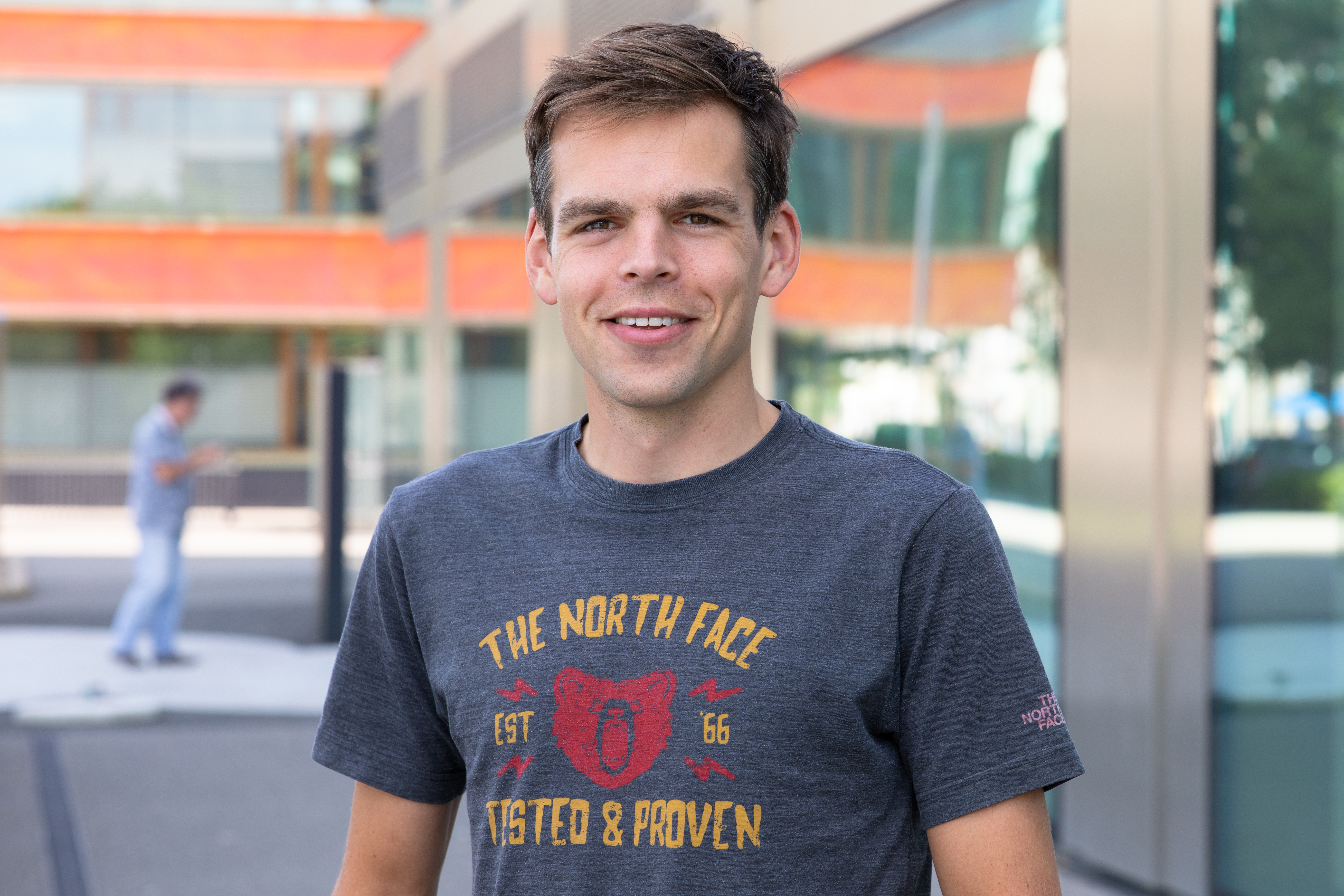
“We are particularly interested in questions such as how cells reliably commit to a specific fate, how they balance plasticity and stability, and how sparse and noisy signals can still steer development,” explains Daan de Groot.
The new team will combine computational tool development and theoretical modeling with collaborative, data-driven projects. They will use single-cell data to map the gene regulatory logic that governs specific differentiation events, and use theoretical models to hypothesize what parts of the found logic can be reused for cell fate decisions across a whole organism.
The team’s research will contribute to building comprehensive reference maps of healthy development. These could serve as a framework to identify the regulatory changes causing developmental diseases, either by studying unhealthy cells or by probing the roles of specific genes in differentiation.
A deeper understanding of cell-fate decisions could guide efforts to reproduce developmental processes using organoids. Through close collaboration with experimental labs at IMBA and beyond, the de Groot lab aims to identify perturbations that improve the reproducibility and fidelity of organoid models, bringing them closer to natural developmental processes.
Beyond his research, de Groot is committed to building a lab culture that values both intellectual boldness and scientific rigor. He aims to create an environment in which group members feel encouraged to share ambitious and even half-formed ideas, alongside a careful and systematic approach to testing them. “Some of the most exciting research directions start as intuitive guesses,” he says. “It’s crucial to create a space where people feel safe to voice those ideas without self-censorship.” Collaboration will be a central pillar of the de Groot lab, reflecting his belief that close interaction with colleagues of complementary expertise is essential for tackling complex biological questions. “The best thing about science is standing in front of a whiteboard with like-minded colleagues,” he adds.
Asked what drew him to IMBA and the Vienna BioCenter. De Groot says: “Until now, I have been extremely impressed by the community here on campus. From everyone, I’ve felt a mix of collegiality and extremely high scientific standards.” Joining IMBA, he sees both a challenge and an opportunity: “I feel a healthy pressure to live up to these standards, but I also know that I’ll get all the support I need.”
De Groot originally trained in mathematics, with a strong interest in abstract algebra and topology, before turning to mathematical physics during his Master’s studies to apply mathematical concepts to real-world problems. For his PhD, he transitioned to systems biology, investigating how bacteria adapt their metabolism in unpredictable environments. He then joined the lab of Erik van Nimwegen at the Biozentrum in Basel as a postdoctoral researcher, where he expanded his work on cellular decision-making to multicellular organisms. Across these stages, de Groot has consistently explored how mathematical and computational approaches can illuminate fundamental principles of biological decision-making.
De Groot is currently recruiting PhD students, postdocs, and a computational research manager to join his team. If you're interested in computational approaches to studying cell fate decisions using single-cell omics, keep an eye out for open positions.
Welcome to IMBA, Daan!