


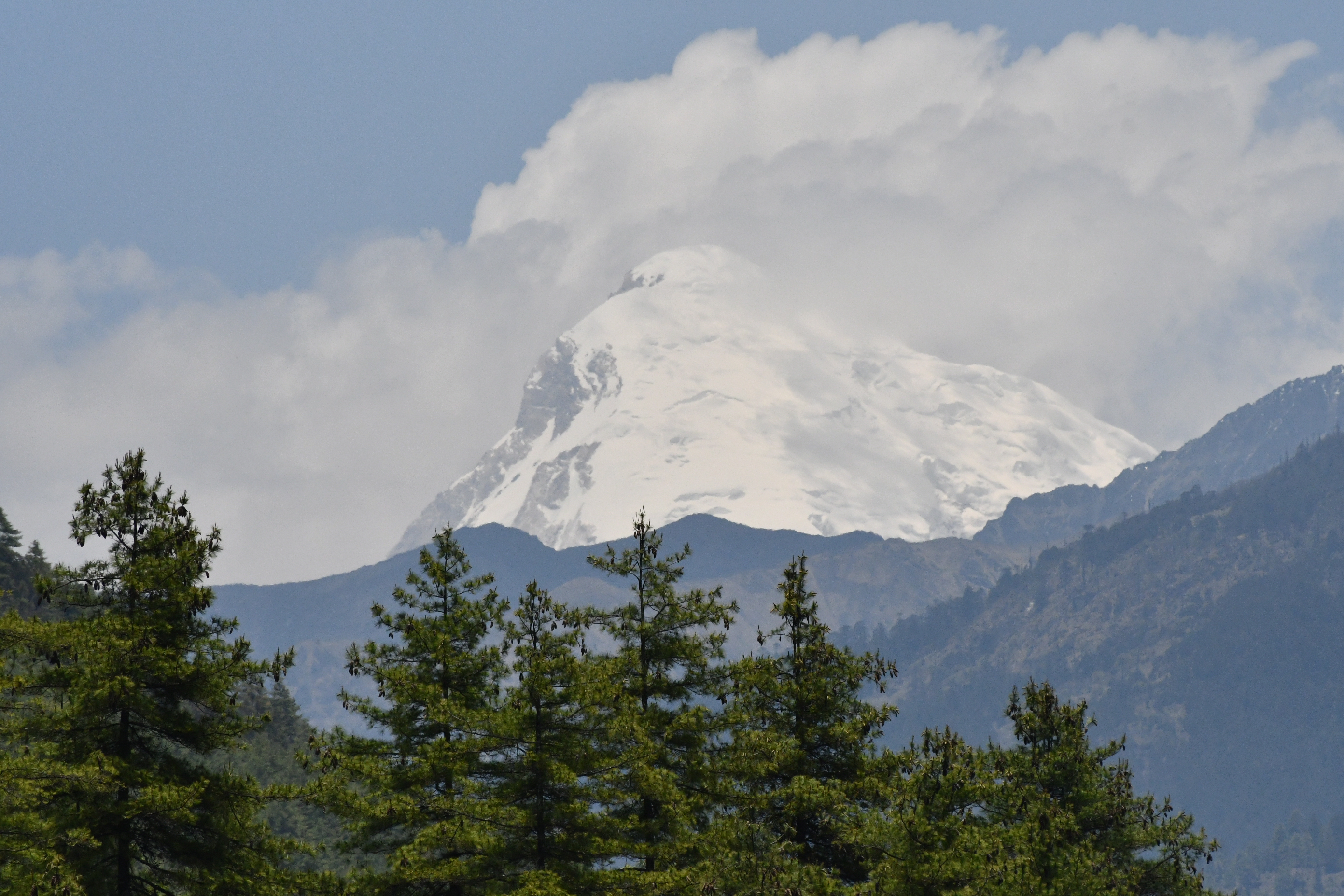
Günter Köck, associated scientist at the IGF, will travel to Bhutan for the third time on 16 November as part of a UNESCO mission to support the kingdom's authorities in establishing its first biosphere reserve.
It is of great concern to UNESCO to continually expand the world network of biosphere reserves, which currently consists of 759 sites in 136 countries, and to support countries that do not yet have a biosphere reserve in establishing this modern protected area concept.
A few years ago, the government of Bhutan decided to establish the country's first biosphere reserve. Since the country has no experience in designating and implementing such a protected area, Bhutan's UNESCO Commission approached the UNESCO Secretariat of the UNESCO ‘Man and the Biosphere (MAB)’ programme in Paris for support. The UNESCO regional office in Delhi (India) responsible for this matter then organised two fact-finding missions in February 2020 and May 2023, in which Köck, a proven expert who also advises the ‘World Network of Mountain Biosphere Reserves (WNMBR)’, was involved.
As part of the current mission, which is funded by the UNESCO Earth Network, consultations are being held with the Minister for Energy and Natural Resources and representatives of the Ministry's forestry department. A workshop on capacity building in the biosphere reserve area and an excursion to the planned protected area should help to take a major step towards finalising the extensive submission documents for the application for inclusion in the UNESCO World Network of Biosphere Reserves. In addition to Köck as the representative of the WNMBR, the UNESCO team consists of Miguel Clüsener-Godt (former director of the UNESCO Division ‘Ecological and Earth Sciences’, Paris), Stephanie Murr (Eberswalde University for Sustainable Development) and Sishtri Kumar (UNESCO Dehli Regional Office).
Interesting facts:
The Kingdom of Bhutan, which covers an area of 38,394 km2, is about 70% forested and is one of the world's most important biodiversity hotspots. It currently has five national parks and several other protected areas that are connected by eight biological corridors. The fact that just over half of the country's 19,750.17 km2 is protected area is a testament to the importance of nature conservation in Bhutan.
To date, 11,248 species have been identified in Bhutan, including 5,114 animal species and 5,369 plant species (of which 369 are orchids and 46 are rhododendrons). Of the almost 200 mammal species, 27 are considered globally endangered. According to the latest census, there are currently 131 tigers and 134 snow leopards in Bhutan. This means an increase of the tiger population by 27%, and an increase of the snow leopard population by almost 40% within six years, which is an enormous success for the conservation efforts of the kingdom.
The planned 90 km2 biosphere reserve is located in the area of the Royal Botanical Garden in Lampelri and forms a corridor between the two national parks Jigme Dorji and Jigme Singye Wangchuk. The area is home to more than 800 species of vascular plants (including 29 of the 46 species of rhododendron and 115 species of fern found in Bhutan), more than 230 species of birds (e.g. Himalayan monal, satyr tragopan) and over 24 species of mammal (including Bengal tiger, red panda and Asian black bear).
Author: Günter Köck