


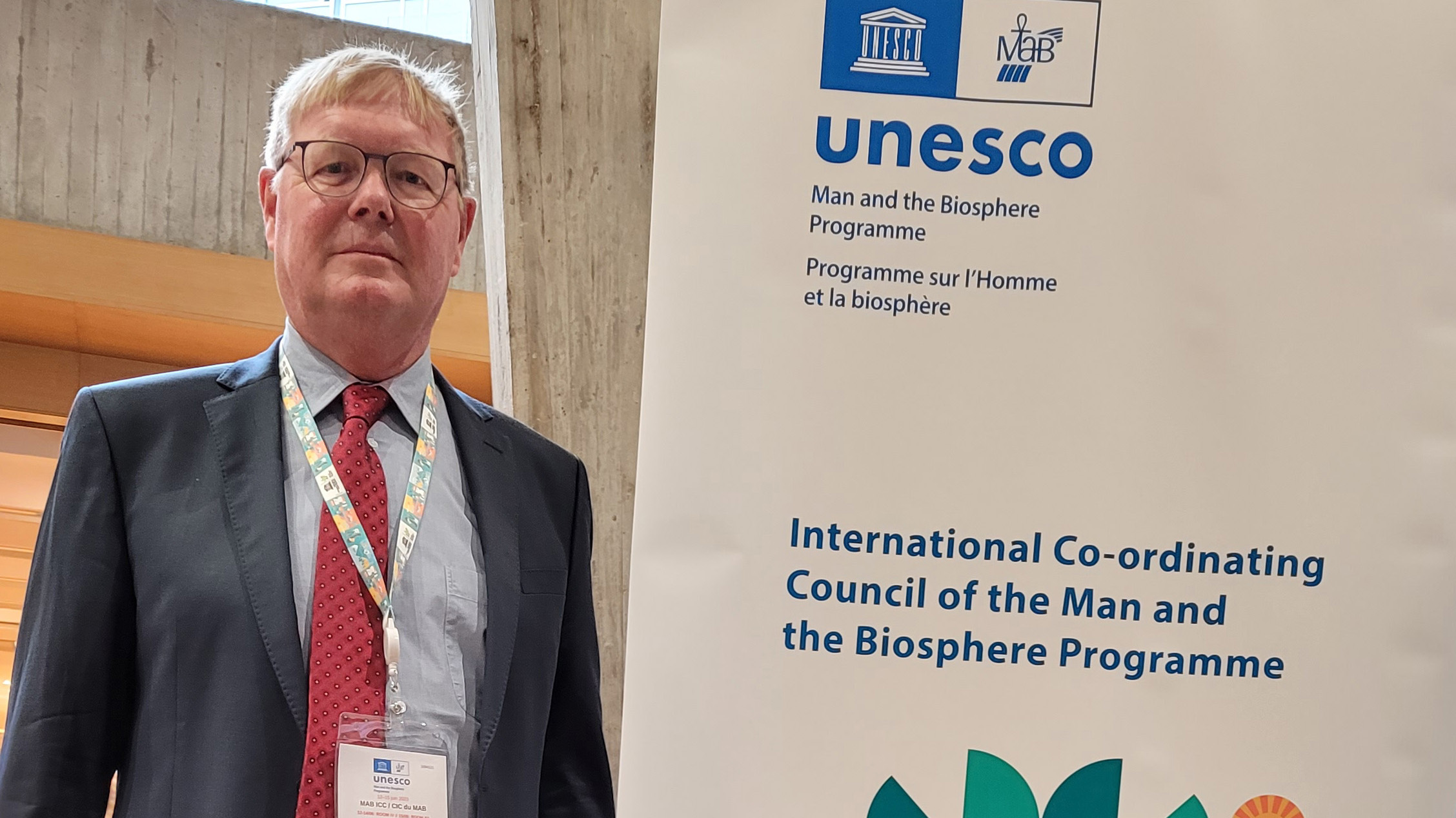

Günter Köck, an associate scientist at the IGF, will attend the Second Meeting of the World Network of Mountain Biosphere Reserves (WNMBR), which will take place from September 24 to 27 at the „Ordino Biosphere Reserve“ in Andorra.
Köck has been intensively involved in setting up the network from the very beginning and has acted as an advisor to the network for the past three years.
Through his decades of research work on high-mountain and Arctic lakes and his extensive experience with the UNESCO program “Man and the Biosphere MAB)” and its World Network of Biosphere Reserves, he provides valuable input for the WNMBR network.
The World Network of Biosphere Reserves (WNMBR) is a thematic network of UNESCO's Man and the Biosphere (MAB) Programme, launched in December 2021. It combines the unique diversity and culture of mountain ecosystems with a common framework for the conservation of the natural and human environment in a context of sustainability.
The World Network of Mountain Biosphere Reserves aims to provide constant support to biosphere reserves through research, strategic partnerships and collaborations as well as North-South and South-South exchanges of experience. This approach will enable the WNMBR to help achieve the Sustainable Development Goals and climatic and biodiversity agreements, without leaving anyone behind.
The WNMBR is coordinated by a Joint Technical Secretariat consisting of the Valles de Omaña y Luna Biosphere Reserve (Spain) and Research Center for Eco-Environmental Sciences (China), with the support of the MAB Secretariat at UNESCO Headquaters in Paris (France).
Why a Network of Mountain Biosphere Reserves?
- Mountains, which cover up to 27% of the Earth’s total land area, represent the most extensive spectrum of geology, climate, species and habitat types, flora and fauna known to us. Major mountain ranges such as the Himalayas, the Andes and the Alps are recognised to be global biodiversity hotspots.
- Mountain landscapes host up to 22% of the world’s population and provide natural and economic resources as well as a wide range of ecosystem services necessary for human survival.
- Mountain landscapes are among the most complex and diverse ecosystems on Earth, but they are also among the most vulnerable.
- Out of 759 BRs in 136 states worldwide, approx. 480 are mountain BRs.
The network meeting will focus on advancing our current plans to establish swift communication among members, thereby enhancing internal and external collaboration, strengthening leadership within our network, and discussing the progress of key projects. These include the Glacier Monitoring and Conservation project, the Cultural Giants initiative, the UNU-WNMBR Internship program, and the WNMBR Exchange Program.
*Please note: UNESCO has defined “biosphere reserve” as the official term for such regions. In view of the fact that many people regard a reserve as a protection area which excludes people, the term has been translated into Austrian German as “biosphere park”.