+43 1 51581 - 7742
michael.kuhn(at)oeaw.ac.at
Dominikanerbastei 16, 1010 Wien
Room 05 01 A R20 01
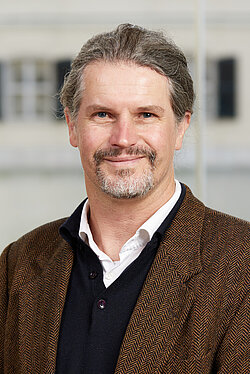
Michael Kuhn is leader of the research group Economic Demography at the Vienna Institute of Demography. Having received a doctorate in economics from the University of Rostock, Germany, in 2001 he has since held positions at the Centre of Health Economics, University of York, UK (1999–2004; lectureship), at the Max Planck Institute for Demographic Research/University of Rostock, Germany (2005–2008; junior professorship) and at the International Institute for Applied Systems Analysis (2021-2025; Program Director Economic Frontiers), where he continues to hold an affiliation.
Michael’s research interests lie in the areas of economic demography / population economics, health economics and economic epidemiology, with a focus on modelling the relationship between demographic, economic, medical and technological transitions. This is through the lens of life-cycle models that depict human capital processes at the individual level, and demographically realistic overlapping generations and other population models at the macro level. He has published, inter alia, in the Economic Journal, Annual Review of Economic, Journal of Economic Literature, Journal of Health Economics, Journal of Economic Theory, Journal of Population Economics, Journal of Demographic Economics; in leading medical and public health journals, such as Lancet Global Health, Lancet Planetary Health, the Journal of the American Medical Association – Oncology, Social Science & Medicine; as well as in general science journals, such as Nature Medicine and Nature Communications. He has led and co-led a significant number of national (FWF, OeNB) and international (HEU) research grants. He is coopted member of the field committees on “Health Economics” and “Population Economics” of the German Economic Association, the CEPR Research Policy Network “Ageing and Longevity”, and a Population Europe expert. Lastly, he serves as associate editor of the Journal of the Economics of Ageing.
Freiberger, M., Kuhn, M., & Wrzaczek, S. (2026). Integrating large health shocks into life-cycle models-Modelling impacts of a cancer diagnosis. Journal of Economic Dynamics and Control, 105367. https://doi.org/10.1016/j.jedc.2026.105367
Bloom, D. E., Kuhn, M., & Prettner, K. (2024). Fertility in high-income countries: Trends, patterns, determinants, and consequences. Annual Review of Economics, 16(1), 159-184.
https://doi.org/10.1146/annurev-economics-081523-013750
Chen, S., Cao, Z., Nandi, A., Counts, N., Jiao, L., Prettner, K., Kuhn, M., & Bloom, D. E. (2024). The global macroeconomic burden of Alzheimer's disease and other dementias: estimates and projections for 152 countries or territories. The Lancet Global Health, 12(9), e1534-e1543.
https://doi.org/https://doi.org/10.1016/S2214-109X(24)00264-X
Bloom, D. E., Kuhn, M., & Prettner, K. (2020). The contribution of female health to economic development. The Economic Journal, 130(630), 1650-1677.
https://doi.org/10.1093/ej/ueaa061
Frankovic, I., & Kuhn, M. (2019). Access to health care, medical progress and the emergence of the longevity gap: A general equilibrium analysis. The Journal of the Economics of Ageing, 14, 100188. https://doi.org/10.1016/j.jeoa.2019.01.002

Sinkende Geburtenraten

Why has the US hit a record low fertility rate?

Was eine Krebsdiagnose mit dem Lebensplan macht