+43 1 51581 - 7748
Bernhard.Riederer(at)oeaw.ac.at
Dominikanerbastei 16, 1010 Wien
Room 05 01 A R13 02
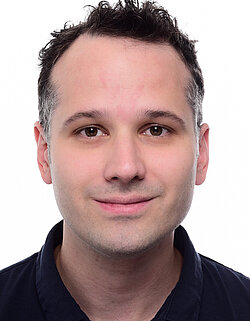
Bernhard Riederer received academic degrees in social and economic sciences (Sociology and Economics) at the University of Graz, Austria. Before joining the Austrian Academy of Sciences, he has primarily worked as a researcher and a lecturer at the University of Graz (Psychology department, Sociology department) and the University of Vienna (Sociology department). He is currently spokesperson for the ÖGS section for family research (since February 2022) and a member of the steering committee of the EAPS working group for register-based fertility research (since 2021).
At the VID, Bernhard Riederer is part of the research group Demography of Austria. His research focuses on fertility, the quality of life of families, the consequences of parenthood, and selected topics in the field of migration. He is particularly interested in comparisons between Austria and other European countries, as well as regional comparisons within Austria and Europe. His current work focuses primarily on fertility intentions and ideals, the differences in fertility behaviour between urban and rural areas, and Ukrainian refugees in Austria.