


The stress kinase MKK7 couples oncogenic stress to p53 stability and tumor suppression
13.02.2011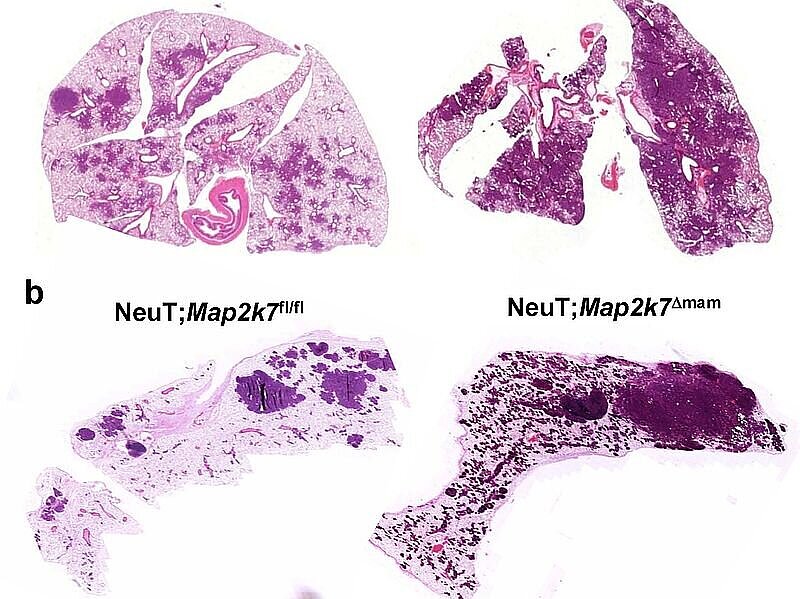
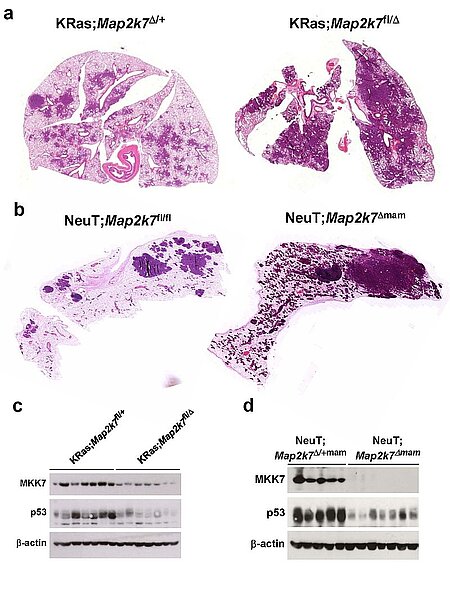
We could now show that MKK7 and the JNK signaling pathway also functions to suppress tumor formation in various organs such as the lung, the breast and the skin. It is well know that cells generally counteract oncogenic transformation by activating a cellular fail-safe mechanism: p53-induced cell cycle arrest or cellular suicide. This mechanism is absolutely crucial considering the trillions of cells in our body susceptible to sporadic mutations, which could ignite uncontrolled proliferation and tumor development. Failure of this mechanism leads to development of multiple, spontaneous tumors in humans and in mice. Using knock-out mice and improved primary cell culture systems I could show that MKK7 directly couples oncogenic and genotoxic stress to p53 stability required for cell cycle arrest and suppression of NeuT-induced breast and KRasG12D-induced lung tumors (Figure 1). Importantly, p53 overexpression could revert lung tumorigenesis in MKK7-deficient animals unambiguously confirming this new tumor suppressive mechanism. This study identified MKK7 as a vital molecular sensor to set a cellular anti-cancer barrier by linking oncogenic stress and the DNA damage response (DDR) to the key tumor suppressor p53. This work was recently featured as an Article in Nature Genetics.