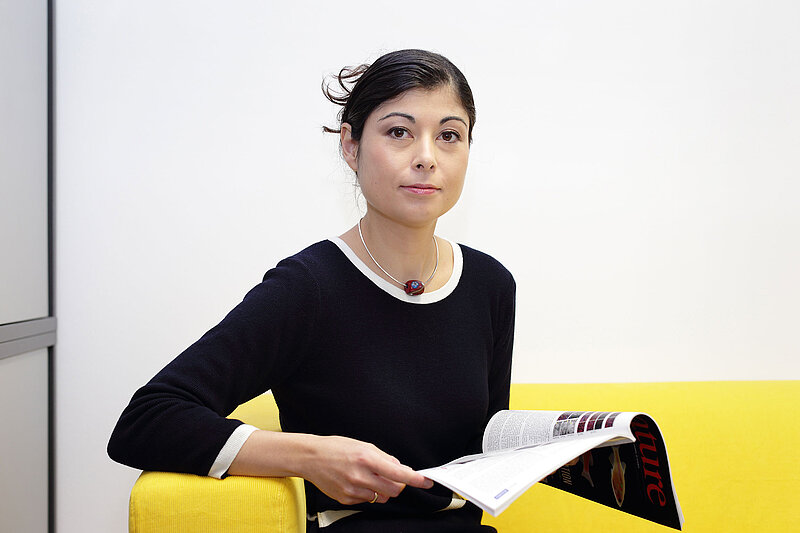
Kikuë Tachibana receives “the Herzfelder Family Foundation” grant by the Austrian Science Fund to further explore the Maternal Age Effect
17.12.2017
The past decade has seen a remarkable shift in the demographics of childbearing in many industrial countries. However, maternal age remains the most important risk factor leading to miscarriages and trisomy disorders. Three copies of one chromosome can result from a failure to accurately segregate chromosomes in the egg cell, erroneously retaining two maternal copies and acquiring a paternal copy from sperm following fertilization – such as three copies of chromosome 21 (Down’s Syndrome) or chromosome 18 (Edward´s syndrome).
What causes the maternal age-related increase in aneuploid pregnancies has remained enigmatic for decades. One key hypothesis focuses on a ring-like protein complex called cohesin. It embraces the replicated chromosomes until cell division. Precocious loss of cohesin prior to cell division can result in chromosome missegregation and aneuploidy. The Tachibana lab could demonstrate in 2016 that cohesin holds chromosomes together without renewal from oogenesis in fetal embryos until the meiotic division in adult mice. This suggests that loss of chromosomal cohesin with age is likely irreversible.
As a current research goal, the research group wants to examine how this process can be delayed preserving female fertility. “The relevance of this project is represented by a global increase in maternal age, as we see a clear trend towards late motherhood. Our focus now is to determine what causes the physiological ageing of oocytes and how this leads to deterioration of cohesin, resulting in chromosome missegregation and aneuploidy pregnancies.
"We are proposing a new hypothesis and Emmanouella Chatzidaki, a postdoc in my lab, is excited to rigorously test it."