


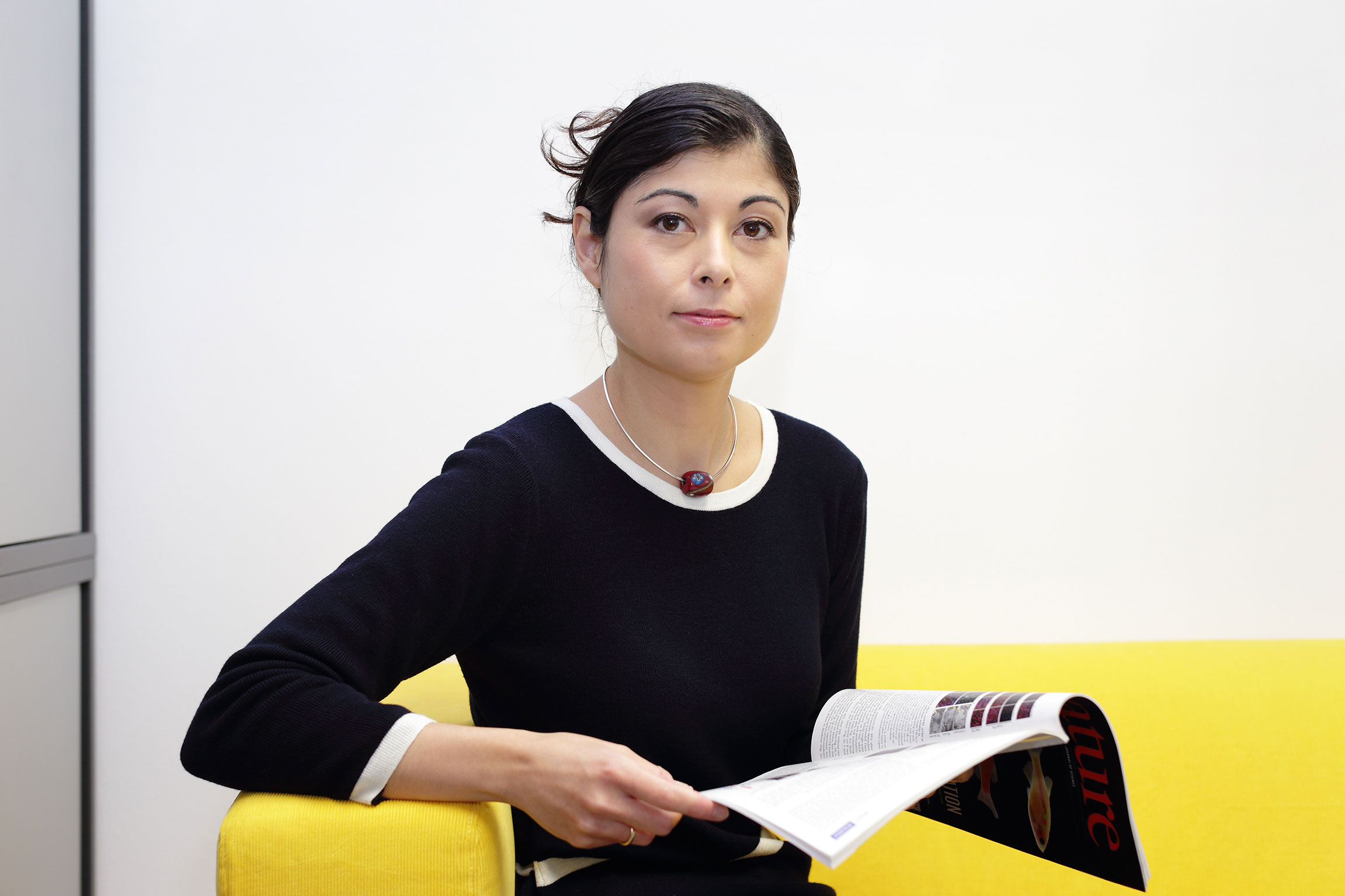
With her research Kikuë has been rigorously exploring the molecular mechanisms underlying the mammalian oocyte-to-zygote transition. Her recent research focuses on the fundamental questions of how chromatin is reorganized and reprogrammed after fertilization. She has discovered that erasure of the epigenetic memory of sperm chromatin is monitored by a surveillance mechanism that ensures reprogramming occurs within one cell cycle. Kikuë is also deeply committed to unravel the molecular causes of the maternal age effect, which is the increase in trisomic pregnancies with maternal age, and aims to provide scientific insights that have potential applications for this rising societal challenge. Her previous work on cohesin, a protein complex that holds replicated chromosomes together, provided support for the hypothesis that the irreversible loss of cohesin contributes to maternal age-related egg aneuploidy and infertility.
About Kikuë Tachibana- Konwalski
Kikuë was educated in Austria, Japan and the UK. She obtained a PhD with Ron Laskey in cell cycle and cancer research from Cambridge University. She continued her postdoctoral research in Kim Nasmyth’s lab in Oxford, where she developed an assay that pioneered the use of TEV protease technology in the mouse to study cohesin in female germ cells. Since November 2011 Kikuë is a group leader at IMBA. 2013 she received an ERC Starting Grant for "Chromosome inheritance from mammalian oocytes to embryos”.
About the Walther Flemming Award
In 2004 the German Society for Cell Biology first awarded a research prize donated by the Society itself. The award is named after Mr Walther Flemming, a pioneer of cell biological research, who gave a detailed report of the process of cell division, naming it mitosis. Hence, Walther Flemming is one of the prominent founding fathers of cell biological research and a worthy namesake for this distinguished award of the Society. There is hardly a week without a handsome mitosis spindle flashing from the cover of a cell biological journal, while the origin of mitosis research is unknown to most readers. By awarding this prize, the Society commemorates the initiator.