


Hyosang Kim receives EMBO fellowship
09.07.2025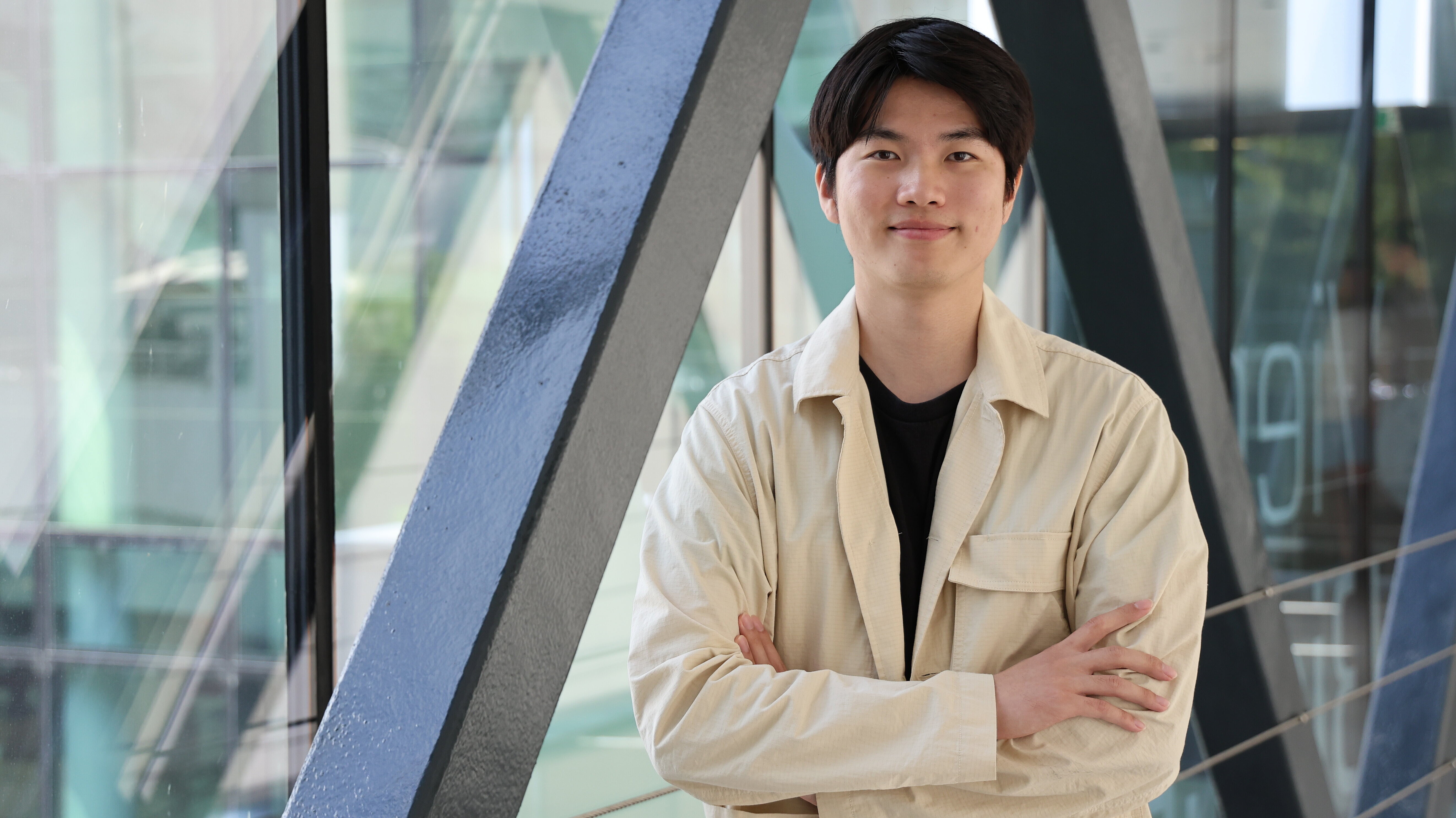
Hyosang Kim, a postdoctoral researcher in the Knoblich lab at IMBA, has been awarded a prestigious EMBO Postdoctoral Fellowship to support his research on the origins of autism spectrum disorder (ASD).
Autism spectrum disorder (ASD) is one of the most common neurodevelopmental conditions, affecting about 1 in 36 individuals. It is characterized by challenges in social interaction, communication, and behavior. Research suggests that ASD arises when the brain’s delicate balance between excitatory and inhibitory signals is disrupted, leading to an “E/I imbalance” that affects how neurons connect and communicate. While this imbalance has been seen in animal models, its exact molecular causes in the human brain remain poorly understood. Hyosang Kim is investigating how specific genetic mutations found in patients may disturb this excitatory–inhibitory balance during brain development, ultimately leading to ASD.
Using advanced human brain organoid models derived from patient-induced pluripotent stem cells, he will recreate miniature, three-dimensional brain-like tissues in the lab. By generating organoids enriched in either excitatory or inhibitory neurons, and then combining them into assembloids, Kim will study how these two critical types of neurons mature and interact in a patient-specific context. This approach could reveal how a single genetic mutation alters neural circuit formation and leads to features of ASD, improving our understanding of how genetic changes translate into the disorder.
Hyosang Kim earned is PhD in neuroscience at the Korea Advanced Institute of Science and Technology, where he focused on brain functional abnormalities and pharmacological restoration in mouse models of autism spectrum disorder (ASD). He continued exploring ASD mechanisms using mice during his time at the Institute of Basic Science in South Korea. Now, as a postdoctoral researcher in the Knoblich lab at IMBA, Kim has transitioned to human iPSC-derived cerebral organoid models, furthering his investigation of ASD by recreating patient-specific features of the developing brain.
EMBO Postdoctoral Fellowships are highly competitive awards that promote scientific excellence and international mobility among Europe’s best early-career researchers, providing crucial support for independent and innovative projects for up to two years. Awardees can attend an EMBO Laboratory Leadership course and become part of the global network of EMBO Fellows.