


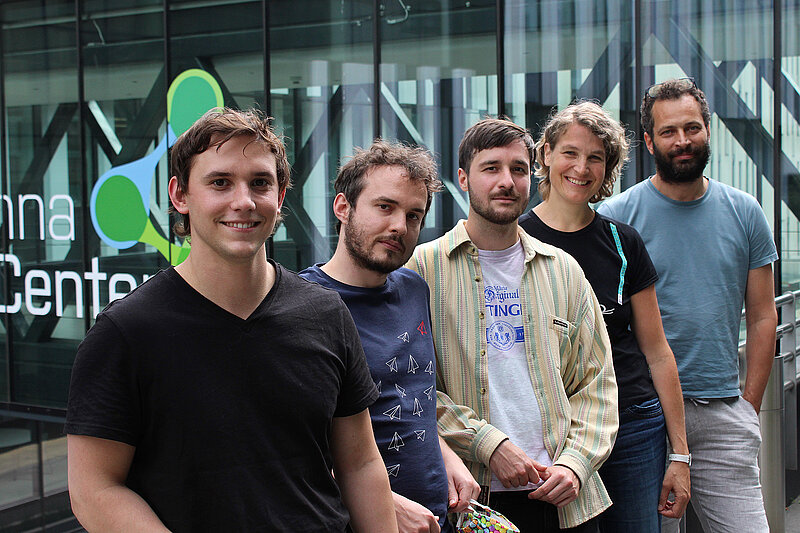
Scientists from the Vienna BioCenter have now improved an established nucleic acid detection assay, the so-called "Loop-mediated isothermal amplification (RT-LAMP)", and thus created a new tool for population-wide screening approaches, especially in economically disadvantaged countries. The method is published on bioRxiv, a preprint service, and is the result of another fruitful collaboration between scientists of different institutes at the Vienna BioCenter.
With this new method, viral RNA is converted into DNA and multiplied billions of times in less than 30 minutes by a simple reaction. The generation of such enormous amounts of DNA can be directly observed with the naked eye by a visual colour change from violet to sky blue in the reaction vessel. Neither special laboratory equipment nor expert knowledge is required - the most difficult step is to keep the sample at a stable temperature of about 63°C during the 30 minutes of the reaction, a task that can be performed - if necessary - by reusable kitchen equipment.
"Our method builds on existing protocols developed for pathogen detection," says IMBA group leader Julius Brennecke. "For SARS-CoV-2 detection, we have succeeded in improving it to a level that corresponds to a sensitivity similar to qPCR. We hope that our method will make a real difference not only in developing countries but also in resource-poor environments around the world. There is now an urgent need for affordable and rapid SARS-CoV-2 screening and diagnostic approaches".
Link to the full story on the Vienna BioCenter website
Link to the publication on bioRxiv