


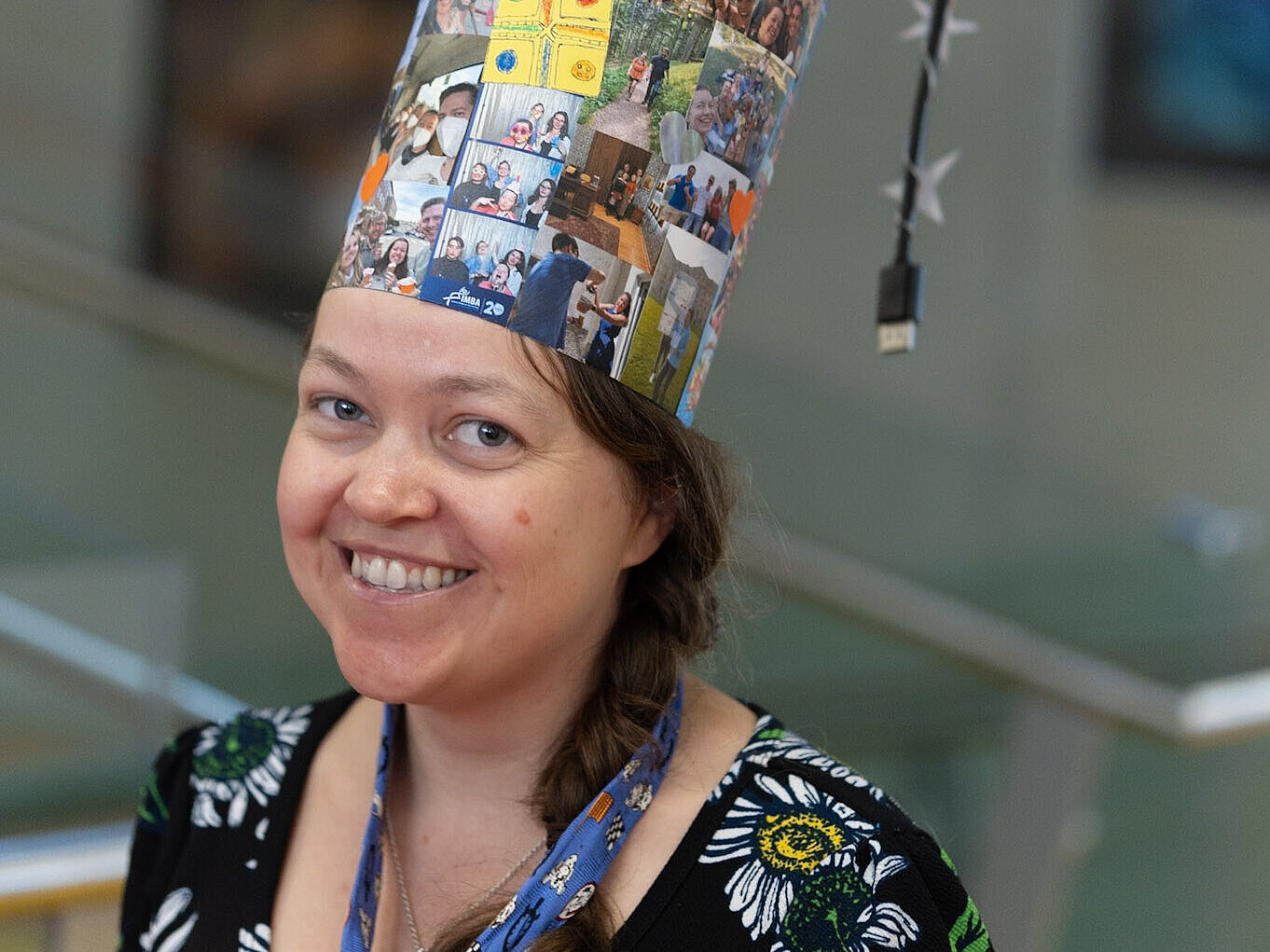
Alison Deyett earned a Bachelor of Science in Chemical Engineering at the University of New Hampshire, which was followed by a research project at Vertex Pharmaceuticals, where she worked on disease modeling. In 2019, Alison joined the group of Sasha Mendjan at IMBA. In 2024, Alison received the Vienna BioCenter PhD Award for her doctoral thesis. After leaving IMBA, Alison joined Michael Laflamme's lab at the University of Toronto, in Canada, as a postdoctoral fellow.
I wanted to elevate my career and have more responsibilities as a scientist. I decided to pursue a PhD degree at IMBA because it was an established institution in the field of organoid research, a topic I had become passionate about while working at Vertex.
I established a multi-chambered cardioid system that models the five major developmental regions of the heart. This new system allowed me to study how the heartbeat initiates and how the different heart regions coordinate to work together. I also investigated how genetic and environmental factors disrupt heart formation, leading to congenital heart diseases.
My mentor encouraged me to design and lead my own project, providing valuable support and advice throughout. In addition, having access to professional experts in various fields provided a great learning opportunity and helped streamline my project.
My PhD at IMBA was filled with both challenges and breakthroughs. There were many obstacles, but each one helped me refine my skills and push through with creative solutions. Leading a team and collaborating with others to overcome these challenges was incredibly rewarding, and the process of discovery kept me motivated.
I was surprised by how many different hats I had to wear as a PhD student. Learning how to mentor younger students, produce scientific illustrations and communicate science were challenges that ultimately helped me develop a more rounded skillset.
The Vienna BioCenter “Prime your PhD” course was a great opportunity to connect with other students. I also enjoyed mentoring younger students, helping them design their own projects and blossom into independent researchers.
I learned a lot about how to present my research in written and audiovisual forms. Additionally, I gained experience in effectively managing other scientists and helping them flourish on their own, which is essential for the future steps of my career.