


Writing the Void: On the Methods and Ethics of Constructing the Memory of Absent Armenian Heritage within Ottoman Architectural and Social Histories: The Case of Early Ottoman Amasya
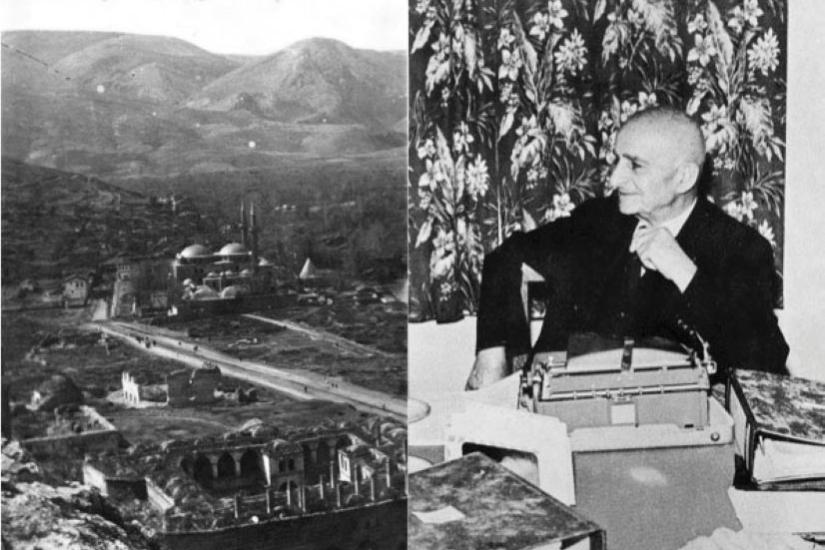
Public Lecture by Polina Ivanova at the Central European University
Abstract
In the late fifteenth century, the royal Ottoman mosque complex of Bayezid II was built in Amasya, an important city in Ottoman Anatolia, directly beside a small medieval Armenian church, St. Nicholas. For centuries that followed, and until 1915, these two spaces coexisted, serving Amasya’s multi-confessional population. Today, the royal complex dominates both the cityscape and the architectural histories of the city. The Armenian church, by contrast, has disappeared: physically destroyed during the Armenian Genocide, it was soon erased from urban memory and excluded from subsequent scholarship on Amasya’s history and architecture. Focusing on the case of St. Nicholas, this talk examines what it means to construct the memory of an absence. It engages the Armenian genre of houshamadyan or “memory books” to show what precious evidence about Armenian monuments can still be “excavated” from these texts. At the same time, it argues against the temptation to simply “reconstruct” perished monuments and seamlessly inscribe them into existing urban and architectural historiographies. Instead, it advocates for a research and narrative method that exposes the inherent limits of the surviving evidence, attends to singular stories of erasure and survival, and uses the space of scholarship to render the voids left by disappeared Armenian heritage palpable in ways that the cities themselves no longer (not yet?) can.
For the zoom link and other details, see HERE
Informationen
Time
19 February 2026
5:30 - 7:30 PM
Hybride lecture (online or in person at the CEU)