


Zohar MEIR
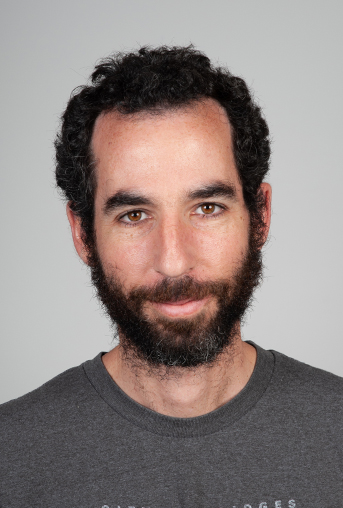
Zohar MEIR
- Postdoc
- Group Dolan
Funding
April 2023 – January 2024: EMBO Postdoctoral Fellowship
January 2024 – January 2027: HFSP Long-term Fellowship
Former and Current Positions
since 2023 - Postdoctoral fellow in the Dolan Group.
2017-2023 - PhD student at the Weizmann Institute of Science, Israel.
2014-2016 - MSc at the Weizmann Institute of Science, Israel.
Research Projects
Understanding niche formation in plants by massively parallel analysis of individual Marchantia sporelings
Little is known about how the plant stem-cell niche is initially specified. This is due to the lack of a clear set of morphogenetic events preceding their appearance, and their inaccessible development in tiny embryos, deep inside layers of tissues. To overcome these challenges, we have combined flow-cytometry and light-sheet microscopy for unbiased characterization of the emergence of a stem-cell niche from the mass of cells developing from a single-celled, bare spore of Marchantia polymorpha.
We observed that whereas all spores develop a stem-cell niche, its initiation timing and the morphogenetic changes preceding it were highly variable. Thus, we developed automated protocols for high throughput mini-bulk transcriptome profiling of hundreds of individual sporelings sampled at different stages (when each comprises of 1-100 cells, and refine their developmental trajectories in-silico. This high resolution molecular and morphogenetic analysis, of a process that was thus far largely inaccessible, establishes an experimental and analytic framework for quantitative, unbiased mapping of the establishment of the first stem-cell niche in plants. This would allow discovering the mechanism driving its formation, and may reflect more broadly on our understanding of how stochastic biological systems converge into the robust formation of stable niches with particular, multipotent characteristics.
Research interests
I am interested in the epigenetic mechanisms driving only a subset of cells to serve particular functions. My working hypothesis is that the “classic” epigenetic marks may serve as one of the layers of information that can persist over time and cell-divisions to deliver such epigenetic instructions, but there might be additional mechanisms. Finding those mechanisms and understanding how those act in “simple” models such as the Marchantia spore, could serve as a great basis to hypothesize how they shape the individual or combined activities of cells in plants and animals to derive different functions.