


DOC Fellowship for Hing Pan Ng
10.07.2025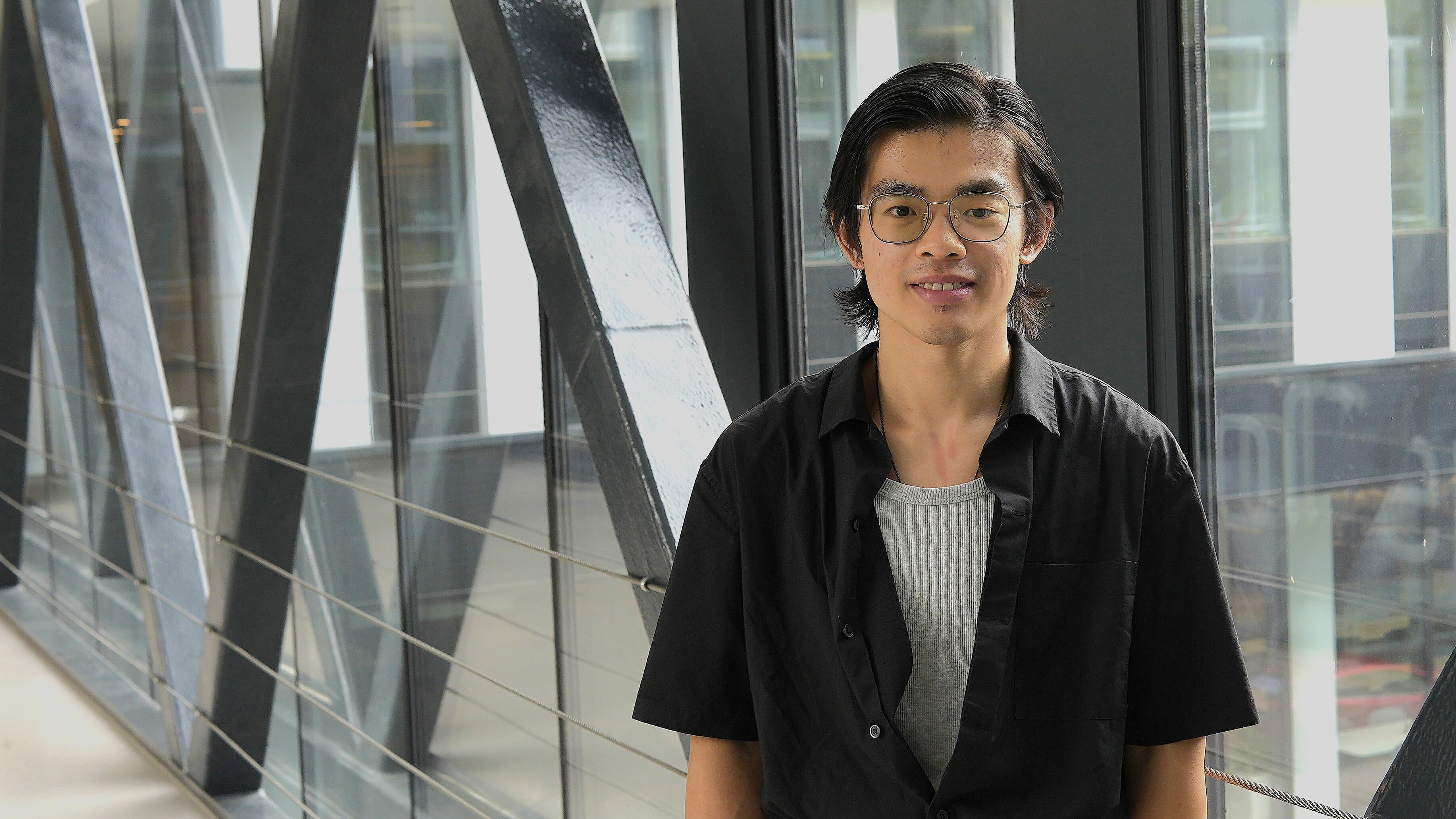
Hing Pan Ng, a PhD student in Yan Ma’s lab at the Gregor Mendel Institute (GMI), was awarded a prestigious DOC Fellowship by the Austrian Academy of Sciences (ÖAW). The fellowship will support Ng's doctoral research and connect him to a network of promising young researchers.
In his project, Ng will use a new Arabidopsis thaliana infection model, developed by the Ma lab, to investigate how the Swede Midge controls the shape of plant cells during gall formation.
Some insects can reprogram plant cells to develop complex, specialized structures called galls, which provide protective and nutritional benefits to the insects and their larvae, often at the expense of plant health. Indeed, gall-inducing insects represent a common agricultural pest, inflicting significant economic damage, for example, on crucifer crops. “Insect-induced galls are a remarkable example of host manipulation, but the molecular mechanisms involved in their formation are largely unknown,” Ng explains. “To study how insects hijack plant molecular pathways to induce gall formation, our group has pioneered the development of an infection model using a small insect called the Swede Midge (Contarinia nasturtii) that can induce gall formation in the plant model Arabidopsis thaliana.”
Ng’s project focuses on how the Swede Midge remodels the cell wall, an essential structure in all plant cells, to create galls. “The cell wall not only gives the plant strength and shape, but also helps control growth and protects the plant’s cells against pests and diseases,” Ng explains. “Given the cell wall’s importance, many insects and pathogens try to break it down or modify it to their advantage.”
Ng will combine advanced staining and imaging techniques with molecular genetics to study how different effector proteins in the Swede Midge’s saliva affect cell wall dynamics and the plant’s defense mechanisms. Understanding how insects induce galls is the first step towards developing effective pest management strategies, including genetically engineered crops that can counteract the molecular strategies used by gall-inducing insects.
“I’m very thankful to my supervisor Yan Ma and the Austrian Academy of Sciences for their support, enabling me to pursue this exciting research project and further develop my scientific career,” Ng adds.
About Hing Pan Ng
Hing Pan Ng obtained a Master’s Degree in Biochemistry at Uppsala University. In 2024, he joined Yan Ma’s lab as a Vienna BioCenter PhD student.
About the DOC Fellowships
The DOC Fellowship Programme of the Austrian Academy of Sciences offers funding for highly qualified doctoral candidates in all areas of research. Selected candidates receive yearly funding for a period of two to three years.