


It is generally understood that remembering and forgetting are two sides of the same coin when it comes to the politics of memory and national mythmaking. Yet, in the myriad of conceptual works that address memorialization, the forgetting conventionally occupies a secondary position, being addressed due to its inevitability in the memory-making but never taken as the primary perspective of analysis. Inspired by the evolving cutting-edge debates on “negative methodology”, the research project explores the mnemonic practices of erasures, void-generation, and silencing, while empirically looking into case studies of domestic state violence across various national contexts in global perspective. Like with conceptual discourses on “forgetting”, there is a felt gap when it comes to memory works that specifically address situations in which nation states inflict violence on its own citizens – whereas there is commendable scholarship that addresses this phenomenon within respective localized case studies, there is yet to be a study which looks at those mnemonic practices in a comparative global context. Recognizing the necessity of nuanced contextualization and the simultaneous perils of context comparisons, I nonetheless propose to enquire whether we might be missing something in the larger perspective by concentrating on localization and context-specifics. In response to and building on the widely discussed “globalization of memory”, suggesting that there are shared and travelling memory tropes, I propose to rephrase and ask: Are there also common strategies of oblivion and mnemonic exclusion that transcend political systems, geographies, and cultural specificities?
Learn more
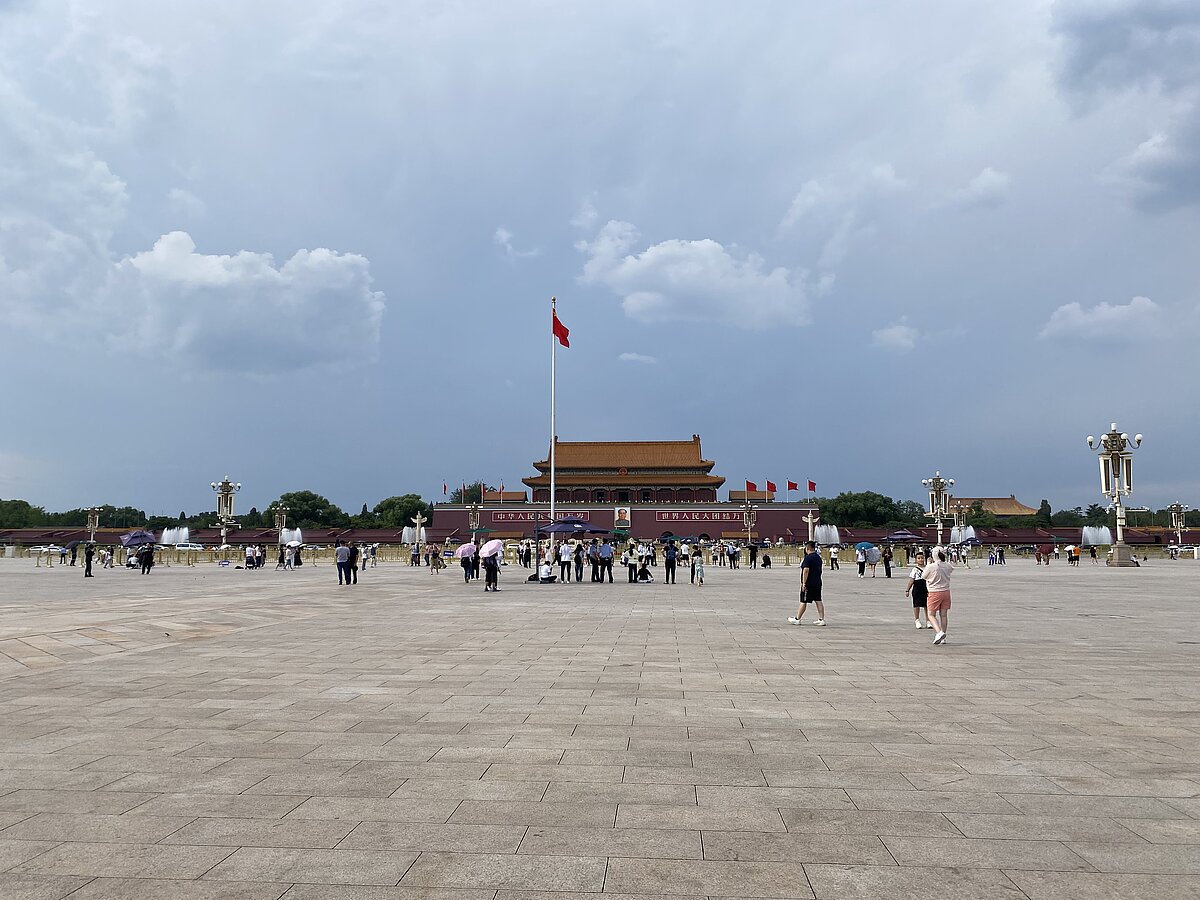
To explore these wide-ranging questions, the project turns to specific cases of domestic state violence in East Asia, specifically China and South Korea, and Latin America, with a particular focus of Argentina and Chile. These two regions could not be geographically further apart, and there are significant contextual differences in socio-cultural aspects as well as in the political systems. What these four nation states share, however, is a recent past of state-perpetrated atrocities, and a post-violence mnemonic need to deal with their legacy accompanied by a high level of controversy and various forms of tactical forgetting. In China, the brutal suppression of the student movement of 1989 in major Chinese cities transformed into the most prolific “elephant in the room” of public discourse in China, becoming what Margaret Hillenbrand famously branded as something that everyone “knows to not know”. In Argentina and Chile, the atrocities committed by the state embody an obliviating element in the essence of the violent act as the murdered victims are commonly referred to as “desaparecidos”/”the disappeared”. In South Korea, the conservative government of the People Power Party attempted to discredit the onslaught on democratic uprising in Gwangju by proclaiming it was instigated by the DPRK in the 2010s, more than thirty years after the atrocity took place. These four case studies entail an interesting scope for relational comparative dynamics allowing for an analysis of regional as well as global trends. Through an investigation of urban sites of past violence, state policies, archives, national museums, as well as public discourses, this research seeks to make a radical intervention in extant scholarship by addressing the mnemonic workings of nation states across political spectrums, challenging the limits of global comparative studies, and conceptualizing the role of “forgetting” as a political force.
Project Leader: Markéta Bajgerová Verly
Duration: 03/2026–02/2030
Funding: APART-GSK (ÖAW)
Cooperations: Marcos Pablo Centeno Martin, University of Valencia and the project TRAMEVIC: Transnational War-time Memories in East Asian Visual Culture funded by Generalitat Valenciana