


Session: Emotional Heritage, Urban Spaces, and the Politics of Memory
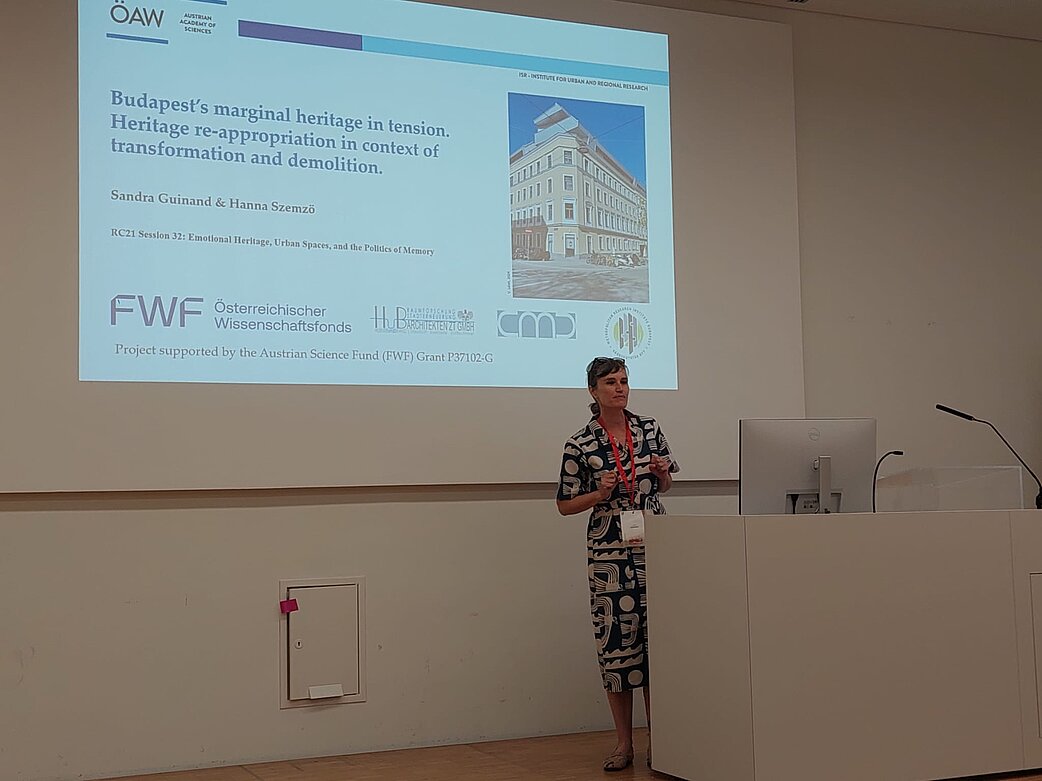
Budapest’s marginal heritage in tension. Heritage reappropriation in context of transformation and demolition
Sandra Guinand & Hanna Szemzö
The Gründerzeit housing stock (GHS), built during the Austro-Hungarian Empire (1867–1918), largely shapes the urban fabric of Budapest. Although this heritage is historically and socially significant, the GHS located in partially marginalised neighbourhoods – such as the 7th and the 8th district– suffers from neglect, demolition or insufficient preservation due to its perceived low aesthetic value, lack of recognition (Smith, 2006) and public financial means to maintain it. In the last decades, this housing stock, experienced changes in functions associated with tourism expansion, such as hotel conversion or platform urbanism, as well as demolition harnessed to developers’ agendas and lack of protection from public authorities. The latter seems to be changing in the last years, however, given the lack of financial and decision making capacity on local level, it happens slowly.
This historic housing holds, however, intangible cultural, social, and economic dimensions which transformations go beyond the individual building and have an impact on the neighbourhood (Guinand et al., 2025). Moreover, these buildings hold cultural and social values for the people who use and practice them. This shows that power struggles, often marked by a differentiation between the centre and the periphery, and between wealth and poverty, is reinforced within heritage practices and processes (Olwig, 2001). Examining the 8th district of Budapest, this paper aims at doing two things: first it wants to discuss “marginal heritage” as a theoretical and analytical tools for investigating new forms of relational heritage, and, second, exemplify it by presenting forms of resistance through the work of the 8th district museum and its ability to connect and mediate the residents’ community with the intangible meanings associated with these historic buildings through collective memory workshops and its exhibition hall. As such, the museum does not only give residents the power to adopt and re-appropriate heritage narratives but also acts as a vehicle for cultural and social continuity in a context of significant urban changes.
Session: The End of Post? Rethinking Urban Practices and Structures and Their Impact on Inequalities in Post-Socialist and Post-Industrial Cities
Remaking Jozsefvaros: identity, politics and the long shadow of Socialism in the in the gentrifying Budapest
Hanna Szemzö & Sandra Guinand
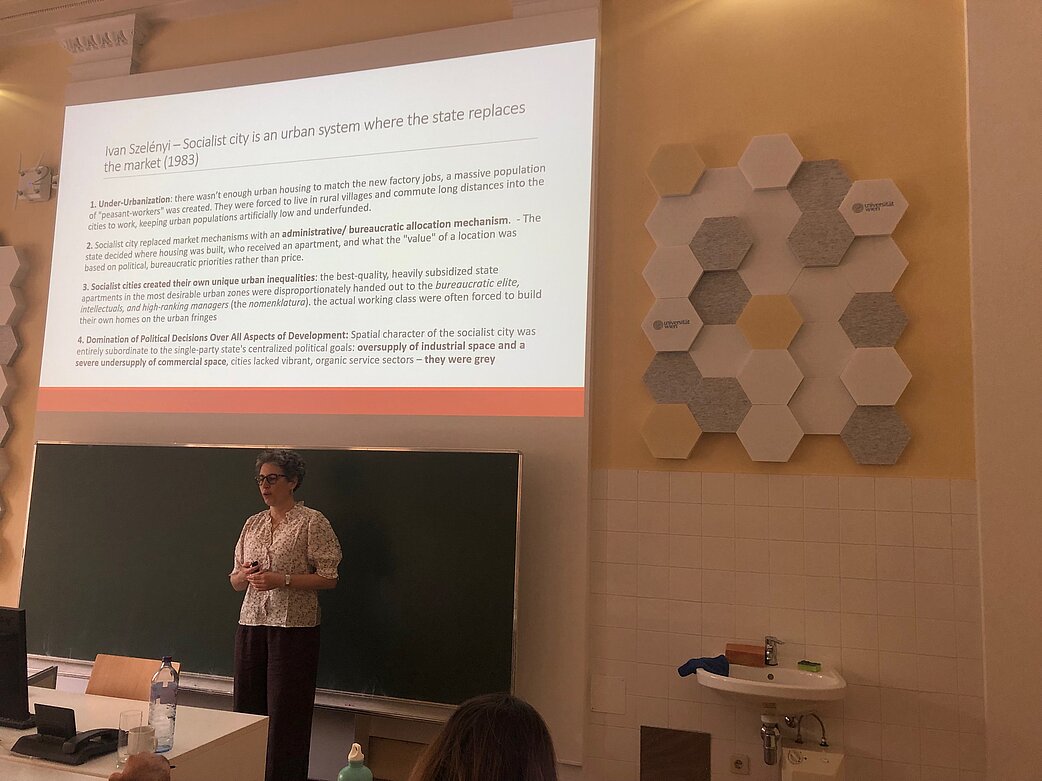
Since the political regime change of 1990, cities across the former socialist regions have followed increasingly divergent development paths, making them progressively less comparable and less easily captured by the overarching category of “post-socialist” cities. Although housing markets in these countries are uniformly characterized by exceptionally high rates of homeownership, very little social and affordable housing they nevertheless display notable differences rooted in the distinct strategies pursued by national and municipal governments to address a deepening housing crisis (Hegedüs, Lux and Teller, 2014; Kepes and Szemző, 2025). Nevertheless, a set of regulatory dysfunctions common to many post-socialist urban settings can still be identified. These typically include weak or non-enforceable regulatory frameworks, insufficient public financing, and, in many cases, a less predictable or stable rule of law.
The combination of these factors have resulted in uncoordinated transformations in many cities that substantially limit the current and future capacity of local authorities to steer planning and urban development. This governance vacuum opens the urban arena to a wide range of actors that - public, private, and informal - pursue their own interests, frequently with limited oversight, responding to global, European and very local challenges, creating a very specific post-Socialist scene.
Taking Budapest’s Józsefváros (8th district) as a case study, an area which used to be viewed as the city “ghetto”, and still houses most vulnerable households in the city, the paper examines how external economic pressures, touristification, gentrification combined with regulatory disfunctions have contributed to reshaping the built environment, changing the local identity and the profound reconfiguration of the district’s social and cultural urban landscapes. The analysis puts the work of local civic initiatives in its centre. These organisations have been actively fighting for local residents, combining political activism with building conservation, and organising events, like city walks as a form of resistance to understand and safeguard local identity.