


From its founding as a discipline, some of the field’s leading thinkers have been looking for a more just human world where all of humanity could be understood on a more equal footing. Quite of few of them were convinced of having found such a world in societies they consequently referred to as ‘egalitarian’. The portraits of such societies have long focused on small communities of hunter-gatherers or pastoralists, with a resolute emphasis on mutual exchange, immediate returns, or the freedoms of political segmentation.
At the same time, such attempts to find egalitarian societies in real life have been strongly contested. Marshall Sahlins not only argued that all known societies exhibit status differentiation in terms of gender and age, but also that they are governed by metahumans and thus embedded in hierarchical power relations. Luis Dumont has insisted on the universality of hierarchy, rendering each attempt to undo hierarchy as futile. And Paul Dresch portrayed segmentary societies – classic examples of egalitarianism along with hunter-gatherers – as a fantasy.
Perhaps it is time to let go of the notion of egalitarianism altogether, but I would rather suggest a change of perspective. Instead of continuing to search so hard for admirably, but empirically shaky egalitarian alternatives to our own imperfect worlds, we might focus on the mechanisms by which different regimes of equality, across time and space, were hard won. What we might find, as I suggest in my presentation, is a good deal of hierarchy, with egalitarian aspirations made open to some but not all.
Short bio
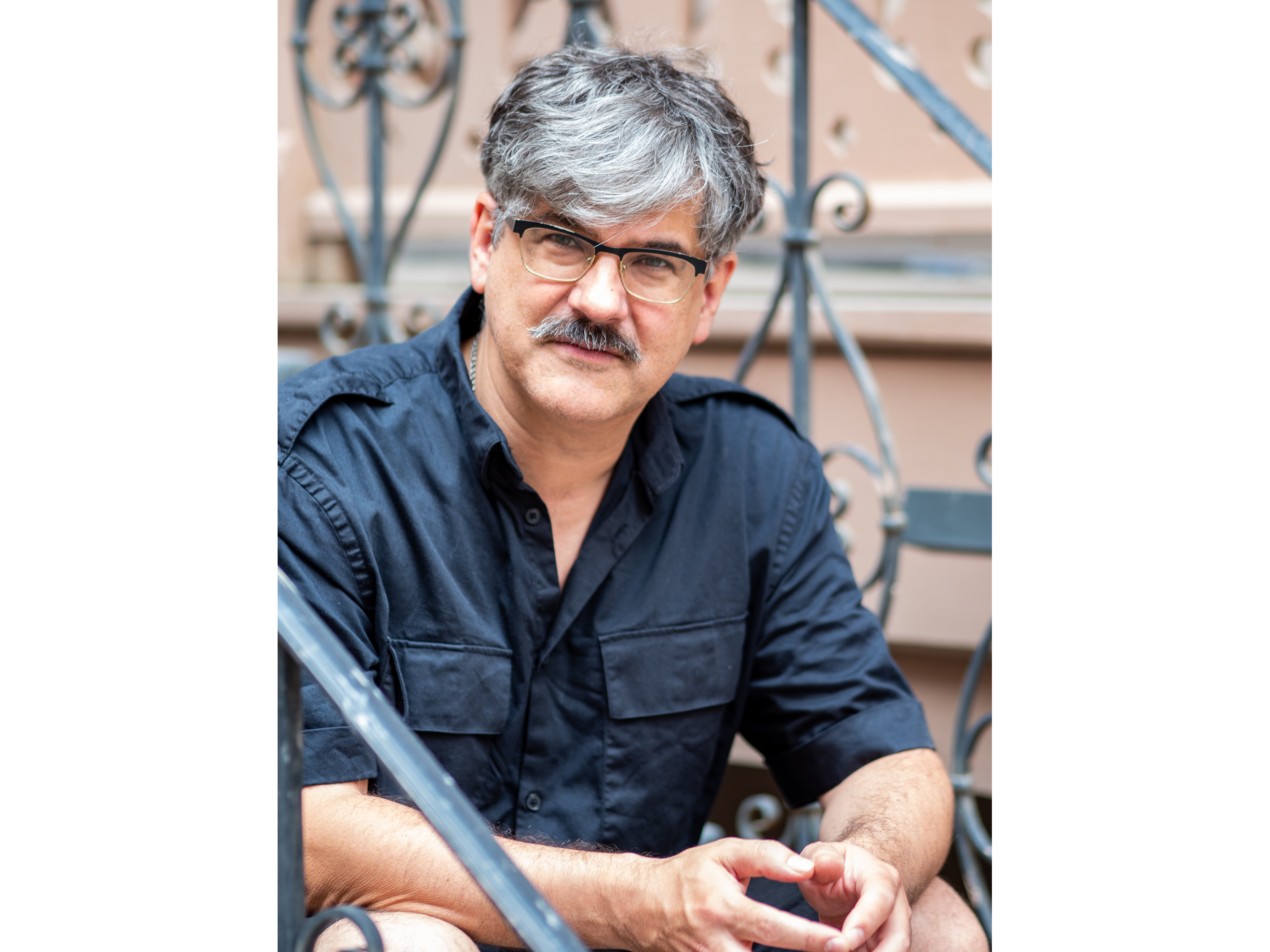
Florian Mühlfried is a Professor of Social Anthropology at Ilia State University. He has been a Lecturer at the Tbilisi State University, a Research Fellow at the Max Planck Institute for Social Anthropology, a Visiting Professor at the State University of Campinas (Brazil), and an Assistant Professor at the Friedrich Schiller University Jena (Germany). His publications include the monographs Ungovernance and Anti-Governance (2022, in German), Mistrust: A Global Perspective (2019) and Being a State and States of Being in Highland Georgia (2014), the edited volume Mistrust: Ethnographic Approximations (2018), as well as the co-edited volumes Sacred Places, Emerging Spaces: Religious Pluralism in the Post-Soviet Caucasus (2018) and Exploring the Edge of Empire: Soviet Era Anthropology in the Caucasus and Central Asia (2011). He is an editor of the journal Caucasus Survey and a member of the editorial board of the Cambridge Journal for Anthropology.
Informationen
Zeit:
Do, 12. Juni 2025 | 16 Uhr
Ort:
PSK (4. Stock, Besprechungsraum 5)
1010 Wien, Georg-Coch-Platz 2