Power in Performance: The Politics of Culture in Central Eurasia.
Registration deadline moved to Sunday 18 Oct 2026! - Our visiting fellow Eva-Marie Dubuisson will be teaching at the Department of Near Eastern Studies during the upcoming semester. She will offer an intriguing course titled Power in Performance:…
EurAsia Academy Keynote Lecture by Finnian Gerety
The division of the sacred syllable "om" into the three sounds, a, u, and m is one of the most enduring ideas in mantra culture. Originating in Vedic thought, dividing OM offers a fertile framework…
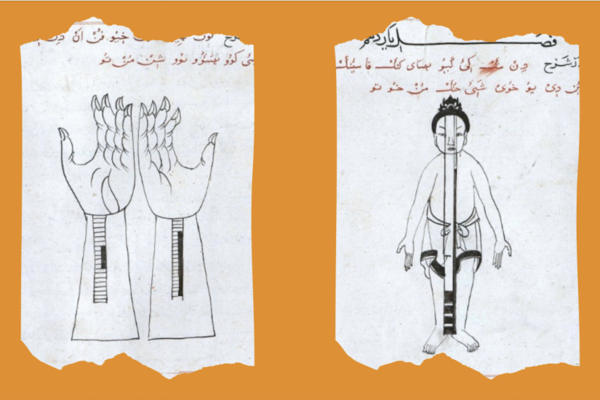
‘Ali Akbar Khata’i’s Book of China: Chinese Qanun as a Model of Political Reform in the Ottoman Empire
This talk takes as its point of departure a new English translation of Khata’i’s Account of China (trans., ed. Kaveh Hemmat et al., forthcoming), a text that has long attracted scholarly attention but remains insufficiently understood in terms of its…
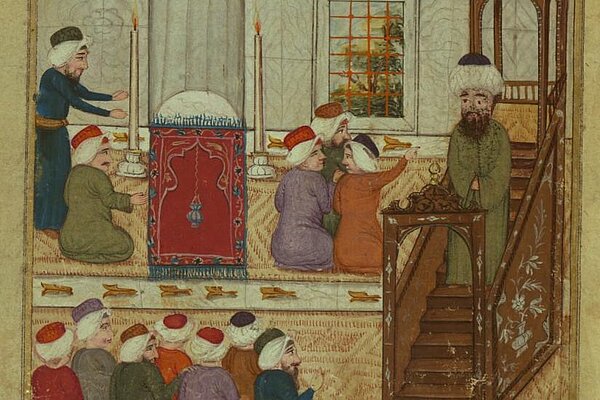
Critique, Discontent and Protest: Political Advice from Military Encampments, Mosques and Public Squares in the Ottoman Empire during the Seventeenth Century
This lecture aims to contextualize a particular corpus of political advice works that flourished in the seventeenth-century Ottoman Empire and that exhibited the following three traits. Firstly, the texts in question were all written in simple…
Imperial Infrastructures of Communication across Eurasia
The lecture examines the institutional framework of imperial communication in the Assyrian Empire, focusing on the interdependent roles of messengers, auxiliary personnel, pack animals, and the royal roads that structured the transmission…
Learning from Experience in Medieval Tabriz? Islamic Views on Chinese and Mongol Medicine and the Limits of Cultural Exchange
The Mongol integration of Eurasia created unprecedented opportunities for cross-cultural exchange. Chinese, Persian, Tibetan, and other medical experts traveled to distant courts to treat the khans and their diasporic communities of migrating…
This is the eleventh lecture in the lecture series Religious Philosophy in Pre-Modern Eurasia: Questions of Translatability organized within the framework of the Cluster of Excellence Eurasian Transformations: Resources of the Past and Challenges of…
Anxious Ancestors: Temple Destruction, Ruler Conversion, and the Contest over Sacred Power in the Mongol Empire
The lecture examines violence directed at ancestor images and religious change, with particular attention to conversion to Islam, in the Mongol Empire. It situates the desecration of temples, burial sites, and royal remains at the intersection of…
Remembering along the Silk Roads: Psychology, History and Conservation in Dialogue
The Silk Roads serve as a "landscape of memory", where the preservation of the past is a continuous, contested,
and collaborative process. This talk bridges the disciplinary divides between cognitive psychology, historiography,
and material…
Lecture Series: Music in the Ottoman Empire, Iran, Caucasus and Central Asia
This lecture series explores musical cultures across the Ottoman Empire, the Republic of Turkey, Iran, and Central Asia, examining these regions as interconnected soundscapes shaped by mobility, devotional practices, and political transformations.…
This site uses cookies. They ensure essential functionalities of the website and enable us to continuously optimize content. Help us by agreeing to the collection of statistical data and the presentation of external multimedia content. You can change your cookie settings at any time. Further information can be found in the privacy settings and by clicking the Data Protection Link.