


In times of mass surveillance and pre-emptive security measures, it is important for Europeans to ask questions, and to insist on having them answered.
Three EU-projects did just that: While SurPRISE, coordinated by Austria’s Institute of Technology Assessment, used citizen summits and meetings as an instrument to gather opinions and arguments on surveillance technologies, PRISMS, overseen by the German Fraunhofer ISI, and PACT, lead by the Peace Research Institute Oslo (PRIO), focused on a numbers-approach: Thousands of interviews conducted in 27 EU-member states delivered a picture of acceptance and/or fear of current practices depending on circumstance.
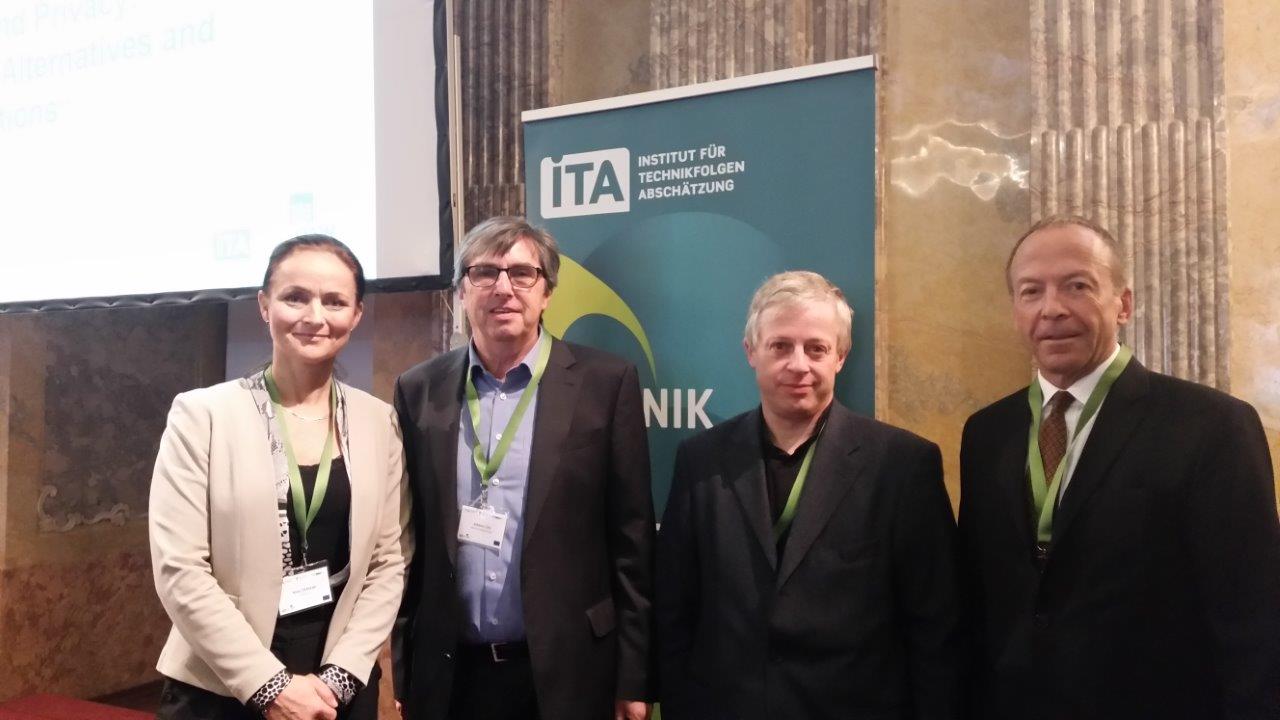
In Vienna, 200 experts from all over Europe gathered at the Austrian Academy of Sciences on November 13 and 14 to discuss those results and make out topics for future research. The conference titled “Citizens’ Perspectives on Surveillance, Security and Privacy: Controversies, Alternatives and Solutions” represents a joint effort to make citizens’ voices heard.
"We are building virtual walls"
“The revelations of Edward Snowden about the NSA and the hesitation of policy-makers to guard people’s privacy are clear signs that public voices have to be heard in this debate”, stresses SurPRISE coordinator Johann Cas (ITA).
“We just celebrated the 25th anniversary of the fall of the Berlin Wall, but we are erecting new, virtual walls around us which we are not even aware of”, Cas adds.
In his keynote, Julian Kinderlerer, President of the European Group on Ethics in Science and New Technology, made another strong argument for the need to strengthen the rights of citizens. Civil rights advocate Ben Hayes spoke out in favour of solidarity and not dividing societies in “the others” and “us”.
At a press conference in the wake of the conference, Michael Friedewald (Fraunhofer ISI) stressed the common ground of these three different efforts to pinpoint the privacy-security trade off: “It has become clear in the course of our research that people do not reject security and surveillance measures as such. But they demand to be informed about the necessity and the consequences of such measures.” Johan Cas adds: “Surveillance technologies themselves are not something that we can simply deny. But they need strong regulations, there have to be rules in place that justify giving up our privacy in public areas, or having our internet traffic monitored. There is definitely a need for decision makers to keep existing standards in place and come up with new solutions”.
19.11.2014
Denise Riedlinger