


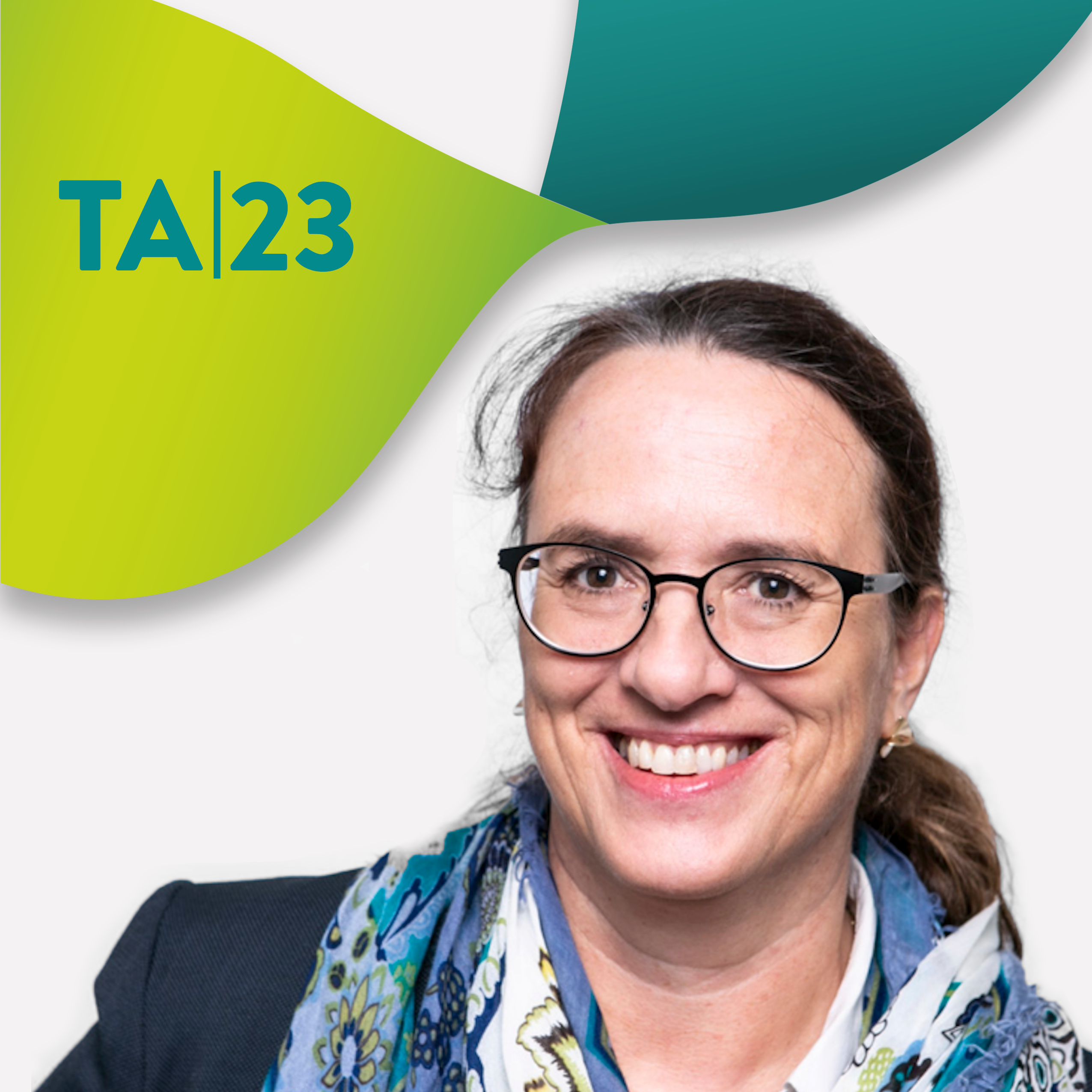
Cordula Kropp is one of the two keynote speakers at this year's TA23 Technology Assessment Conference in Vienna in June. Her keynote, titled "Infrastructures in Climate Change," (original German title "Infrastrukturen im Klimawandel") will take a closer look at the interaction of global warming with infrastructure development:
"Infrastructures are essential switchers of societal natural relations. They are variously sociotechnically integrated and intertwined, go hand in hand as cognitive standards and technological connection constraints with interactions in all social spheres, and therefore have great persistence. Their construction, reconstruction and dismantling aims at channeling and co-designing uncertain futures. For this reason, infrastructure development projects have always been the subject of technology assessment and also transformation research. Global warming is the result of today's infrastructures, forcing their climate-responsive transformation. The goals of climate neutrality demand a fundamental transformation of growth- and efficiency-oriented infrastructure development and raise far-reaching questions - also and especially in the context of digital sector coupling, which will be opened up in the lecture."
Cordula Kropp is director of the Center for Interdisciplinary Risk and Innovation Research at the University of Stuttgart (ZIRIUS) at the Institute of Social Sciences - Chair of Sociology with a focus on risk and technology research.
In her research, she investigates socio-technical transformation processes such as the current infrastructure change (energy transition, mobility transition) and the possibilities of a sustainability and participation-oriented design of the changes. Special attention is paid to the increasing digital penetration of production and infrastructures and the associated opportunities and risks. What is driving the current societal transformation that is accompanied by automation processes in decision-making and production, leading to novel constellations of distributed control? How can digital, computer-based innovations be implemented in the construction sector, what quality and sustainability goals accompany the computerization of construction and robotic prefabrication, and what are the prerequisites of distributed control in the increasingly close human-machine interaction?