


by Elizabetha Davitasvili

Jewish life in present-day Afghanistan dates back to late antiquity. Situated at the crossroads of Iran, Central Asia, and India, the region was an important centre of trade and cultural exchange along the Silk Road. Jewish communities are documented in cities including Balkh, Herat, Ghazni, Kabul, Kandahar, and Maymana (Reuven Kashani 1958). Over time, the Jewish communities of the region became known as part of the Jewish tradition of Khurasan. (Yitzhak Bezalel, 2013)
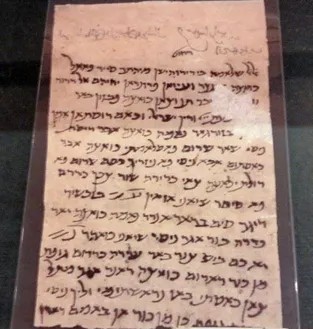
The earliest evidence of a Jewish presence dates to the 4th century CE and comes from Aramaic documents from ancient Bactria. (Josef Naveh and Shaul Shaked, 2012) Later sources include an 8th-century Judeo-Persian document preserved in the British Museum. Among the notable Jewish intellectuals associated with Afghanistan was Ḥiwi al-Balkhi, a 9th-century biblical critic from Balkh. (Shaul Shaked, 1999) Archaeological evidence offers an even more tangible glimpse into Jewish life. In Firuzkuh, the capital of the Ghurid dynasty, Hebrew and Judeo-Persian tomb inscriptions document a Jewish community that flourished for more than two centuries, from 1012 to 1249. (Joshua-Raz Ben-Zion, 2013) Further evidence comes from the so-called Afghan Genizah, discovered in a cave in Samangan Province. It includes hundreds of manuscript fragments, dating mainly from the 11th to the 13th centuries, include religious, literary, and commercial texts in Hebrew, Judeo-Persian, and Judeo-Arabic. (National Library of Israel, 2014) Together, these sources reveal a diverse and intellectually active Jewish presence in the region of present-day Afghanistan during the Middle Ages.
Jewish Communities of Modern Afghanistan
The Jewish community of modern Afghanistan was not a direct continuation of these medieval communities. Rather, it emerged largely through migration from Iranian Jewish centres, particularly Mashhad and Yazd, following the establishment of Afghanistan as a distinct political entity in 1747. (Yitzhak Betsalel, 2013) The community maintained a continuous presence for roughly two centuries and was particularly associated with Balkh, Kabul, Kandahar, and Herat.
The Jewish communities of Balkh and Kabul date back centuries, with Jewish travellers and merchants maintaining connections with Bukhara, while Kabul also attracted Jews from Mashhad and Herat. In the early 20th century, rabbis from Herat supported religious life in Balkh, but the community declined by the 1930s. Kabul’s community faced persecution, restrictions, and forced migration, particularly under Amir Abdur Rahman Khan (1880–1901), and had dwindled to a small community by the 1980s. There is no evidence of a permanent Jewish community in Kandahar, although Jews from Herat and Mashhad travelled there for trade. A 14th-century tombstone and a Jewish family documented in the early 1930s provide evidence of a Jewish presence there at different times. (Joshua-Raz Ben-Zion, 2013)
Jews in Afghanistan
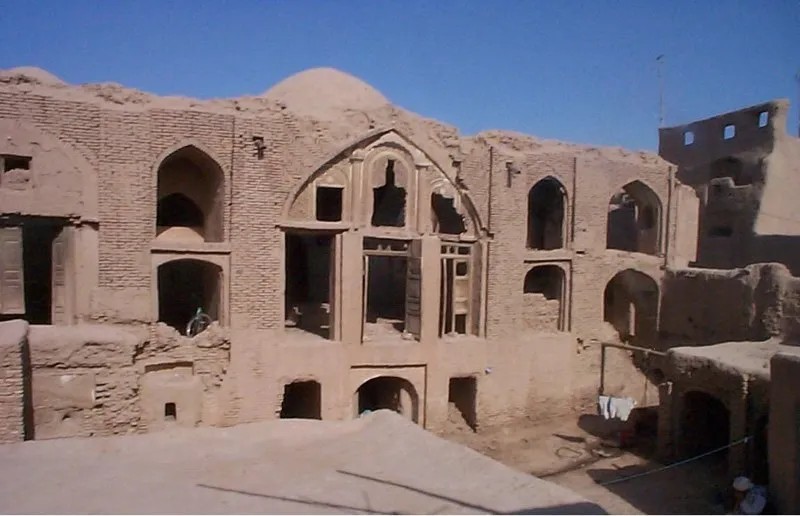
Under Islamic law, Jews were recognized as dhimmi (“protected peoples”). In return for paying the poll tax, they were granted communal autonomy, freedom of worship, and protection of their lives and property. The Pact of Umar nevertheless imposed various restrictions on non-Muslims, including regulations concerning public religious practices, clothing, and the construction of religious buildings and homes. (Reuben Kashani, 2012) In Herat, however, such restrictions were not consistently enforced: all four synagogues in the city were built under Muslim rule, during either the Persian or Afghan periods. (Zeev Gol, 1984)
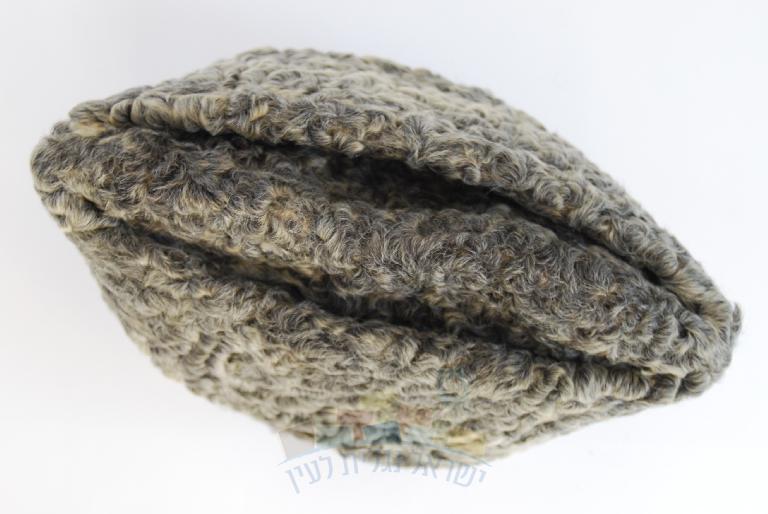
The status of Jews in Afghanistan varied considerably in practice. Amanullah Khan’s reforms after 1919 allowed Jews to wear the white Muslim-style turban. Following the 1929 uprising, Jews were required to wear distinctive headgear and a belt, but after about six months, the Jews of Herat were permitted to adopt the karakul cap. Although initially intended to distinguish Jews from Muslims, the cap later became an attribute of pride. Jewish men in Afghanistan were formally subject to military service. However, at first, they could pay a fee or provide a replacement. Later, they were permitted to serve near their homes so that they could observe their religious obligations. (Zeev Gol, 1984)
Despite periods of tolerance, Jews in Afghanistan experienced blood libels, discriminatory decrees, violence, looting, and forced financial contributions to internal and external wars. During periods of political upheaval and succession conflicts, Jewish property was often looted and lives were lost. (Reuven Kashani, 1958) Persecution was not exclusively religious, but was also shaped by political and economic factors. (Reuven Kashani, 1970) Nazi agents operating in Afghanistan contributed to such agitation, particularly between 1933 and 1941. During World War II, Afghanistan’s pro-German orientation and the resulting trade restrictions further affected Jewish merchants and their livelihoods. (Yehoshua Ben-Zion, 2013)
Economic Life
Most Jews in Afghanistan, particularly in Herat, were engaged in small- or large-scale trade, with commercial networks extending as far as Russia, India, and England. Some owned shops in the bazaar, where Jewish and Muslim merchants traded side by side. Others travelled as itinerant traders, bringing goods to villages, or rented shops in cities across Afghanistan, Russia, and India, dealing in textiles, carpets, and furs. Herat merchants acted as intermediaries for Jewish traders from Mashhad and Europe, exporting karakul furs processed in Herat by Muslim workers and shipped via India to European markets, particularly London. (Zeev Gol, 1984)
In daily life, the Jewish community in Afghanistan primarily spoke two Judeo-Persian dialects: Herati among the local population and Ghilaki among Jews who had fled from Mashhad. Additionally, Jewish merchants used a trade language called “La-Torai,” which combined Hebrew vocabulary with Persian grammar and pronunciation. This enabled them to communicate confidentially in the presence of the Muslim majority. (Afghani Jewry in Israel and the Diaspora)
Herat
In discussing Afghan Jews, a substantial body of academic and non-academic literature primarily focuses on the history of the Jewish community in Herat, thereby contributing to its portrayal as a major centre of Jewish life in Afghanistan.
Herat was home to the largest Jewish community in Afghanistan. It was shaped in particular by Jews from Mashhad who fled to Herat following the forced conversion of the city’s Jewish population to Islam on March 26th 1839. (Joshua-Raz Ben-Zion, 2013) Known as Jadīd al-Islām (“New Muslims”) (Reuben Kashani, 2012), they sought to return to openly practising Judaism. (Joshua-Raz Ben-Zion, 2013)
The community was organized along patriarchal lines. (Reuven Kashani, 1958) In the 1930s, the heads of extended families selected a kalanthar, also known as the head of the community or vakil. He served as an intermediary between the Jewish community and the authorities, representing Jewish affairs and conveying official information to the community. The position was generally held by economically established men who could read Arabic script and were entrusted with an official government seal. (Joshua-Raz Ben-Zion, 2013) Above the vakil stood the community rabbi, who served as the spiritual leader of Herat’s Jews and, more broadly, of Afghan Jewry. (Joshua-Raz Ben-Zion 2013, Zeev Gol 1984)
The city of Herat had four large synagogues. The community maintained a structured religious life, with regular prayer services and religious study forming an integral part of daily life. The established prayer routines and religious study of the more observant and devout members reflected the community’s religious traditions. (Aharon Bezalel, 2009)
Migration
Three waves of Jewish immigration from Afghanistan to Palestine, first under Ottoman rule, later under the British Mandate, and ultimately to Israel, can be distinguished. The first, between 1882 and 1914, involved around 350 people, including wealthy Jews who contributed to the development of Jerusalem. The second, between 1933 and 1939, was a migration driven by hardship, involving around 2,000 people through both legal and illegal overland routes. The third followed the establishment of Israel: around 4,000 Jews were living in Afghanistan at the time; approximately 2,000 emigrated after the borders opened, while the remainder left by 1979 (Joshua-Raz Ben-Zion, 2013).
The article “Last Jew in Afghanistan arrives in Israel, ending a yearslong saga,” published in The Jewish Chronicle on November 14, 2024, describes the end of “… a years-long saga” by reporting on Afghanistan’s last Jew, 72-year-old Zebulon Simantov, arriving in Israel in September 2021. By the early 2000s, the Afghan Jewish diaspora was estimated to number around 10,000 people, with a major community in New York. (Joshua-Raz Ben-Zion, 2013)
Heritage
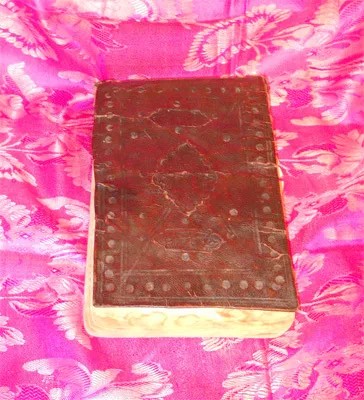
The community’s way of life, and consequently its cultural legacy, is distinctive and has attracted increasing scholarly interest. Many musical traditions were transmitted orally from one generation to the next without being documented in musical notation or recordings. The Jewish Music Research Centre in Jerusalem has therefore devoted a study to the musical traditions of the Jews of Afghanistan, including piyyutim Afghan Jews also developed a distinctive manuscript tradition, preserving religious and literary traditions through oral transmission and handwritten Dastak—personal books containing piyyutim, religious texts, stories, and moral teachings.
A further insight into the community’s cultural heritage is offered by a staged play depicting a traditional Jewish wedding in Afghanistan, edited by Reuven Kashani.
References:
Afghani Jewry in Israel and the Diaspora פורטל הקהילה האפגנית
Bezalel, Aharon. To Leave a Blessing: Memoirs of a Jewish Boy from Herat, Afghanistan. Jerusalem: Ben-Zvi Institute and the Hebrew University of Jerusalem, 2009.
Bezalel, Yitzhak. “The Bookshelf of a Jewish Rabbi in Afghanistan.” Pe'amim, no. 136 (Summer 2013).
Ben-Zion, Yehoshua-Raz. Behind the Silk Curtain: Nations and Jewish Communities in Central Asia (Iran, Afghanistan and Bukhara). Jerusalem: Carmel Publishing House, 2013.
Gol, Zeev. The Herat Community, 1839–1976. Seminar paper, Two-Year Course in Humanities and Social Sciences, November 1984.
“Genizah from Distant Times.” National Library of Israel, video lecture, January 9, 2014. YouTube. https://www.youtube.com/watch?v=4WsjX1W2oEc&list=PLr4ozSOkQBfrFJRyPHY-9e2sAQbmCGAiX&index=6
Kashani, Reuven. “On the Jews of Afghanistan.” Shevet Va’am, first series, no. 2 (Sivan 5718 [Spring 1958]).
Kashani, Reuven. “Korot Zemanim l’ha-Rav Matitiyah Gargi Mi-Afghanistan” (A History of the Times by Rabbi Matitiyah Gargi from Afghanistan). Shevet Va’am, second series, (1970): 136–159.
Kashani, Reuven. The Jewish Communities in Persia-Iran. Jerusalem, 2012.
Naveh, Joseph, and Shaul Shaked, eds. Aramaic Documents from Ancient Bactria (Fourth Century BCE): From the Khalili Collections. London: The Khalili Family Trust, 2012.
Shaked, Shaul. “New Information on the Jews of Afghanistan in the Middle Ages.” Pe'amim: Studies in Oriental Jewry, no. 79 (Spring 1999).
Shaked, Shaul. “Newly Discovered Jewish Writings in a Cave in Afghanistan.” Massuah: Journal of the Heritage of Afghan Jewry, no. 13, seventh year (Nisan 5772–April 2012).
“The Last Jew in Afghanistan Arrives in Israel, Ending a Yearslong Saga.” The Jewish Chronicle, November 14, 2024.
“Amar Hashem LeYaakov – Afghan Melody.” An Invitation to Piyyut, January 17, 2012. https://www.youtube.com/watch?v=kt68tcz5MEY&utm_source=chatgpt.com
“A Wedding in Afghanistan.” September 6, 2020. YouTube חתונה באפגניסטן