


CERN bids farewell to the LHC and prepares for the HiLumi era
20.07.2026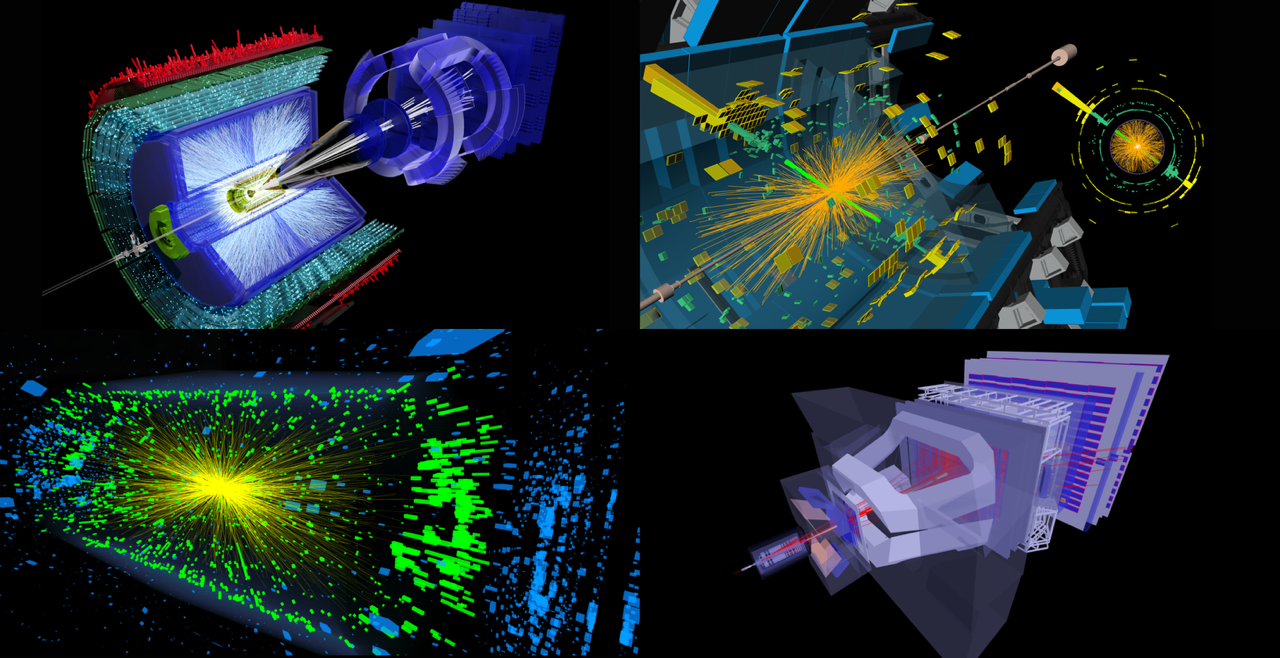
Since its first beams circulated in 2008, the LHC has been at the forefront of scientific discovery, delivering groundbreaking results, including the historic discovery of the Higgs boson in 2012. Over its three operational periods, the LHC has enabled hundreds of major advances in particle physics, including the discovery of over 85 hadrons, advancements in understanding matter-antimatter asymmetry, insights into quark–gluon plasma, and contributions to astrophysics. Beyond its scientific achievements, the LHC has driven innovation in accelerator science, superconducting technologies, computing, and international collaboration. As members of the LHC experiments scientists and engineers at the Marietta Blau Institute for Particle Physics (MBI) of the Austrian Academy of Sciences have made significant contributions to the CMS Trigger and Tracker systems, as well as to the physics analysis of data from the CMS and ALICE detectors.
The LHC now enters Long Shutdown 3 (LS3), a major maintenance and upgrade phase that will prepare it for its successor, the High-Luminosity LHC (HiLumi LHC). Scheduled to begin operations in 2030, the HiLumi LHC will increase the collider’s luminosity by up to ten times, allowing researchers to collect vastly larger datasets. This will enable precision studies of the Higgs boson and enhance the potential to uncover phenomena beyond the Standard Model.
LS3 marks the most extensive intervention on CERN’s accelerator complex since the LHC’s construction. Thousands of specialists from CERN and partner institutes worldwide will work on extensive upgrades, including replacing 1.2 km of magnets and components in the LHC, modernizing the injectors, and transforming experimental facilities. These efforts will ensure the facility is ready to meet the challenges of the next era in high-energy physics.
The ATLAS and CMS experiments at the LHC are being upgraded to handle the increased demands of the High-Luminosity LHC, which will produce 140–200 proton–proton collisions per bunch crossing. To process over five billion interactions per second, both experiments will replace their trigger systems and adopt advanced detector technologies, including all-silicon tracking systems, high-precision timing detectors, and new calorimeter systems. These upgrades aim to maximize the potential of the HiLumi LHC.
“The LHC has exceeded every expectation”, said Oliver Brüning, CERN Director for Accelerators and Technology. “For nearly two decades, it has transformed our understanding of the Universe and inspired generations of scientists, engineers and citizens around the world. We now look forward to the HiLumi LHC, which will take this scientific journey even further.”
As CERN says goodbye to the LHC, it celebrates the global community of scientists, engineers, and collaborators who made its achievements possible. The HiLumi LHC will mark the beginning of a new era of discovery, further advancing the boundaries of our understanding of the Universe.