


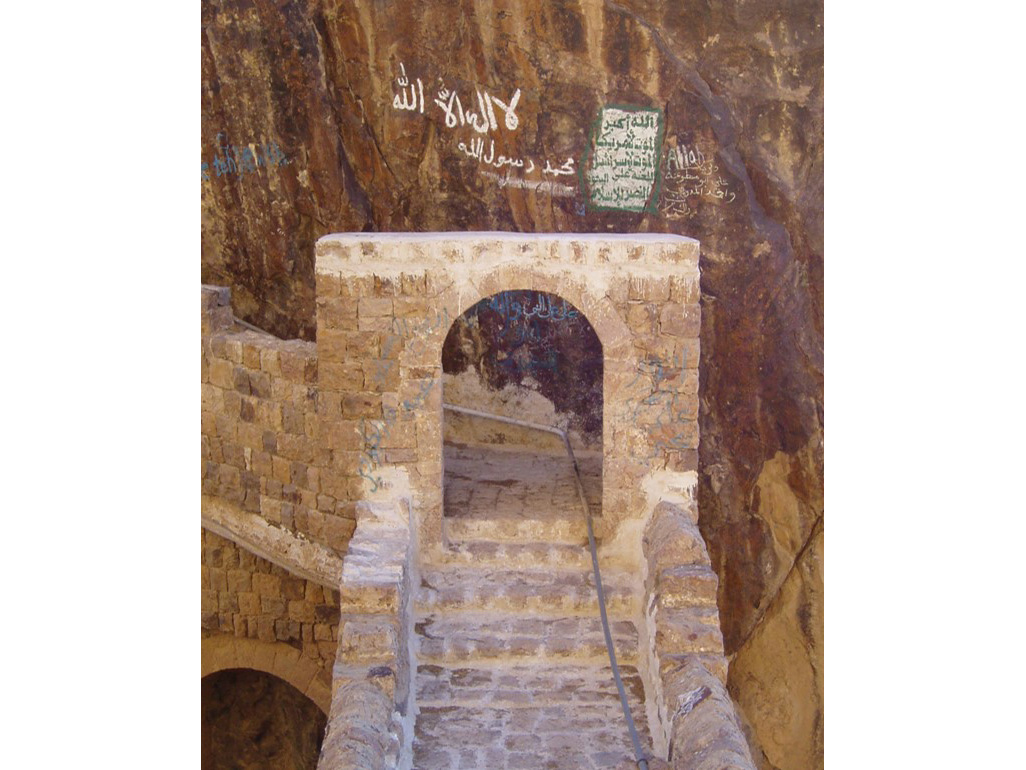
The stellar rise of the Houthi (Ansar Allah) movement in Yemen is not just a story of military conquest but also one of ideological innovation, transforming northern Yemen and reshaping power dynamics in the Middle East. Despite their prominent role in national and geopolitical arenas, the question of what the Houthis “really” want still looms large in academic debates and political circles. This lack of understanding is particularly striking given that, since coming to national power in 2014, the Houthi regime has invested heavily in developing an extensive ideological framework, which now encompasses an overwhelming array of sources and plays out in nearly every aspect of everyday life.
This lecture offers insight into the origins, evolution, and ideological orientations of Houthism. It shows that Houthi ideology is a creative and syncretic construct in constant dialogue with Yemen’s social, intellectual, historical, and religious histories and frameworks, while also engaging with external influences – thus challenging dominant perceptions that Houthism is either a revival of Yemen’s pre-1962 imamate, an exogenous discursive construct superimposed on Yemen, or merely an Iranian proxy. Using the case of Houthism, this talk outlines possible avenues through which anthropology can contribute to the study of ideology, offering new perspectives, approaches, and tools for studying emerging ideologies in similar contexts.
Short bio
Marieke Brandt is a researcher at the Institute for Social Anthropology at the Austrian Academy of Sciences, with a primary focus on the social and intellectual history of Yemen, where she spent five years living and researching. She is the author of Tribes and Politics in Yemen: A History of the Houthi Conflict (Oxford University Press/Hurst 2017), The Tale of a Feud: Domination, Resistance, and Agency in Highland Yemen (Brill, 2023), and numerous peer-reviewed articles.
Information
Date:
21st November 2024 | 4 PM
Ort:
PSK (Room 4 | 4th floor)
1010 Wien, Georg-Coch-Platz 2