


Doing business in Turkestan: labour, networks, institutions
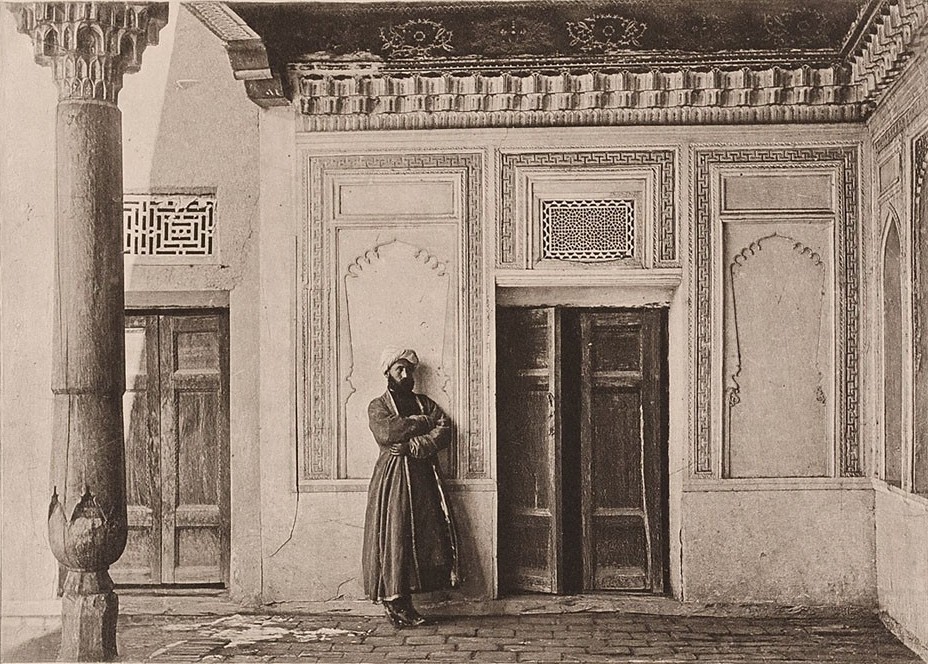
The economic history of colonial-era Central Asia is still largely clichéd and regarded as ‘peripheral’, with most of post-1991 scholarship focusing on identity, culture, and governance. Piecemeal reconstructions of economic life through business history, geography, and historical anthropology have yielded promising results, yet they lack co-ordination between the study of western and eastern Turkestan, links with debates in Global Economic History, and a new analytical framework, away from older ideological shibboleths. Meanwhile, exclusion from sources in Russia has spurred new interest in the latter’s imperial ‘borderlands’.
A renewed interest in the economic and business history of Central Asia, reflected in new publications and in dedicated panels on Capitalism in Turkestan at CESS-ESCAS conferences (Tashkent 2022, Lisbon 2025) shows both the potential and the need to federate efforts and exchange ideas about theoretical toolkits and definitions, sources, and possible cross-regional comparisons. Research about the circulation of technologies, contractual forms, commodities, investment, and entrepreneurial diasporas calls for a perspective that integrates both eastern (i.e. ‘Chinese’) and western (‘Russian’) Turkestan (including the protectorates), as well as the neighbouring regions. Similarly, this research invites a comprehensive revision of older historiography, often inspired by Marxist-Leninist, ‘Maoist’, or nationalist paradigms, many of which continue to resonate in later publications. Finally, it is useful to reflect collectively at this point on the interrelation between new findings about the economic and business history of Central Asia and the history of capitalism at large, global labour history, and the history of ‘resourcification’.
These and related questions will be tackled at a two-day workshop, held at the Institute of Iranian Studies, Austrian Academy of Sciences, Vienna, on 30-31 October 2025, under the auspices of the Cluster of Excellence Eurasian Transformations. The purpose of the workshop is to advance substantive knowledge, to refine intellectual tools, and to prepare a further grant application. In particular, we want to agree on the functional definitions of key terms (e.g. ‘capitalism’), take stock of published and ongoing research, and identify the needs of scholars in different research environments (e.g. regarding access to sources, collaboration) to be targeted through a future grant.
Information
Time
30-31 October 2025
Venue
Austrian Academy of Sciences
PSK, 5th floor, Seminar Room 8 & online
Georg-Coch-Platz 2
1010 Vienna
Organisers
Jeanine Dağyeli
(University of Vienna &
Austrian Academy of Sciences)
Beatric Penati
(University of Liverpool)