


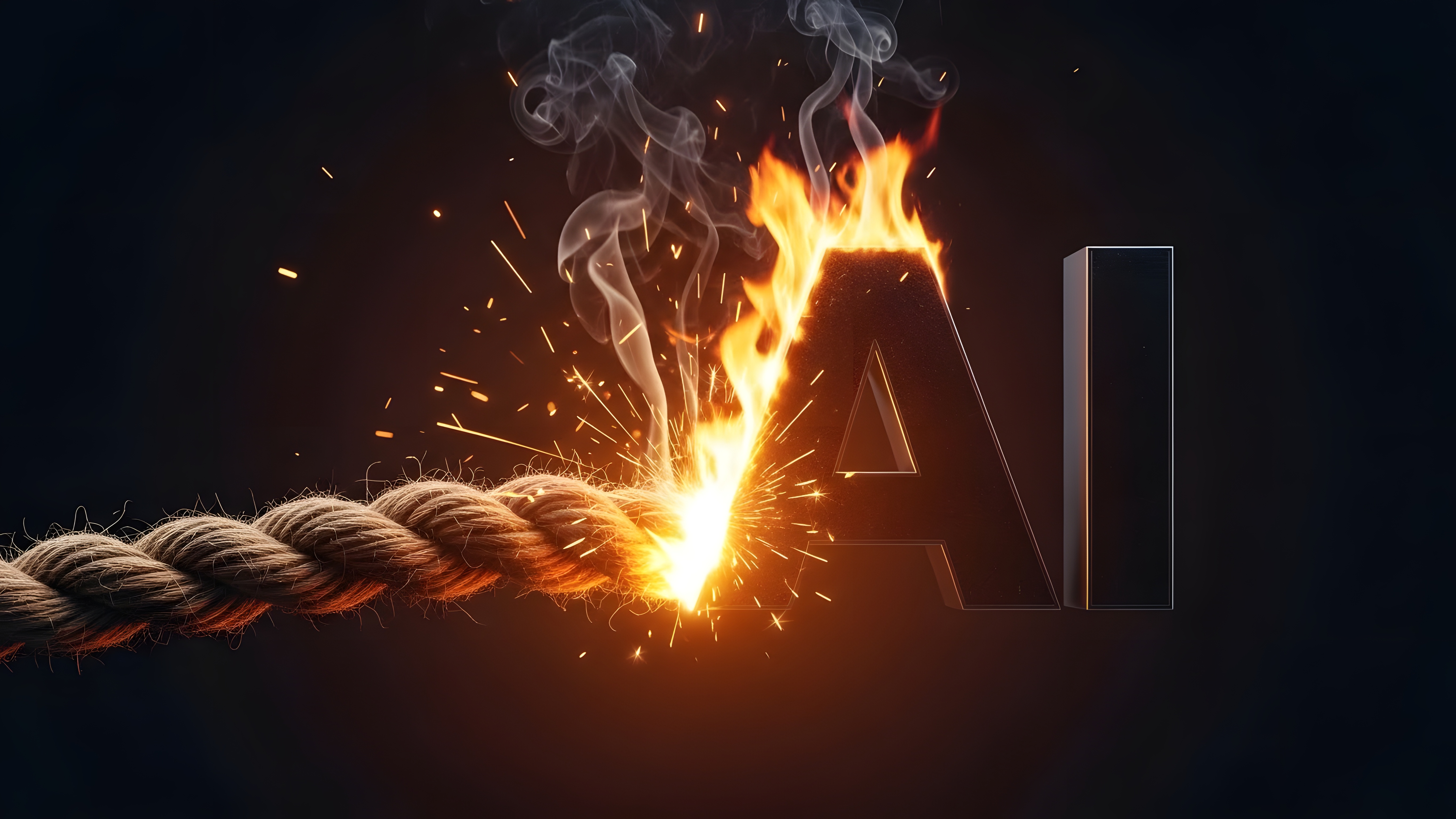
AI Agents - the Dynamite of the 21st Century?
Yes, this Blog concerns agentic AI. And yet, we will start with Nitroglycerine. This substance was already well known in the second half of the 19th century. Very powerful, very explosive – too explosive, actually, for wider use. Only when Alfred Nobel mixed it with Kieselguhr, became secure large-scale commercial employment possible. Dynamite was born.
What does this tell us about AI agents, now? Parallel to the early days of dynamite, AI is at a crossroads. Generative AI is already widely used – just like Nitroglycerine 150 years ago. But agentic AI adds a special feature: Autonomous decision-making is nowadays’ Kieselguhr in the context of Large Language Models like ChatGPT & Co.
And just like dynamite back then, we do not know how AI agents will shape our future. How they will impact our understanding of human action. How they will change our brains. How they will alter our economic system. To encourage discourse on all these matters, we present to you four hypotheses – cheeky and serious at the same time. The underlying question remains the same: Is agentic AI rather a threat or an opportunity?
What’s human? And what’s machine?
Our first hypothesis pertains to the realm of philosophy. But don’t worry, keep reading! We suggest that agentic AI will not only impact our actions in numerous ways. The very concept and phenomenon of human agency will undergo change in face of the rise of AI agents and the introduction of their competing, non-human ability to act.
This observation is rooted in the fact that with agentic AI, we will for the first time become able to substitute many coordinating and organising operations. These have so far always strictly required human coordinators, organisers and communicators. Once given a complex task, a non-human AI agent will begin to make decisions and choices on the execution of the task independently. The agent thereby determines the shape of the tasks’ realisation beyond what its human user anticipated.
Thus, these decisions are removed from the scope of human action. Their effectuation no longer depends on a human making decisions and enacting them. This opens the potential to replace humans in positions of organisation, communication and coordination and, consequently, shifts the importance and role we occupy within the system of society.
The answer, my friend, is blowing in AI…
Let’s turn to neurobiology. The use of agentic AI may change our brain – and could mean a major new development of humankind. Outsourcing tasks can be of great help. However, it does also alter the way we think and our brain develops. With agentic AI, many tasks can be accomplished automatically without getting the brain cells to work. More than likely, our brain is going to react with changes regarding connection and structure.
In the past, greater changes in the structure of the human brain led to major developments of humankind, without which the homo sapiens probably wouldn’t be where they are today. A change, now, could therefore mean two things: On the one hand, it could open a new, maybe even better dimension of mankind. On the other hand, it could as well lead to the decay of humankind, making humans unable to think and live properly. How do we make sure we will continue in the right direction?
My AI agent is better than yours!
In the end, the market decides, right? And agentic AI introduces something new to the economy: non-human actors that can make decisions on their own. This challenges a basic idea in economics – that markets are driven by human decisions. Thus, markets may slowly turn into interactions between algorithms instead of people. As those become faster and more efficient, they may even outperform humans.
The hypothesis, therefore, is that global markets may evolve into algorithmic ecosystems. In such a scenario, a parallel “AI economy” could emerge within the human economy – one in which agents continuously interact and trade with one another, representing firms, consumers, and institutions.
Humans would still set goals, but the real activity would happen between autonomous agents. This raises a key question of who is truly participating in the market. Is it us – or is it the agents acting in our name?
In such a world, competition may shift away from capital and rather focus on who has the better AI – meaning that the real competition may no longer be between companies, but between their algorithms. If that is true, then we are not only just changing the economy. We are fundamentally redefining it.
Oh, you’re human? Well, that’s a shame…
Following the previous hypothesis, AI markets may have additional consequences. And here we come to the heart of politics – equality. The current structural stability of extreme wealth inequality is sustained by the market’s function as a shared value system. In a performance-oriented society, financial accumulation serves as the primary metric for social merit. The German double meaning of the word “verdienen” (to earn and to deserve) illustrates how economic success is equated with social standing.
This logic, however, is strictly reliant upon the continued economic relevance of human labour. If agentic AI can consistently outcompete human output across a majority of tasks, the market value of human productivity would trend towards zero. This renders the market's "rational" distribution of status dysfunctional and makes a re-evaluation of the social contract indispensable. To put it succinctly: If the majority becomes obsolete in the eyes of the market, then so does the market in the eyes of the majority.
And what does this all mean?
Above all, we cannot know. Our hypotheses can be disproven, and the course of history may take another, most unexpected direction. It would not be for the first time. But once again, the story of dynamite could help in the assessment. Using dynamite, the Panamá canal was built, the Gotthard tunnel finalised, and mining productivity skyrocketed. Putting all our efforts into upscaling the production of dynamite and into finding new ways of employing it, seemed both rational and successful. Until factories exploded, assassinations occurred, and modern warfare took its shape. Dynamite had revealed its downside.
AI agents are a powerful tool, maybe even more than that. And as such, they are neither inherently good nor bad. We thus do not want to display a negative image of AI agents at all. Their potential to benefit us all is enormous. However, we may be well advised to first think about the consequences of technological advancements before we rush into implementation.
Let’s take a breath and decide together on the future use of agentic AI. Let’s all be Bertha von Suttner for a while. Hopefully, we can thus prevent AI agents from becoming the dynamite of the 21st century. And this time, we will use technology more wisely.
Niklas Kapeller, Victoria Wagner, Sandra Pasaricek, Jonas Palus, Michael Weilch