
Welcome to the Mendjan Lab
Our group explores the mechanisms underlying the formation of the human heart. The embryonic heart, the first functional organ to form in humans, develops from endocardial, myocardial and epicardial progenitors. These organ precursors co-develop resulting in self-organization of major cardiac structures. Despite our insights about cardiac development, it remains a major challenge to discern how molecules instruct cells to self-organize into a functional heart, and how this fails in disease.
IMPACT

The most common human birth defects originate from faulty self-organization of mesodermal precursors during cardiogenesis. The resulting congenital heart disorders affect many pregnancies, children and a growing number of adults with life-long complications. Cardiac developmental genes and processes play also an important role in the aetiology of cardiovascular disease - the major cause of death worldwide (32% of all deaths, source: WHO) due to missing treatments. Thus, insights into how mechanisms of cardiogenesis are linked to heart disease will lead to development of much needed treatment strategies.
Vision
Human pluripotent stem cell (hPSC) differentiation and derivation of organoids have revolutionised human developmental biology and opened new avenues to regenerative medicine. However, we are still far from mimicking the fascinating complexity of cardiogenesis. While hPSC can be differentiated into multiple cardiac cell types, the key self-organizing processes of heart tube formation, looping, trabeculation, ballooning, septation, valve development and functional maturation remain elusive. Further challenges comprise modeling heart-specific vascularisation, innervation and interactions with adipose tissue, which have a major impact on cardiac development, function and disease.
Our guiding principle is that to understand heart development and disease in patients, we must be able to recreate these linked processes in the lab.
Mission
Our aim is to discover how signaling and gene expression drive self-organization and functional maturation of the heart, and how mutations cause disorders of cardiogenesis. Our hypothesis is that organoids need to recapitulate development as faithfully as possible to serve as predictive disease models. Missing human cardiac models that allow development of therapies and predict responses in patients are the biggest bottlenecks towards much needed treatments in cardiovascular disease. Our mission is to address this key problem affecting more patients than any other disease on the planet.
Approach
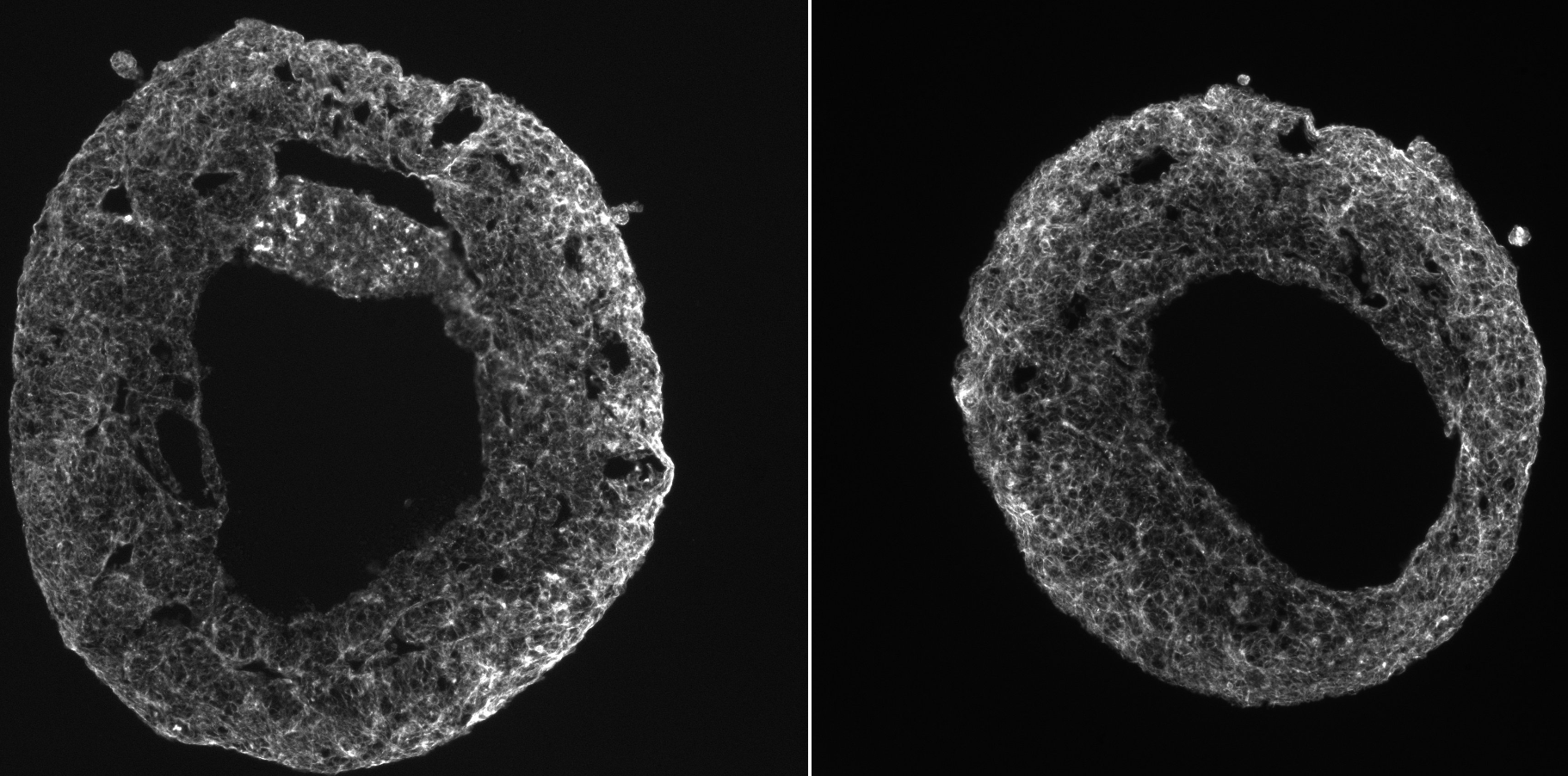
To achieve our objectives, we systematically apply principles of in vivo development and translate them to in vitro models. Our lab philosophy is to tackle this challenge at the molecular, cellular and organ scale. We combine stem cell differentiation into self-organizing organoids, and perturbations by small molecules, CRISPR, and degrons, with quantitative imaging, as well as with global epigenome, transcriptome and proteome analysis.
Video Gallery
Selected Publications
Clara Schmidt, Alison Deyett, Tobias Ilmer, Aranxa Torres Caballero, Simon Haendeler, Lokesh Pimpale, Michael A. Netzer, Lavinia Ceci Ginistrelli, Martina Cirigliano, Estela Juncosa Mancheno, Daniel Reumann, Katherina Tavernini, Steffen Hering, Pablo Hofbauer, Sasha Mendjan (2022). Multi-chamber cardioids unravel human heart development and cardiac defects BioRxiv.
Hofbauer, P., Jahnel, SM., Mendjan, S. (2021). In vitro models of the human heart. Development. 148(16)
Ctortecka, C., Stejskal, K., Krššáková, G., Mendjan, S., Mechtler, K. (2021). Quantitative Accuracy and Precision in Multiplexed Single-Cell Proteomics. Anal Chem.
Hofbauer, P., Jahnel, SM., Papai, N (...) Novatchkova, M., Mendjan, S. (2021). Cardioids reveal self-organizing principles of human cardiogenesis. Cell. 184(12):3299-3317.e22
Haider, S., Meinhardt, G., Saleh, L (...) Latos, PA., Knöfler, M. (2018). Self-Renewing Trophoblast Organoids Recapitulate the Developmental Program of the Early Human Placenta. Stem Cell Reports. 11(2):537-551
Bertero, A., Brown, S., Madrigal, P (...) Mendjan, S., Vallier, L. (2018). The SMAD2/3 interactome reveals that TGFβ controls m<sup>6</sup>A mRNA methylation in pluripotency. Nature. 555(7695):256-259
Bertero, A., Madrigal, P., Galli, A (...) Pauklin, S., Vallier, L. (2015). Activin/nodal signaling and NANOG orchestrate human embryonic stem cell fate decisions by controlling the H3K4me3 chromatin mark. Genes Dev. 29(7):702-17
Mendjan, S., Mascetti, VL., Ortmann, D (...) Moreau, T., Pedersen, RA. (2014). NANOG and CDX2 pattern distinct subtypes of human mesoderm during exit from pluripotency. Cell Stem Cell. 15(3):310-325
Pedersen, RA., Mascetti, V., Mendjan, S. (2012). Synthetic organs for regenerative medicine. Cell Stem Cell. 10(6):646-647
Vallier, L., Mendjan, S., Brown, S (...) Brons, G., Pedersen, RA. (2009). Activin/Nodal signalling maintains pluripotency by controlling Nanog expression. Development. 136(8):1339-49
Mendjan, S., Taipale, M., Kind, J (...) Saumweber, H., Akhtar, A. (2006). Nuclear pore components are involved in the transcriptional regulation of dosage compensation in Drosophila. Mol Cell. 21(6):811-23